Search results for: audio recording tips
About 241 filtered results
Posted
In this video, Kevin breaks down the dos and don'ts of planning your first recording session at a commercial studio. He'll break down budgets, logistics, and everything you'll need to have the best experience possible.
0:00 - Intro
0:35 - How to Choose the Right Studio for You
2:11 - Pre-Production
3:34 - Understanding Roles
6:03 - Studio Etiquette
6:53 - Budgeting & Pricing Estimates
10:46 - Most Importantly
by Freddy Gerngross · Posted
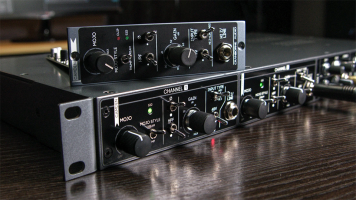
If you're new to the world of audio and are wondering what a mic preamp does and whether you need one for your home studio, you're in luck. We've put this guide together to answer all of your questions.
What Is a Mic Preamp?
The mic preamplifier, or preamp, is a device that increases the voltage of a mic’s outgoing signal so it can be strong enough to be processed by other audio equipment—it takes signal from mic level to line level (often boosting between 30-70 dB). It can also add a user-specified amount of gain to the signal which in turn

by Jennifer Hahn · Posted
Many moons ago, when the economy was unstable and layoffs were rampant, this author decided to switch careers to pursue filmmaking. With a new perspective and energy, but without any guidance, knowledge, or tools, going back to school for digital filmmaking was a no-brainer. The aim was to tell real stories in documentary form, and it became a challenging but ultimately rewarding adventure.
Tips for Starting Out
If you’re just starting out at the dawn of your student career, or find yourself older and wiser looking for a change, and you want
by Freddy Gerngross · Posted
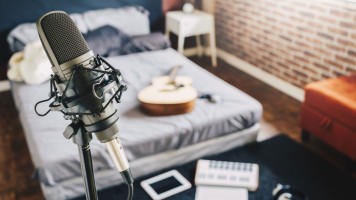
As the democratization of music production continues to propagate, many people have been innovating new production techniques, creating entirely new genres of music, and recording literal chart-topping hits—all from the comfort of their bedrooms. But if you’re just getting started, you might soon realize that the vocal recordings you capture in your bedroom are … less than ideal.
Getting a tight and professional sound from a small bedroom is possible—but it takes planning, preparation, constant rearrangements, and maybe a few bucks here and

by Freddy Gerngross · Posted
Mixing is a polarizing issue. For some, it’s the most exciting part of the music-making process. Others lament it is a necessary evil they wish to avoid at all costs (and often do, at the cost of paying someone else to mix for them).
Regardless of how you feel about mixing, it’s inarguably an important and demanding process, one that requires you skillfully balance science and art—both of which are key components to a great-sounding mix.
In this article, we’ll be focusing more on the science side of things, specifically how to set up your room
by Zach Kornhauser · Posted
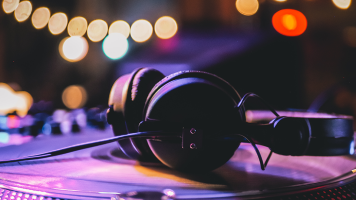
With the ever-increasing mobility of music-production equipment, the subject of mixing and mastering on headphones becomes increasingly relevant. While there is no real substitute for mixing and mastering on tuned near- or mid-field monitors in an acoustically treated room, headphones certainly have a role to play in production. Whether for convenience, portability, noise considerations, or other reasons, here are a few ideas to keep in mind when mixing with headphones.
1. Protect your ears
When wearing headphones, recognize that because the
by Mathew Malwitz · Posted
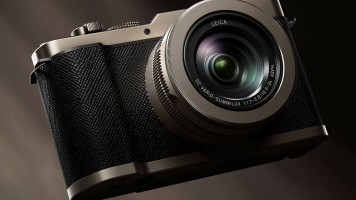
After the smartphone revolution, it appeared that the days of the compact camera were done. How wrong we were. It’s true that a few years back, point-and-shoot options were few and far between. There were just a handful of options on the market, and some industry titans even left the market entirely. Despite the long-rumored demise of the compact camera, it seems that photo enthusiasts still desire a dedicated device without the distractions that come with a smartphone.
What is a compact or “point-and-shoot” camera? Just because a camera is
by Gabby Bloch · Posted
There are many factors to consider when choosing your first pair of studio monitors. And though the technical aspects of monitors can get a little complicated at times, it’s probably sufficient to understand the essentials of what a studio monitor can offer in terms of features and sound delivery. So, here’s an accessible guide to choosing the best monitors for your needs. We’ll also touch on how to best position your monitors for accuracy.
What Is a Studio Monitor?
Unlike regular speakers, which tend to have some coloration or biases in the

by Freddy Gerngross · Posted
Tube microphones (also known as “valve mics” to those who refer to the subway as “the tube”) are something of a venerated patrician class of microphone technology known for their euphonic sound characteristics and historical pedigree, along with exorbitant prices that induce nightmares for recording studio accountants—discontinued models like the Telefunken ELA M 250E command upward of $30,000, making a brand-new Sony C-800G

by Freddy Gerngross · Posted
With the days we've chosen to honor our parental units quickly approaching, it can be tough to find a gift that isn't just the same old stuff as last year. While grilling utensils or a bath kit can be the stereotypical and affordable solution, these 10 audio gift ideas can seriously impress your forbears—even if your parents aren't music lovers.
For Vinyl Lovers: Audio-Technica Sound Burger and Audio-Technica ATLP70XBT
Society writ large has decided that vinyl is back and here to stay. Whether you have parents who have collected a library of

by Freddy Gerngross · Posted
Like anything worth creating, solidifying the process of a project is key to success. Often, the ambitious work of aspiring music producers can get bogged down from a lack of organization. Projects can bloat into dozens of unnamed tracks processed with reckless abandon, and audio and MIDI clips get chopped and sliced into a charcuturie board of chaotic (un)organization.
For the fever-pitched producer in a flow state, this chaos can be managed during the session (to an extent). But what if they were to step away from the project and come back

Posted
Drum sounds are an integral part of a song's production. However, recording drums at home presents its own unique challenges. Andrew provides solutions, such as microphone choice and placement.
0:00 - Introduction
0:35 - Challenges of Recording Drums at Home
2:15 - Many Parts, One Instrument
2:45 - Drum Tuning and Head Choice
3:25 - 1 Mic, 2 Options
6:00 - 2 Mics (Glyn Johns)
8:08 - 4 Mics (Glyn Johns w/kick & snare)
10:29 - 4 Mics (Spaced Pair w/kick & snare)
12:30 - 4 Mics (Blumlein Pair w/kick & snare)
13:18 - Options for Using

by Freddy Gerngross · Posted
Since its founding in 1992, DPA Microphones has gained a prestigious reputation in the audio industry for their mics' exceptional quality, crystalline transparency, and rugged and reliable build quality. And while DPA's microphones have found their way onto the stage with Beyonce, onto the sets of Game of Thrones, and into the concert halls of the world's greatest orchestras, what's perhaps most impactful to our world is the contributions they've made to the scientific community: DPA's microphones have enabled advancements in medicine,

by Freddy Gerngross · Posted
Reverb gives sound verisimilitude. Think of it as the persistence of sound after it is produced—a phenomenon of multiple clashing and diverging sonic reflections whose characteristics are defined by the surfaces and materials they contact. It reveals the nature of a physical space in infinitesimal detail.
Reverb defines the tangible nature of space and our place within it—something that sighted and hearing humans often take for granted. You can infer a ton of knowledge about an environment simply by listening to what it sounds like.
The

Posted
Home recording is more accessible, but how do you make your instruments sound good? Andrew shares how to get the most out of your experience recording music at home. In this episode, you’ll get a crash course on acoustic guitar recording at home, as well as mistakes to avoid. You’ll learn how to choose a microphone, where to place your mic, how to record acoustic guitars in an untreated room, and more. As always, Andrew will demo each mic position and share its pros and cons.
0:00 - In This Tutorial
1:00 - Basic Mic Placement
2:23 - How