Search results for: color temperature guide
About 140 filtered results
by Zack Young · Posted
Looking to learn more about the LED volume walls used in the burgeoning field of OSVP (on-set virtual production)? These walls are a key component of the process, serving as true-to-life backgrounds, sets, and locations for OSVP. Volume walls are composed of multiple LED displays (also called cabinets) that are seamlessly joined together to form a custom-size screen on which your background footage and real-time graphics are shown. Here, we’re going over key specs for the most visible component, the displays themselves.
Configuration
The first

by Mary Latvis · Posted
Blending a high-resolution video display with live action, real-time computer graphics, camera tracking, and game engine software to create immersive environments, virtual production is rapidly transforming the face of video production. To streamline your VP or XR (extended reality) stage setup, consider getting a jump start with the help of a turnkey VP package.
LED Nation P1.86mm GOB Video Wall Turnkey Kit for

by Mathew Malwitz · Posted
Have you ever taken a photo that looked so good on the back of your camera, only to get home and see that it’s just not sharp? We’ve all been there, and even the experts miss more shots than they keep. That said, there are many tricks and techniques we can learn to improve the odds. In today’s guide, we’re looking at five techniques to aid us in confidently capturing tack-sharp photographs.
Sharpness is critical in most genres of photography, especially nature and wildlife. Sure, we can intentionally blur elements to showcase motion. We

by Roberto Bayde · Posted
Streaming has become a new form of entertainment in today's world. While one can simply pick up their phone and begin streaming, it's the extra you put into it that sets you apart. The following items are some of the best products you can buy to elevate any stream.
Webaround Close-Up Collapsible Portable Webcam Backdrop
In a tight room and your background isn’t appealing to viewers? Well, this
by Mathew Malwitz · Posted
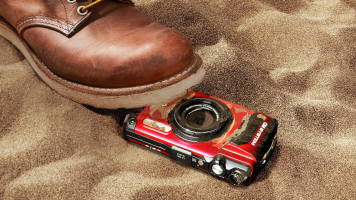
Who doesn't love a day at the beach, or hitting the slopes in November? These are classic pastimes and a great place to snap photos of yourself, your friends, or your family. You could always use your smartphone but following recent trends, there's a big push for focusing on the experience of photography. What better way to do so than with a compact point-and-shoot camera?

by Mathew Malwitz · Posted
You don’t have to go far to capture fun and engaging images of wildlife. In fact, you may not have to go anywhere at all. A carefully landscaped yard and the right tools can attract an impressive variety of animal life to observe and photograph. Pair that with a little patience and soon you’ll be capturing stunning images from the comfort of your own home.
Attracting Birds
Birds are part of nearly every environment, from the densest cities to rural areas. While they are common, we’ll need to offer three essentials—water, shelter, and food—to
by Mathew Malwitz · Posted
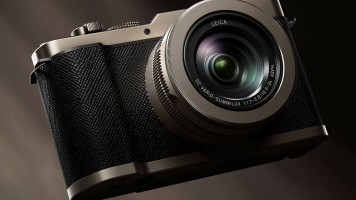
After the smartphone revolution, it appeared that the days of the compact camera were done. How wrong we were. It’s true that a few years back, point-and-shoot options were few and far between. There were just a handful of options on the market, and some industry titans even left the market entirely. Despite the long-rumored demise of the compact camera, it seems that photo enthusiasts still desire a dedicated device without the distractions that come with a smartphone.
What is a compact or “point-and-shoot” camera? Just because a camera is
by Steven Gladstone · Posted
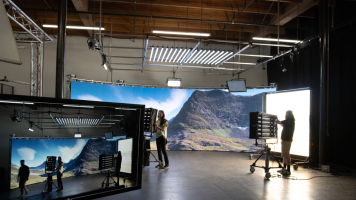
Lighting hasn't really changed in the past few decades. Sure, new fixtures, faster cameras and lenses, and shooting styles may change, but the essence of lighting really hasn't changed. The look of the scene is still driven by the DP and still created by the lighting designer; it is still all about ratios, and no matter how technology advances, lighting is a powerful tool for putting realism and drama on screen.
What Is Image-Based Lighting?
Simply put, image-based lighting (IBL) is using lighting fixtures to mimic the effects of natural

by Mathew Malwitz · Posted
Imagine, if you will, a photo shoot. Your subject is a striped, orange cat bouncing off of the walls. You have your camera raised to your brow, finger on the trigger, waiting for the perfect pose. He turns his gaze toward you, but his head is constantly moving. No matter, you quickly fire a few frames, figuring that you finally nailed the shot. You check your shots, only to see a series of blurry portraits.
If this sounds like a situation you’ve been in before, we know the feeling. That’s why, today, we’re taking a look at settings for pet

by Mathew Malwitz · Posted
Birding is, by definition, the recreational hobby of observing and identifying wild birds in their natural habitat. Finding birds is the easy part. Just go outside and stop, look, and listen, and you’ll notice our feathery friends like you’ve never seen before. But how do we identify them? We need to consider a few physical attributes of the birds, from their overall shape to the length of their tail and more.
Birds come in all sorts of elaborate shapes, sizes, and color patterns that make them stand out, or in some cases, remain hidden from

by Zack Young · Posted
As audiences consume more and more video, it’s increasingly challenging to create bold, striking visuals that stand out from the crowd and truly engage viewers in a story. Lighting remains—arguably—the most underrated tool for that mission. Even the most budget-friendly camera and lens on the market can capture beautiful images when paired with thoughtful lighting choices. While accurate LED panels used to be large, heavy, and expensive, that is no longer always the case, and Genaray’s new PX-MOD-3 modular RGB LED panel is proof of this,

by Mathew Malwitz · Posted
Who doesn’t want to capture fun and creative portraits of our four-legged friends? We know we love it. In fact, pet photography may just be the most popular form of photography there is. Think of all the smartphone snaps of yawns, big stretches, and funny moments we all take of our cats, dogs, chinchillas, and beyond.
Quick snaps aside, you know what really ups the quality of our pet portraits? Lighting. Just as with any form of portrait, lighting unlocks possibilities that can be impossible without it. But what lighting system should we use?

by Mathew Malwitz · Posted
There’s an old adage that claims in order to be a wildlife photographer, you need a lot of time and a lot of money. This is only partly true. Many great wildlife photo opportunities can occur in urban parks and even in your own backyard, as long as we know what we’re doing. In this article, we’re going to cover a number of essential tips that will help you become a better wildlife photographer.
If you’ve read our introduction

by Mathew Malwitz · Posted
Most photos consist of a balance between bright and dark tones, creating what we typically consider to be “proper exposure.” In proper exposure, there should be ample detail in all areas of the image, no matter how dark or how bright. At least, that’s what we should do when trying to capture a balanced exposure.
Balance, while important to most photographic situations, is not always best for a scene. There are

by Luke Rollins · Posted
Subject and style may vary, but consistency is a quality shared by all successful photo studios. When working indoors, that begins with lighting. Strobes remain the bread and butter of many still photography studios. Unlike natural light, which can be finicky and unpredictable; on-camera flashes, which are not typically designed for studio use; or continuous lights, which can become costly as output increases; strobes are built to withstand the rigors of studio life while providing flexible and powerful light. But with so many options on the