Search results for: photography buying guide how many megapixels do you need
About 18 filtered results
by Mathew Malwitz · Posted
Bird watching and photography seem to go hand in hand. While there are some who prefer to enjoy the sights free of distraction, there are others who like to record their findings to share with others. To do that, we need a camera and picking one can be overwhelming. Many opt for the tried-and-true bridge camera, but these are limited in the quality they can deliver.
For
by Mathew Malwitz · Posted
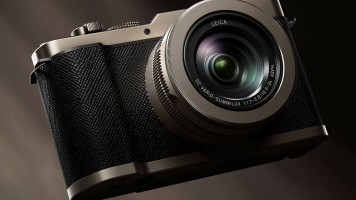
After the smartphone revolution, it appeared that the days of the compact camera were done. How wrong we were. It’s true that a few years back, point-and-shoot options were few and far between. There were just a handful of options on the market, and some industry titans even left the market entirely. Despite the long-rumored demise of the compact camera, it seems that photo enthusiasts still desire a dedicated device without the distractions that come with a smartphone.
What is a compact or “point-and-shoot” camera? Just because a camera is
by Mathew Malwitz · Posted
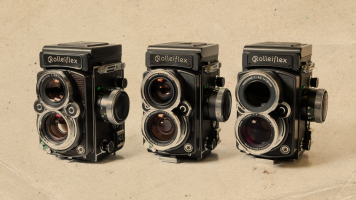
It's not every day that a piece of photography history passes through B&H. Sure, every camera and lens carries a little bit of the past with it, from a DSLR made in 2015 to an old rangefinder from the 50s. History lives in the images they've captured and the hands they've been passed through. That said, there are some cameras and lenses that stand out among the rest. Especially when they come bearing the serial numbers 0000001, 0000002, and 0000003.

by Mathew Malwitz · Posted
There’s an old adage that claims in order to be a wildlife photographer, you need a lot of time and a lot of money. This is only partly true. Many great wildlife photo opportunities can occur in urban parks and even in your own backyard, as long as we know what we’re doing. In this article, we’re going to cover a number of essential tips that will help you become a better wildlife photographer.
If you’ve read our introduction

by Todd Vorenkamp · Posted
Choosing a lens is a highly personal choice, and that’s especially true for wildlife photography. This is in the realm of the telephoto lens after all. While almost any focal length lens works for landscapes and other types of photography, in general, when it comes to photographing animals in the wild, you'll want to have the longest reach you can. In this guide, we’re going to discuss the factors one should consider when purchasing a lens for wildlife photography.
Focal Length
The first and most straightforward factor to consider is focal

by Mathew Malwitz · Posted
Typically confined to the northernmost latitudes of our planet, the northern lights—or "aurora borealis"—are a natural spectacle many dream of seeing. Recently, it may seem like auroras are occurring more often and are visibly farther south than ever before. Maybe you've already seen one or even photographed one with your phone.
While rare, exceptionally powerful auroras have been seen with the naked eye as far south as Alabama. These are uncommon, but in mid-latitude states, visible auroras are a bit more frequent. Last summer, I found myself

by Luke Rollins · Posted
While 2025 continued many of the photo industry's developments (emphasis on hybrid developments, splashes of niche camera releases, sequels to established camera series), it also formalized the compact digicam trend that had emerged on social media in recent years, with several companies releasing (or re-releasing) point-and-shoot cameras. As the floor for image quality continues to rise, and with yesteryear's flagship features trickling down to today's mid-market offerings, manufacturers are distinguishing themselves through body design,

by Mathew Malwitz · Posted
Fall is one of the most exciting times to be a photographer. Whether the changing foliage is the subject itself or the dramatic backdrop, there's something about the warm, cozy colors that get many photographers amped up. We at B&H are right there with you and are already preparing for the creative season ahead and making sure we have the right gear.
I have experienced four fall seasons as a photographer, and through trial and error have accumulated an assortment of tools to better my images. Some of my gear predates my time as a landscape

by Mathew Malwitz · Posted
There’s an old adage that gear doesn’t make the picture, it’s the photographer. This is partly true. A super-telephoto prime with a fast aperture will make quick work of busy backgrounds, and the faster focusing systems of high-end full-frame cameras will more easily track a bird’s eye in some of the most challenging lighting conditions. But there’s another factor to consider. At the heart of the image is a creative eye and technical proficiency. High-end camera gear only serves a purpose once you know what you’re doing.
In this guide, we’re

by Mathew Malwitz · Posted
Whether you’re interested in photography or a semi-experienced beginner looking to upgrade your gear, this is a guide to the essentials you need to build a complete camera kit for any budget. But what do we need in a basic kit? Of course, you can’t take photos without a camera and lens, but we’re looking to help you take your photography to the next level. To do this, we’ll need other staples like a tripod, flash, and select filters to enhance our image taking abilities.
The Basics
When building a kit, there’s more to consider than just the

by Todd Vorenkamp · Posted
If your dreams involve capturing stunning images of beautiful, wild animals in nature, there is no getting around it—you need the right gear. Although every camera can capture wildlife, not all cameras are created equally and some certainly have technological advantages that benefit wildlife photography. We have discussed buying considerations for the right lens in this article, and here we will take a deep dive into what to look for in a camera for dedicated wildlife photography.
What Makes a Camera Better for Wildlife?
For wildlife

by Rachel Leathe · Posted
What makes a camera good for landscape photography? In this article, we’ll dive into factors such as megapixel count, sensor size, usability, weather readiness, and design—helping you develop your own personal metric for finding the ideal camera. We’ll help you wade through all the technical mumbo jumbo to figure out what specs really matter, whether you want to capture stunning mountain ranges or shoot star-strewn night skies.
Megapixels
It doesn't get much more basic than megapixels. They're like the atoms of photography. But just how many

by Steven Esposito · Posted
If you work with libraries of large image files, or in audio or video production, you need to be selective about your external hard drive. Reading and writing files directly to or from an external drive can incur some hefty performance demands, so it's best to determine your needs before you buy a drive. With the ever-increasing data-transfer demands brought on by more megapixels, complex audio layering, and higher-resolution video, keeping up with all of that data can be a burden.
The first thing to determine must be how much overall storage

by Stepan Andranikian · Posted
Fashion photography undertakes the deceptively difficult task of capturing the nature and spirit of a garment while conveying the designer's underlying vision. Doing so successfully already requires immense skill and artistry, so it helps to have the right camera for the job. We’ll be looking at a few cameras suitable for fashion photography, as well as some camera fundamentals to help inform your future purchase. Let’s begin with essential features.
Camera Sensor
Your camera’s sensor should be your first consideration, because it is

by Rachel Leathe · Posted
As the line between professional photography and videography continues to blur, one company has chosen to cater to this emerging class of hybrid shooters.
Sony released its first full-frame, interchangeable-lens cameras, the Alpha a7 and a7R, in 2013. With the release of these twin cameras, the company unknowingly embarked on what would end up being a five-year monopoly of the mirrorless camera market. Although not the very first mirrorless cameras of their kind, the a7 and a7R were immediately disruptive due to their revolutionary