Search results for: photography buying guide what to know when buying a camera
About 132 filtered results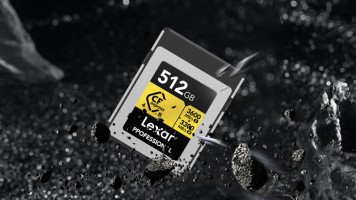
by Mathew Malwitz · Posted
Recording work and data in the form of thousands of pictures or hours of video is made possible by compact memory cards. These devices are the standard for photo and movie storage, saving and protecting your files until you can transfer them safely to a more permanent home on your computer or external hard drive. They are available in an array of different types, with a broad range of capacities and data-transfer

by Mathew Malwitz · Posted
When it comes to choosing the best camera for sports and action photography, there are three factors to focus on. Speed, autofocus performance, and reliability are all essential to tracking, freezing, and nailing the shot time and time again. Speed and performance have become increasingly affordable with mid-tier cameras and even some entry-level ones can keep up with sporting events. In this guide, we’ve narrowed things down to the very best cameras in each class, from the pro-level flagships to everyday cameras that are right at home on your

by Steven Esposito · Posted
One of the best pieces of advice I like giving photographers is that they should print their photos. For many, this will mean going to a lab or print shop, in which case you should learn about profiling and calibration. The rest of you are likely more interested in getting your hands dirty and printing on your own at home. This guarantees you have full control over the entire production process, from capture to output. To do this, you will need a
by Mathew Malwitz · Posted
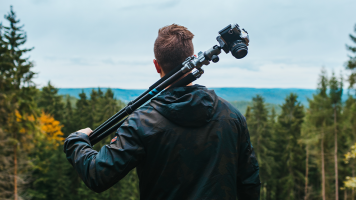
As complementary as peanut butter is to jelly, the camera and tripod are an age-old pairing that still manages to maintain relevance and unmatched functionality in a world dominated by image stabilization and Photoshop tricks. While the form and function of a tripod is far simpler to understand than the scrolling menus of today’s feature-packed cameras, it can still be a chore to choose the right setup for your needs from among a sea of manufacturers and seemingly comparable models.
Now, what’s the big deal with tripods? Most photographers

by Todd Vorenkamp · Posted
There is nothing that can replace the extreme close-up view of a rare bird in the wild. Binoculars can get you close but, if you want to look the bird in the eye or confirm that identification for your life list, you need a spotting scope. Spotting scopes pack incredible magnification in a generally simple and lightweight package that is
by Mathew Malwitz · Posted
We’ve all tried to photograph something up close. This small-scale world fascinates us all, whether it be a stunning flower or a bumble bee crawling about, but our cameras can’t seem to focus as close as we want. So, what is a struggling photographer to do?
There are several ways to do close-up, or "macro" photography, but the

by Rebecca Melville · Posted
An on-camera flash is an indispensable accessory for many photographers. While it provides light to supplement dark conditions, an on-camera flash also allows you to achieve more balanced exposures in daylight conditions, permits freezing of fast-moving subjects, and can even be used to control other flash light sources. With so much to offer, an on-camera flash can become an integral part of your workflow, but where do you start? We are going to give you the on-camera flash rundown with everything you need to know to make the most of this

by Mathew Malwitz · Posted
It is probably safe to say that many of us photographers have, either with our cameras or smartphones, tried to capture a close-up image of an insect, flower, toy, or other object. We have an idea of what we want this photograph to look like as we prepare to capture the image. We've seen and admired beautiful close-up images before but, when we nose the camera lens up to the object, we see nothing but a blur—the lens can't focus close enough to

by Shawn C. Steiner · Posted
After you pick up your first speedlight, strobe, or LED panel, the best investment you can make is in some modifiers. These are tools that shape and alter the intensity of our light source. Modifiers come in all shapes and sizes based on the type of light you plan to use them on, which can make it difficult to pick one out if you are new to photography. Since each modifier comes with its own distinct look and ideal use, here is a

by Zack Young · Posted
Video is getting bigger and better every year, and I’m sure nearly everyone knows at least one aspiring filmmaker. I love filmmaking and photography, but the main problem I have with it is the amount of equipment one needs to get the job done. This can mean big, important pieces such as a camera or lights as well as tiny, essential accessories that make life a whole lot easier. If you are looking for something to gift your filmmaking friend or for some key components to upgrade your kit, check out the following.
1. Compact Lights
If there is

by Mathew Malwitz · Posted
Getting great pictures of your newborn or infant is certainly no easy task. Indeed, the window of opportunity for coaxing a perfect expression and a picturesque pose from your little bundle of joy is fleeting, at best. For parents (and others) who aspire to capture such moments, user-friendly gear, highly functional accessories, and photogenic props can make all the difference. With this in mind, here are our best recommendations to help make photo sessions with your unpredictable little darlings a success.
Pick the Right Camera for the Job

by Mathew Malwitz · Posted
While much of what makes a great family portrait photographer comes with practice, there are ways you can improve your workflow with the right gear. Today, we’re going to look at accessories that will make your life as an at-home or even aspiring professional portrait photographer easier.Family portraits can be one of the most challenging yet rewarding genres of photography. On top of technical expertise and a familiarity with your gear, it also requires personability and the ability to (sometimes) wrangle up large groups. Even after you get a

by Mathew Malwitz · Posted
Wedding and portrait photographers looking for a lightweight, compact system with exceptional performance need look no further than the FUJIFILM X cameras and lenses. While the size and weight advantage of mirrorless cameras spans from Micro Four Thirds to full frame, the APS-C sensors in the FUJIFILM X system allow the cameras and lenses to be relatively small and light. Full-frame mirrorless is attractive to many, but the portability advantage of APS-C sized lenses is not to be understated.
For those looking to one-up the full-frame shooters

by Mathew Malwitz · Posted
Food photography is an undeniably popular artistic medium, involving all kinds of people and gear to make those mouthwatering shots possible. If you’re an aspiring food photographer or someone looking to take their existing work to the next level, we’ve put together a special, themed gift guide that’s perfect for any skill level.
1. A 50mm Lens
Whether you are far into your photography career or just starting out, whenever you complete a dish in your kitchen or have a plate placed in front of you at a restaurant, there’s no better starting

by Bjorn Petersen · Posted
As a student, much of your life is about making choices and sacrifices. “Should I skip this class and sleep in?” or “Should I go to class even though I’m too tired to pay attention?” There are a lot of hard decisions to make as a student, especially if you’re a burgeoning photographer looking to attain professional status.
But, as a student, means are often limited and you need to be more conscious about what gear to add to your kit. What gear is critical and worth the investment versus what are some of the things you can ignore for now and