Search results for: photography composition leading lines
About 26 filtered results
by Mathew Malwitz · Posted
Do you plan your images? Really think about that question. Do you have an idea of an image before you head out for a shoot, or do you let the moment inspire you as the pieces fall into place? There's no wrong answer here. Planning or "pre-visualization" is a key piece of the photography puzzle that some put a lot of thought and effort into while others effortlessly come up with ideas on the fly.
No matter how you go about taking a picture, there is some level of planning that goes into a shot. With that said, there's a big difference between

Posted
Now that you understand your camera from Part 1, the next step is understanding what makes a good photograph. Derek goes over some of the core elements of photo theory, composition, perfective, and storytelling.
0:00 - Intro
5:05 - Review of what makes an effective photograph
5:47 - Composition
12:54 - Rule of thirds
18:37 - Golden/Fibonacci spiral
23:47 - Leading lines
32:59 - Negative space
38:29 - Asymmetry
41:52 - Frame within a frame
43:10 - Patterns/Repetition
44:34 - Perspective
55:01 - Storytelling - Photo breakdown
1:15:29 - Photo

by Mathew Malwitz · Posted
If there’s one area of wildlife photography that challenges even some of the most consummate artists, it’s birds in flight. A dynamic flight shot shows action, and a bit of technical prowess. As you can imagine, capturing birds in flight is no easy feat.
To consistently capture these shots, one must be proficient with their gear and have a knowledge of animal behavior. We’d go as far as to say you need a bit of luck too, but what is luck if not preparedness meeting opportunity. In order to make the most of the opportunities that present

by Mathew Malwitz · Posted
Family portraits are a great way to capture a moment in your family’s history. You may find yourself wanting to capture family photos every few years or so, more often when the little ones are, well, little. Maybe you’re looking for a way to take matters into your own hands, or maybe you’ve been taking your own family photos for years and have found yourself being asked to take photos of friends, family members, or even paying clients.
Family portraits can be a lot of fun to shoot. Maybe you’ve been taking photos of your kids and want to

by Mathew Malwitz · Posted
Typically confined to the northernmost latitudes of our planet, the northern lights—or "aurora borealis"—are a natural spectacle many dream of seeing. Recently, it may seem like auroras are occurring more often and are visibly farther south than ever before. Maybe you've already seen one or even photographed one with your phone.
While rare, exceptionally powerful auroras have been seen with the naked eye as far south as Alabama. These are uncommon, but in mid-latitude states, visible auroras are a bit more frequent. Last summer, I found myself

by Mathew Malwitz · Posted
Anyone who has dabbled in pet photography knows that it can be a rewarding yet challenging experience. While pets are considered to be part of the family, they’re still animals who walk to the beat of their own drum and do things at their own pace. Even the best listeners can be easily distracted or have trouble sitting still for more than two seconds. If you’re considering trying your hand at photographing our fuzzy friends, we’ve put together this helpful guide for you. In this guide, we’re going to cover the essentials for those with a

Posted
Back in late 2022, Ricoh Imaging/Pentax had announced that it was working on a “new project involving the research and development of new Pentax-brand film camera products.” Today, we finally get to see the fruits of that labor: the Pentax 17. This is a brand-new 35mm half-frame film camera built using a wealth of inspiration from Pentax’s rich history of film camera development. It’s perfectly simple, elegant, and functional, just as a film camera

by Rachel Leathe · Posted
Did you know that the first photograph ever taken was of a landscape?
“View from the Window at Le Gras” was captured by Nicéphore Niépce, in 1827. It features a very abstract view from Niépce’s window. Then, in 1839, Louis-Jacques-Mandé Daguerre made history with his image of

Posted
In Part 3 of this four-part Introduction to Photography series, Sony Artisan of Imagery Tony Gale breaks down the principles of composition.
0:00 - Introduction
3:12 - Composition: Why and How to Frame a Photo
7:24 - What Are You Trying to Say in Your Photos?
9:06 - What's in the Frame?
15:41 - Composing In-Camera
19:24 - Balance, Symmetry, Reflection, and Repetition
20:21 - Edges of the Frame/The Form of Elements in the Frame
27:35 - Lens Choice
31:24 - Finding the Angle
27:26 - Rule of Thirds, Leading Lines, and Framing
41:15 - Camera Tools
by Caleb Quanbeck · Posted
Getting close enough to wild animals is one of the greatest challenges a wildlife photographer faces. So how do you solve this problem? The way most wildlife photographers do is to buy a telephoto lens with as much reach as their wallet allows. Today, a fairly economical way to enter the realm of the super-telephoto lens has been via the family of very nice 150-600mm lenses from brands like Sigma and

by Cory Rice · Posted
Like vinyl records and your father’s wardrobe, instant cameras are back and as popular as ever. Alongside refurbished and reimagined analog cameras, many new hybrid models combine the benefits of digital capture with the immediacy of instant film. Polaroid and FUJIFILM continue to produce “true” instant film stock—the kind you expose and then wait to see develop. They share the market with a new thermal printing technology, ZINK, short for “Zero Ink,” a borderless printing process that has risen in popularity, particularly with hybrid cameras

by Todd Vorenkamp · Posted
Raise your hand if you, like me, have arrived at a scenic vista and, standing next to the brown sign with a camera on it, have stood exactly where we were supposed to, raised our cameras to eye height, looked though the viewfinder, and taken the perfect postcard shot. While there is nothing wrong with that approach to landscape photography, there are a few techniques that you can employ to give your photographs a bit more visual appeal and, more importantly, make them stand apart from the image(s) you might have remembered when I asked you to

Posted
One of the key elements to creating impactful images is knowing the principles of photography composition. Sony Artisan of Imagery Tony Gale returns for Part 3 of our Basics of Photography series to discuss how composition plays into the overall appeal of a photo. From portraits to still life to landscape, we will talk about some common techniques for placement within the frame, such as the rule of thirds and leading lines.
by Jill Waterman · Posted
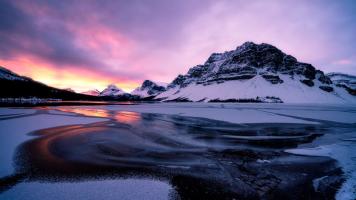
Intrepid adventurer Rachel Jones Ross is most in her element amid heaps of puffy snow, blooming frost flowers, skies full of stars, and methane bubbles in ice. After embarking on a psychology career, Ross fell under the spell of capturing the cosmos in awe-inspiring nocturnal landscapes that coax a delicate inner light from the cold, dark Canadian winter. She now leads photography workshops that help attendees to hone their technical skills and empower their creativity.
We caught up with Ross

by Todd Vorenkamp · Posted
For many photographers, the lure of a machine is an addictive draw to the camera and lens. Airplanes, cars, trucks, tractors, wristwatches, cameras, super colliders, and factory machinery are the subject of many photographs around the world. And, for a small group of passionate photographers, the appeal of photographing railroads is forever intoxicating. Locomotives, commuter trains, subways, and railway landscapes come together to create visual poetry that blends nature and man-made landscapes, as well as the human love for complex machinery.