Search results for: photography tips solutions how set up your first photo studio
About 34 filtered results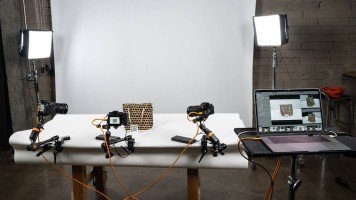
by Luke Rollins · Posted
At its most basic, tethered shooting involves connecting your camera, wired or wirelessly, to your computer as you shoot. You’ve likely seen it in some behind-the-scenes video for a professional studio shoot, or you just have a friend who swears it’s the best thing since sliced bread. Tethering is a shooting technique that can benefit many a photographer’s workflow significantly, though upon first hearing of it, the idea of tethering can be something that first requires a bit of education. Hopefully, this introduction will help get you started
by Luke Rollins · Posted
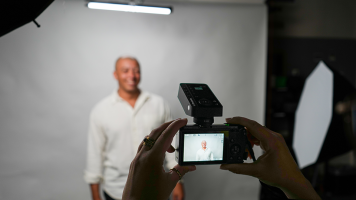
At first glance, studio photography and the compact camera may seem strange bedfellows. The type of work associated with the studio—still life, product photography, portraiture, macro photography—usually wants cameras with larger sensors and interchangeable lenses, especially in professional applications. Compact, point-and-shoot cameras, for their part, have their natural home in everyday, travel, nightlife, and street applications, where their discretion and size become virtues.
It might seem almost cruel to introduce the compact to the

by Jennifer Hahn · Posted
Point-and-shoot cameras are a great value-add to your photography kit, social media sharing, or as a vacation companion for quick stills and capturing memories on the fly. And these days, the value is even greater with point-and-shoot video recording. The point-and-shoot design makes things simple to change to video mode and press record. Though after you’ve captured your video, it can become cumbersome to edit and share that footage.
Some cameras allow you to edit/trim your video footage (also called “Movies” in some cameras) in camera, which

by Mathew Malwitz · Posted
You don’t have to go far to capture fun and engaging images of wildlife. In fact, you may not have to go anywhere at all. A carefully landscaped yard and the right tools can attract an impressive variety of animal life to observe and photograph. Pair that with a little patience and soon you’ll be capturing stunning images from the comfort of your own home.
Attracting Birds
Birds are part of nearly every environment, from the densest cities to rural areas. While they are common, we’ll need to offer three essentials—water, shelter, and food—to
by Mathew Malwitz · Posted
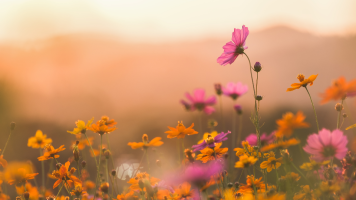
If there’s one question fledgling photographers often ask, it’s “How did you get such a nice background?” Backgrounds are an essential element of a photograph that are often neglected. In fact, it’s safe to say that a background is as important to a composition as the subject itself. After all, a distracting one will detract from an image.
In this guide, we’re going to cover the many methods used to capture clean, smooth backgrounds in our images. This will encompass the settings and gear involved as well as the in-the-field techniques you can

by Mathew Malwitz · Posted
First, a disclaimer: Like composition, lighting portraits is a subjective exercise. A setup that works for one situation may not work for the next, and lighting that one photographer adores might repulse another. Cultivating a personal lighting style involves an awareness of conventional approaches and willingness to go beyond what everyone else is doing. Study portraits

by Mathew Malwitz · Posted
Lighting is the key to all photography. While elaborate, multi-light setups may appear to be the standard, the creative photographer can produce a seemingly endless range of images using just one light source. This guide is designed to help those beginners out there build the perfect one-light kit for portrait photography.
Why One Light?
I completely understand why multi-light “studio in a box” kits are tempting to beginner and budget-conscience photographers. Why spend hundreds of dollars on one light when you can get three lights complete

by Zach Young · Posted
The aesthetics of street photography has evolved greatly over the years. On one side of the spectrum, you have the more “natural” look championed by icons like Henri Cartier-Bresson, William Klein, and Vivian Maier: no added light, no post-processing, no cropping, etc. Elsewhere, you have the innovators, the iconoclasts—artists like Bruce Gilden and Dina Litovsky—who regularly eschew the natural aesthetic by utilizing a

by Zack Young · Posted
Any photographer worth their salt should be familiar with portrait photography, but they’re likely less familiar with high-volume photography, an offshoot of traditional portraiture that focuses on providing large quantities of professional-level headshots. The most common clients for this type of work include schools, sports teams, large corporations, government-run entities, and basically any other organization that needs a sizeable amount of quality headshots in a short amount of time. Because of the economies of scale, high-volume

by Todd Vorenkamp · Posted
A few years ago, I published the groundbreaking article 8 Mistakes I Have Made in Photography and How You Can Avoid Them—a mea culpa that exposed me to endless ridicule around the halls of B&H. Well, I am back with another confessional—this time focusing on mistakes I have made in the dark while engaged in night photography. Although I made some of those

by Lindsay Finnegan · Posted
Are you new to food photography or looking to advance your lighting techniques? This article takes you through how to use existing light to your benefit as well as how to create it yourself. Both approaches will yield similar results, but each has its own unique advantages. It’s up to you which path to take.
Natural: Work with Window Light
The simplest way to photograph food is to shape light that already exists


by Todd Vorenkamp · Posted
Texture is one of those multi-sensory things that we can feel with our sense of touch and “feel” visually with our eyes. Because texture transcends the senses, we must account for it when we create photographs. Sometimes the goal is to accentuate a specific texture. Sometimes we wish to “smooth” the texture visually. How you light your subject has a lot to do with how you reveal, or hide, texture.
Photographs ©Todd Vorenkamp

by Jill Waterman · Posted
Jean Fruth is a diehard baseball fan. “Growing up in New York, with two great hometown teams, how could you not connect with the sport?” she asks. As a teen, she worked in a restaurant owned by serious Mets fans who had season tickets, “And they would take me to games,” she reminisces. “And my grandfather was a Mets fan, listening to games on the radio.”
Such formative influences foreshadow her ultimate path to becoming one of baseball’s preeminent photographers, yet it took many years of exploration for Fruth to put a plan into action. “My

by Todd Vorenkamp · Posted
Macro and close-up photographers often employ the technique of “focus stacking” to increase the depth of field in their images. While this is often done in a controlled studio environment with a sturdy tripod or support and sometimes the benefit of macro focusing rails, it is possible to use this technique out in the field armed only with a minimal amount of gear. Handheld focus stacking is challenging, fun, and can produce some great results.

by Todd Vorenkamp · Posted
The art of photographing the wristwatch is known as one of the most challenging aspects of still life photography. Between the relatively small size of the timepiece, reflective sapphire and acrylic crystals, shiny elements on the watch face, matte leather or nylon straps, etc., there are a multitude of surfaces with different properties and reactions to light and the camera.
Photographs ©Todd Vorenkamp
If you are a lover of the wristwatch or a horologist, you