Search results for: photography video lighting three point lighting
About 160 filtered results
by Mathew Malwitz · Posted
This holiday season, we’re looking at fun and affordable lenses for mirrorless systems. There will be both unique lenses and some overlap thanks to the vast number of third-party lenses hitting the market for all major brands. In this guide, we’re covering lenses for the L-Mount. From ultra-wide-angle lenses suited for landscapes and architectural images to super telephoto ones for sports and wildlife, we’ll be covering a variety of focal lengths are variety of uses. Of course, the L-Mount is shared across brands like Leica, Sigma, and Lumix,

by Mathew Malwitz · Posted
This holiday season, we’re looking at fun and affordable lenses for your mirrorless systems. There will be both unique lenses and some overlap thanks to the vast number of third-party lenses hitting the market for all major brands. In this guide, we’re covering lenses for the Canon RF Mount. From ultra-wide-angle lenses suited for landscapes and architectural images to super telephoto ones for sports and wildlife, we’ll be covering a variety of

by Mathew Malwitz · Posted
There’s an old adage that gear doesn’t make the picture, it’s the photographer. This is partly true. A super-telephoto prime with a fast aperture will make quick work of busy backgrounds, and the faster focusing systems of high-end full-frame cameras will more easily track a bird’s eye in some of the most challenging lighting conditions. But there’s another factor to consider. At the heart of the image is a creative eye and technical proficiency. High-end camera gear only serves a purpose once you know what you’re doing.
In this guide, we’re

by Mathew Malwitz · Posted
If renowned landscape photographer Ansel Adams were alive today, he would surely be astounded at the variety of cameras available. When compared to his hulking 8x10 view camera, today’s cameras look like child’s play. He would also be flabbergasted at the image quality these little devices produce.
This year, we have a bottomless well of cameras
by Luke Rollins · Posted
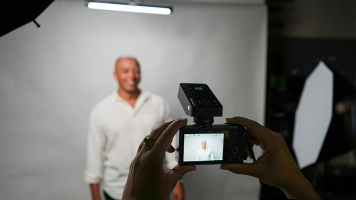
At first glance, studio photography and the compact camera may seem strange bedfellows. The type of work associated with the studio—still life, product photography, portraiture, macro photography—usually wants cameras with larger sensors and interchangeable lenses, especially in professional applications. Compact, point-and-shoot cameras, for their part, have their natural home in everyday, travel, nightlife, and street applications, where their discretion and size become virtues.
It might seem almost cruel to introduce the compact to the

by Jennifer Hahn · Posted
Point-and-shoot cameras are a great value-add to your photography kit, social media sharing, or as a vacation companion for quick stills and capturing memories on the fly. And these days, the value is even greater with point-and-shoot video recording. The point-and-shoot design makes things simple to change to video mode and press record. Though after you’ve captured your video, it can become cumbersome to edit and share that footage.
Some cameras allow you to edit/trim your video footage (also called “Movies” in some cameras) in camera, which

by Mathew Malwitz · Posted
Have you ever taken a photo that looked so good on the back of your camera, only to get home and see that it’s just not sharp? We’ve all been there, and even the experts miss more shots than they keep. That said, there are many tricks and techniques we can learn to improve the odds. In today’s guide, we’re looking at five techniques to aid us in confidently capturing tack-sharp photographs.
Sharpness is critical in most genres of photography, especially nature and wildlife. Sure, we can intentionally blur elements to showcase motion. We

by Luke Rollins · Posted
Achieving a standard of production value is an essential component of establishing a brand and growing a following. For part-time, burgeoning, and mid-level creators, it can feel like bridging that gap is less a matter of learned skill and more about the equipment you can afford.
In most cases, the problem isn’t budget at all. Acquiring the specific know-how can give your content professional sheen with little to no financial outlay.
Lighting design is arguably the most immediately visible production component—and the one most capable of
by Mathew Malwitz · Posted
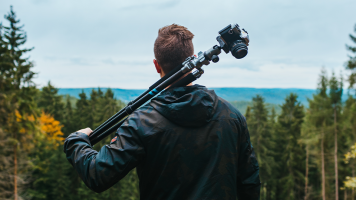
As complementary as peanut butter is to jelly, the camera and tripod are an age-old pairing that still manages to maintain relevance and unmatched functionality in a world dominated by image stabilization and Photoshop tricks. While the form and function of a tripod is far simpler to understand than the scrolling menus of today’s feature-packed cameras, it can still be a chore to choose the right setup for your needs from among a sea of manufacturers and seemingly comparable models.
Now, what’s the big deal with tripods? Most photographers

by Luke Rollins · Posted
Compact, point-and-shoot cameras have become an increasingly popular way for people to explore the possibilities of photography beyond the smartphone. Brands like Camp Snap, Kodak, Yashica, and Kreate offer buyers affordable options for turning unforgettable moments into lasting memories across skill levels, feature sets, and applications.
Camp Snap
A world dominated by screens is a world where screenless-ness is a feature. Inspired by summers frolicking in the outdoors before the ubiquity of electronic devices, Camp Snap cameras are designed

by Luke Rollins · Posted
Gear is never just gear. For professionals, gear represents livelihood, financial stability, and potential growth. Hobbyists see their artistic ambitions, the labor-hours invested in the gear’s acquisition, the satisfaction of knowledge gained, and what remains left to learn. Even novices can see in their gear their new path of embarkation and the road ahead to mastery.
Despite how laden with meaning these objects can be, they will nonetheless spend most of their lives in storage, waiting to be plucked for duty—and often with little thought

by Mathew Malwitz · Posted
Content creation can be as simple as we make it, but if you truly want to make your content stand out, you’ll need the right tools to do it. Visually pleasing lighting and quality audio can go a long way to legitimizing your work and giving it a pro level feel. In this guide, we’ve put together a few kits ranging from budget friendly to higher end and everything in between.
Best Budget Kit
It’s said that the best camera is the one you have available. Odds are, you likely have a smartphone, so that’s our budget camera. Most modern smartphones
by Mathew Malwitz · Posted
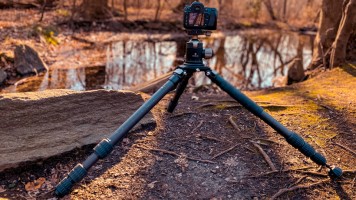
Love them or hate them, tripods are an essential piece of the photography puzzle. They allow us to capture images that would otherwise be impossible to create, whether it be due to low light or long exposures where keeping our camera motionless is essential. Even in bright daylight, tripods aid us in producing sharper images, all while freeing our hands to do other tasks.
Choosing a tripod is a highly personal choice, and there are many considerations we should take

by Steven Gladstone · Posted
When creating images for a film, you try to balance your shots so that you draw the audience into the movie, while at the same time they forget that they are watching a movie. Usually, the last thing you want is to break the illusion and have the audience snap out of their reverie.
As you read this article, you may want to pause and rewatch some classic films, or films that had a powerful effect on you. Examining the new and different techniques, lighting, and compositions used to create impact, mood, and feeling will help you grow as a

by Luke Rollins · Posted
After a 2025 spent celebrating its 100th birthday, Leica returns to market with its first new camera of 2026, the SL3-P Mirrorless Camera. Accompanied in its release by two new lenses, the APO-Macro-Elmarit-SL 100mm f/2.8 and the