Search results for: video tips solutions best aperture settings for video
About 27 filtered results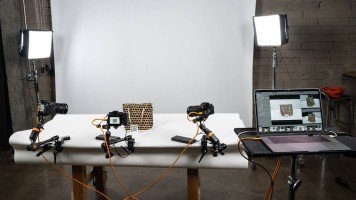
by Luke Rollins · Posted
At its most basic, tethered shooting involves connecting your camera, wired or wirelessly, to your computer as you shoot. You’ve likely seen it in some behind-the-scenes video for a professional studio shoot, or you just have a friend who swears it’s the best thing since sliced bread. Tethering is a shooting technique that can benefit many a photographer’s workflow significantly, though upon first hearing of it, the idea of tethering can be something that first requires a bit of education. Hopefully, this introduction will help get you started
by Mathew Malwitz · Posted
We’ve all tried to photograph something up close. This small-scale world fascinates us all, whether it be a stunning flower or a bumble bee crawling about, but our cameras can’t seem to focus as close as we want. So, what is a struggling photographer to do?
There are several ways to do close-up, or "macro" photography, but the

by Mathew Malwitz · Posted
The most engaging portraits seem to have direct eye contact between subject and viewer, as if the camera were simply a window through which we’re looking. But is it that simple? So much goes into making a good portrait, can success simply come down to eye contact between subject and camera and is it even necessary to concentrate on the eyes for a portrait? There are certainly wonderful portraits that do not focus exclusively on the eyes that illustrate character with other aspects of the body, from posture to hands, but as an introduction to

by Cory Rice · Posted
Using fast prime lenses to create razor-sharp portraits where the focus melts away like butter can be an addictive (and costly) pastime. The jump from an 85mm f/1.8 to an 85mm f/1.4 may seem minor on paper, but anyone who has used both lenses knows that the difference extends well beyond a few decimal points. This article is an homage to the top-tier primes designed for the most demanding portrait photographers. Hide your wallet before proceeding.
Photographs ©

by Jess Santos · Posted
Thinking back to my first time photographing the stars, let’s be real: I had no idea what I was doing. I spent the afternoon watching video after video, and after several hours felt confident enough to attempt it. Now keep in mind I had done the research on settings, but completely skipped over the planning phase. I didn’t run into one video that talked about things like the moon phase or dark skies, some pretty important information to know when getting into astrophotography. Nonetheless, a couple friends and I headed out at eleven o’

by Stan Moniz · Posted
It's no secret that photographing the night sky and everything astrophotography related has been a big part of my life for many years now. Staring up at the sky on a dark night is so inspiring. It's a time where I can relax, but at the same time find that creative spark that keeps me moving forward in my career as an action/adventure photographer. It just never gets old.
Every year, I set a new goal. Moving forward and keeping things new and always learning has been my basic philosophy during this walk in the creative arts and recently, I’ve

by Todd Vorenkamp · Posted
Specular out-of-focus highlights have appeared in photographs since the first photos were taken through lenses. In 1997, Photo Techniques magazine introduced the word “bokeh” to the photography world’s vernacular and the out-of-focus areas of photographs have been scrutinized ever since. Before the term, there was certainly discussion about the aesthetics of the out-of-focus specular highlights of a photograph, but until 1997, there wasn’t a good word in the English language to describe the phenomenon. Credit goes to Mike Johnston, article

by Shawn C. Steiner · Posted
Time lapses feel a lot like photography during capture stages and a lot like video during the editing process. Creating them is a common progression for photographers looking to dip their toes into video and motion because you can start making high-quality time lapses with your current still photo equipment. If you are starting to tackle time-lapse projects, applying some video tricks can help smooth out your final product.
The Absolute Basics
I’m hoping that by the time you make it to this article you already have a basic understanding of how

by Bjorn Petersen · Posted
There is no doubt that digital photography is here to stay, and film has certainly seen better days, in terms of availability and affordability. However, what if you’re a digital photographer who simply wants to shoot a roll of film every once in a while, for fun? Film photography has a distinct look that, even with the latest and greatest 50MP cameras, cannot be duplicated by digital imaging. It’s subjective to say whether one look is better or worse, but there is no denying that there is a unique quality to film. Back in the halcyon days of

by Stan Moniz · Posted
Being a photographer and a filmmaker, I've gravitated heavily toward the art form of time-lapse photography. It's the perfect blend of photography and videography, the best of both worlds. Because I mix this art form up with my undying love for capturing the night sky, I’m incredibly passionate about this process and sharing it with others.
Time-lapse photography is capturing consecutive photographs over a long period of time and then playing them back quickly in a series so that slow action appears to happen faster. Examples include clouds

by Shawn C. Steiner · Posted
Whether you want a professional look for your livestreams or simply to look better during your next video chat, one of the best options is to use a dedicated camera with excellent video specs—such as your Olympus Micro Four Thirds mirrorless camera. Now that Olympus has launched the OM-D Webcam Beta you can get these advantages without much effort. A few key accessories can

by Allan Weitz · Posted
FAQ is a new ongoing series of B&H Explora posts regarding frequently asked photography-related questions. Topics we plan on covering include cameras, lenses, flash, accessories, and photo technologies. Many of the questions we’d like to answer will be based on feedback from our in-house experts at the B&H Chat lines and online sales. We’ll also choose topics based on listener feedback, so if there’s a topic you’d like us to address, let us know about it in the Comments field that follows this post.
Our first FAQ topic is image

by John Harris · Posted
Zoom, Hangouts, BlueJeans, Slack, and Teams. These are words that have taken on a whole new significance over the past few weeks. With so many of us now relying on livestreaming, video chat, and video conferences, the quality of connection and the quality of your image is increasingly important. It may be time to upgrade from the camera in your computer or the basic webcam that has been dangling off the side of your monitor for all these years. Joking aside, appearing clear, in focus, and well-lit is crucial when impressions are being made,

by Shawn C. Steiner · Posted
If you are here I’m guessing you’ve done a time lapse or two, maybe read our introductory article or Stan Moniz’s night-specific piece, and want to see how you can make your time lapses even better. I’ll admit it, time lapses are tough. There is a ton of information you need to know about photo and video to make

by Todd Vorenkamp · Posted
Photography from the window seat of an airliner is becoming a controversial topic. Before we talk about how to get awesome photos, let’s have a chat… First of all, no one seems to look out the windows of airliners today, and many passengers give the evil eye to those who do not close their window shades. Fact: Future airliners may be made without windows at all. This saves manufacturing costs, and builders have realized that no one seems look outside anymore because they are staring at glowing screens or sleeping. Another fact: The Washington