Search results for: digital vs physical light
About 21 filtered results
by Mathew Malwitz · Posted
Smartphones have forever changed the world of photography, making the art form more accessible and connecting people from across the world through the instantaneous sharing of images. For all their benefits, there are plenty of criticisms to be had, especially on the creative front. Smartphone cameras are, for some, everything one could want from a camera. For others, they lack the control and creative freedom that makes photography so interesting.
Who can blame one for having hard feelings against smartphones. After all, they nearly wiped

by Steven Gladstone · Posted
When creating images for a film, you try to balance your shots so that you draw the audience into the movie, while at the same time they forget that they are watching a movie. Usually, the last thing you want is to break the illusion and have the audience snap out of their reverie.
As you read this article, you may want to pause and rewatch some classic films, or films that had a powerful effect on you. Examining the new and different techniques, lighting, and compositions used to create impact, mood, and feeling will help you grow as a
by Freddy Gerngross · Posted
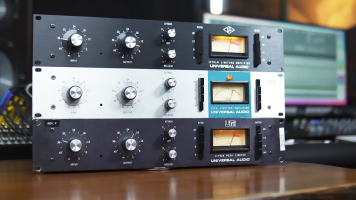
Among the many tools audio engineers use to sculpt and shape raw audio into a final work, most would say that compressors are in the top two most ubiquitous and useful. In concept, compressors are simple tools: they make the loud parts of sound quieter and the quiet parts louder, reducing dynamic range so that everything can be heard more clearly. They were first developed out of necessity, designed to solve critical technical problems in the early days of AM radio broadcasts—loud signals would distort, and quiet signals would be lost behind

by Mary Latvis · Posted
XR (Extended Reality) and VP (Virtual Production) are two terms you’ll hear used to describe professional video capture on special stages equipped with LED volume wall backgrounds. In consultation with the experts in The Studio B&H, here we review the components needed to set up an XR stage and break down some of the specifics of this VP capture technique.
Extended Reality vs. Virtual Production
XR and VP stages both use

by John Harris · Posted
It would be foolish to claim that there is only one way to take a portrait, but there are some accepted norms and basic camera settings that you should understand if portraiture is to become your area of photographic interest. Remember though, as you walk down your creative path, that a portrait is more than a headshot, more than a beautiful photo of your subject; it is an opportunity to get to know someone, to have a visual conversation with a person, and to use your photographic skills to pass that understanding of the person on to the

by Mary Latvis · Posted
Optimal imaging for virtual production (VP) requires certain camera functions that are not integral to all video cameras. A global shutter (or fast readout speeds), genlock capability, and timecode input are key factors to look for when selecting a camera for your VP video capture. Let’s review these specifications and highlight several cameras that incorporate these key specs.
Global Shutter Sensor
Most video cameras are designed with a “rolling” shutter that successively scans each row of photosites (the physical embodiments of pixels) on

by Todd Vorenkamp · Posted
Many interchangeable-lens cameras, be it DSLR or mirrorless, are sold today with what we call "kit" lenses. Current kit lenses, in general, thanks to computer technology and advanced manufacturing techniques, are more capable and of higher quality than those of yesteryear. However, many of us who use interchangeable-lens cameras feel the gravitational pull of other lenses that are not yet in our bags.
Adding lenses to your quiver is all about choices and selection and, in photography, we often find ourselves at a sort of "gear crossroads." The

by Mathew Malwitz · Posted
As you begin to experiment with exposure, you’re likely to find many creative tricks. For example, one of the most visually stunning compositions you can capture is one where moving water is blurred while the rest of the scene remains tack sharp. You know the look. It’s a much sought-after effect that is quite easy to capture, once you know how. In order to achieve this look, your exposure must go on for a

by Mathew Malwitz · Posted
As you begin to research cameras, you’ll likely hear some technical jargon about sensors. While it’s easy to ignore some elements of any devices, there’s no way to work around sensors. But what is a sensor and what does it do? In this guide, we’re diving into the often confusing world of imaging sensors. By time we’re done, you’ll have a better understanding of the most significant component in our digital camera.
About Sensors
What Is an Imaging Sensor?
At the heart of our digital cameras sits an imaging sensor, which serves as the digital

by Steven Esposito · Posted
Apple's product lineup has evolved quite a bit, with more options available today than at any point in the company's history. This overabundance of choice means finding the right device can be intimidating for the first-time buyer or aspiring professional. This guide is meant for anyone hoping to incorporate a Mac into their creative workflow and should help you break down and more easily identify which device might be right for you.
There are currently six categories that comprise the Mac universe: MacBook Air, MacBook Pro, Mac mini, iMac,

by Allan Weitz · Posted
For the longest time, comparing image quality between point-and-shoot cameras and full-frame cameras, or even APS-C format cameras, was a conversation you could have start to finish during the course of an elevator ride. Point-and-shoot cameras were convenient, but the detail and dynamic range of their smaller sensors never measured up to the detail and dynamic range you get from larger sensors. And then one day Sony introduced a new 1" format CMOS sensor, and BOOM! People started having second thoughts about slinging heavy camera bags over

by Todd Vorenkamp · Posted
Believe it or not, when a spacecraft leaves the earth with a camera as a part of its scientific suite, there are real-world similarities between the cameras on interplanetary space probes and the cameras we sell at B&H—especially now in the age of digital photography. In this article we will look at all the American spacecraft that have ventured beyond earth orbit and discuss their various camera systems.


by Bjorn Petersen · Posted
Canson Infinity has released its latest fine-art inkjet paper, the Baryta Prestige II, with the sole purpose of maintaining the aesthetics of a traditional darkroom paper. Over the past few years, one of inkjet printing’s main goals has been to emulate the look and feel of so-called darkroom papers, specifically fiber-based, black-and-white, silver gelatin papers, because these papers truly hit the mark in terms of tonal range and
by Todd Vorenkamp · Posted
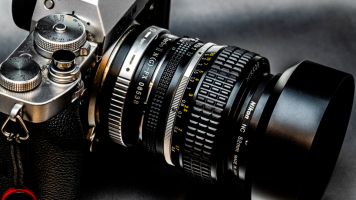
If you use an interchangeable-lens mirrorless digital camera, you know that one of the pleasures of mirrorless shooting is the ability to use lens-mount adapters to photograph with any number of vintage lenses (manual focus or autofocus), as well as some modern-day lenses from your favorite optical manufacturers. When using a crop sensor camera, you might have stumbled across adapters with the monikers

Posted
It has been more than four years since FUJIFILM entered the mirrorless medium format market with the original GFX 50S, and now the company is finally getting around to updating the focal point of this system with the GFX 50S II. Version II of this groundbreaking model sees a revised design, more in line with the recent GFX 100S, along with faster performance and the inclusion of in-body image stabilization (IBIS). The GFX 50S II is a more