Binoculars

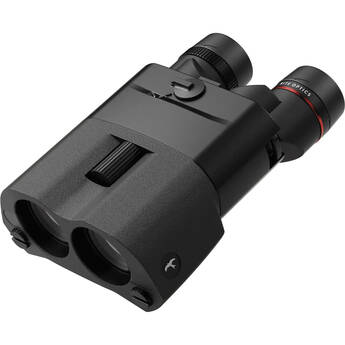
KITE OPTICS 12x42 APC Stabilized ED Binoculars (AAA Battery Powered)
- 3° Image Correction Angle
- Extra-Low Dispersion Glass
- Auto-Activates When Lifted for Use
- 90-Minute Auto Sleep
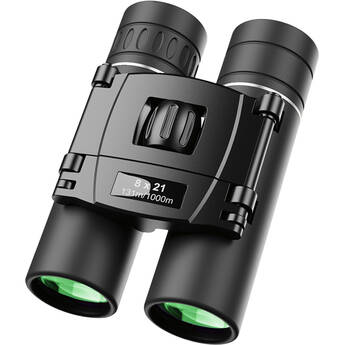
Apexel 8x21 Compact Binoculars
- 8x Magnifying Power
- 21mm Objective Lenses
- Antireflection Multicoated Optics
- Compact Roof Prism Design
Celestron UpClose G2 10-30x50 Zoom Porro Binocular
- Porro Prisms
- Wide-Angle AAoV
- Multi-Coated Optics
- Zoom Lever
Vortex 6.5x32 Bantam HD Youth Binoculars
- High-Definition Optical System
- Fully Multicoated Optics
- Wide 7.6° Angle of View
- Sized to Fit Younger Users
Nikon 8x21 Aculon T02 Compact Binoculars (White)
- Sleek, Stylish & Lightweight Design
- Lead- & Arsenic-Free Eco-Glass
- Compact Roof Prisms
- Antireflection Multicoated Lenses
Celestron 8x42 Outland X Binoculars (Black)
- 42mm Objective Diameter
- BAK4 Roof Prisms Preserve Color
- Multicoated Optical Elements
- Wide Angle Viewing: 6.8°
Nikon PROSTAFF P3 8x42 Binoculars
- Lead- and Arsenic-Free Eco-Glass
- Silver-Coated Roof Prisms
- Multicoated Optics
- 377' Field of View
Nikon 10-22x50 Action Binoculars
- Zoom Magnification
- Traditional Porro Prism Design
- Antireflection Multicoated Optics
- Large Center Focusing Wheel
Opticron 8x32 Discovery WA ED Binoculars
- Fully Multicoated Optics
- 8° Angle of View
- 3.9' Minimum Focus Distance
- Soft-Touch Rubber Armor
Nikon 10x50 Monarch M5 Binoculars
- Extra-Low Dispersion Glass Elements
- Phase-Corrected Dielectric-Coated Prisms
- Antireflection Fully Multicoated Optics
- Nitrogen Filled, Fog and Waterproof
Steiner 10x50 Military/Marine Binoculars
- Traditional Porro Prism Optical Path
- Fully Multi-Coated Optics
- Individual Sports-Auto Focusing System
- Shock-Resistant Floating Prism System
Leica 8x20 Trinovid BCA Binoculars
- P40 Phase-Corrected Roof Prisms
- HighLux Fully Multi-Coated Optics
- HDC and AquaDura Optical Coatings
- Closed-Bridge / Dual-Hinge Configuration
Leica 10x25 Trinovid BCA Binoculars
- P40 Phase-Corrected Roof Prisms
- HighLux Fully Multi-Coated Optics
- HDC and AquaDura Optical Coatings
- Closed-Bridge/Dual-Hinge Configuration
SIG SAUER 12x42 Zulu6 HDX Image Stabilized Binoculars (Flat Dark Earth)
- Scanning & Stationary IS Modes
- HDX Glass Optimizes Light Transmission
- 3.8° Field of View
- Schmidt-Pechan Prisms
Vortex 8x32 Razor UHD Binoculars
- Ultrahigh-Density Apochromatic Lenses
- Schmidt-Pechan Roof Prisms
- XR Plus Fully Multicoated Optics
- Wide 72° Apparent Angle of View
ZEISS 8x30 SFL Binoculars
- UHD Optics
- ZEISS T* Multicoating
- 1.4-Turn Ergonomic Focus Wheel
- 5' Close Focus Distance
ZWO 8x24 Seestar VisionX Binoculars
- Compact and Lightweight
- K9 Roof Prisms
- Antireflection Fully Multicoated
- 2.6' Close Focus
Bushnell 20x50 PowerView 2 Binoculars
- For Terrestrial and Astronomical Use
- Compact and Lightweight Design
- Traditional Porro Prism Design
- Antireflective Multicoated Glass
Bushnell 10x42 PowerView 2 Binoculars
- Compact and Lightweight Design
- BK7 Compact Roof Prisms
- Antireflection Multicoated Glass
- Closed Bridge Configuration
Vortex 8.5x32 Raptor Binoculars
Nikon 8x25 Travelite Binoculars
- Lead- and Arsenic-Free Eco-Glass
- BAK4 Reverse Porro Prisms
- Aspherical Lenses
- Fully Multicoated Optics
Nikon 12x25 Travelite Binoculars
- Lead- and Arsenic-Free Eco-Glass
- BAK4 Reverse Porro Prisms
- Aspherical Lenses
- Fully Multi-Coated Optics
Steiner 10 x 26 Safari Ultrasharp Binocular
- Compact Roof Prisms
- UV-Protected Fully Multicoated Optics
- O-Ring Sealed, Waterproof
- Short, Closed-Bridge Configuration
Nikon 7x50 OceanPro Binoculars
- BAK4 Traditional Porro Prisms
- Anti-Reflection Multi-Coated Optics
- Nitrogen Filled, Water and Fogproof
- Submersible to 3.3' for 5 minutes
Vortex 15x56 Diamondback HD Binocular
- High-Definition ED Optical System
- Dielectric & Phase-Corrected Roof Prisms
- Fully Multicoated Optics
- Wide 64.5° Apparent Angle of View
Nikon 10x42 Monarch M5 Binoculars (Black)
- Extra-Low Dispersion Glass Elements
- Lead- and Arsenic-Free Eco-Glass
- Phase-Corrected Dielectric-Coated Prisms
- Anti-Reflection Fully Multicoated Optics
Nikon 7x50CF OceanPro CF WP Global Compass Binoculars
- BAK4 Traditional Porro Prisms
- Integrated Global Compass
- Illuminated In-View Display
- Anti-Reflection Multi-Coated Optics
Nikon 12x42 Monarch M5 Binoculars (Black)
- Ideal for Glassing Across Vast Distances
- Extra-Low Dispersion Glass Elements
- Lead- and Arsenic-Free Eco-Glass
- Phase-Corrected Dielectric-Coated Prisms
How to Choose a Binocular
Learn more about Binoculars
Also known as field glasses, a pair of binoculars is an optical magnifying instrument made of two telescopes. They are made of lenses and prisms mounted inside metal and plastic frames. Compared to monoculars, they produce three-dimensional images and give magnified images a true sense of depth.
Types of Binoculars
You can classify binoculars by size, usage, and prism arrangement. When categorized by size, there are full-sized, mid-sized, and compact binoculars. Compact and pocket-sized models have small lenses while full-sized and large ones pack lenses big enough to show clear images in low-light conditions. Mid-sized units balance power, weight, and light transmission, and are the ones most suitable for wildlife observations. Hunting binoculars are usually mid-sized models while astronomy ones are large, and may require mounting hardware.
Binoculars use either roof or Porro prisms. Roof-prism or DCF (Dach Center Focus) models have overlapping prisms, while Porro prism (ZCF or Zeiss Center Focus) have staggered ones. The DCF arrangement produces slim, straight H-shaped instruments with eyepieces directly behind objective lenses, while ZCF models are conical or M-shaped instruments. Porro prisms produce greater depth perception and wider field of view.
What Do the Numbers on Binoculars Mean?
Binoculars usually have two set of numbers printed on them. These are magnification, and the size of the objective lenses used. For example, an 8x20 model makes subjects look 8x bigger while the diameter of its objective lenses is 20mm. Bigger lenses capture more light and are better in low-light conditions. For improved visibility at night, consider a pair of night vision binoculars.
For bird watching or to observe sporting events, look for models with 7-12x magnification. These have fields of view wide enough to enjoy fast-moving action. Higher magnifications, such as those on astronomy binoculars and spotting scopes, narrow your field of view but show faraway subjects in detail. Zoom binoculars have a unique design that allows adjustable magnification. A 10-22x50 model has 55mm objective lenses with a minimum magnification of 10x and a maximum magnification of 22x. Spotting and riflescopes are popular magnifying instruments with this feature.
Features to Look for in Binoculars
Models with coated lenses produce brighter images. Lens coating prevents light scattering and reduces glare by cutting down on light reflection. Fog-proof lenses resist fogging in cold and humid conditions. For nighttime observations, choose a pair of infrared binoculars, as these provide night vision.
Build quality is also important. If you plan to spend time outdoors, look for a unit with a water-resistant, waterproof, or weather-resistant shell. A shockproof housing also protects your precious instrument if you accidentally drop it. Models with compasses are especially useful on hunting and backpacking trips. To record what you’re observing, choose a pair of binoculars with a camera.
Carry a pair of binoculars to observe the wonders of the natural world in close detail wherever you go. Browse the large inventory of optical instruments at B&H Photo and Video to find the magnification tool you need.