Spotting Scopes

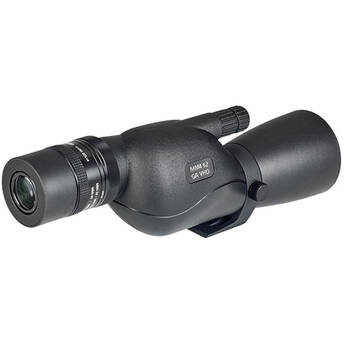
Opticron MM4 62 GA VHD Travelscope + SDLv4 15-45x Eyepiece
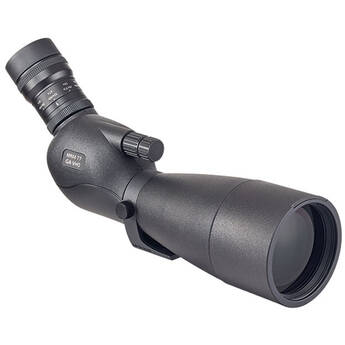
Opticron MM4 77 GA VHD 20-60x77 Travelscope (Angled Viewing)
- HR3 20-60 Zoom Eyepiece
- Large 77mm Objective Lens
- FCD-100 Element for Color & Contrast
- APO Design Corrects Chromatic Aberration
Opticron MM4 77 GA VHD 20-60x77 Travelscope (Straight Viewing)
- HR3 20-60 Zoom Eyepiece
- Large 77mm Objective Lens
- FCD-100 Element for Color & Contrast
- APO Design Corrects Chromatic Aberration
Vortex Razor HD 22-48x65 Spotting Scope (Straight Viewing)
- Straight Viewing
- 22-48x Zoom Eyepiece
- 65mm Objective Lens
- Dielectric Coated Porro Prism
Bushnell Forge 20-60x80 Spotting Scope (Angled Viewing)
- 45° Angled Viewing
- Powerful 20-60x Zoom Eyepiece
- Massive 80mm Objective Lens
- BAK4 Porro Prism Light Path
Newcon Optik Spotter ED 20-60x85 Spotting Scope (Straight Viewing)
- Straight Viewing
- 20-60x Zoom Eyepiece
- Large 85mm Objective Lens
- BAK4 Porro Prism
GPO USA 15-45x60 GPOTAC 45 Spotting Scope (PLR Reticle)
- 1st Focal Plane PLR MRAD Reticle
- Matches GPOTAC 4.5-27x50i Riflescope
- Top & Side Rails for Accessories
- Honeycomb Lens Cap
Opticron MM4 77 GA ED/45 18-54x77mm Travelscope (Angled Viewing)
- 45° Angled Viewing
- 18-54x SDLv3 Zoom Eyepiece
- Large 77mm Objective Lens
- Extra-Low Dispersion Glass
Opticron MM4 77 GA VHD 18-54x77 Travelscope (Angled Viewing)
- SDLv4 18-54 Zoom Eyepiece
- Large 77mm Objective Lens
- FCD-100 Element for Color & Contrast
- APO Design Corrects Chromatic Aberration
Opticron MM4 77 GA VHD 18-54x77 Travelscope (Straight Viewing)
- SDLv4 18-54 Zoom Eyepiece
- Large 77mm Objective Lens
- FCD-100 Element for Color & Contrast
- APO Design Corrects Chromatic Aberration
ZEISS Dialyt 18-45x65 Field Spotter Spotting Scope (Straight Viewing)
- Straight Viewing
- 18-45x Zoom Eyepiece
- 65mm Objective Lens
- Fully Multicoated Lenses
SWAROVSKI OPTIK ATX/STX/BTX 65mm Objective Lens Module (Eyepiece Module Required)
- Eyepiece Module Required
- 65mm Objective Lens
- Field-Flattener Lens System
- Extra-Low Dispersion Fluoride HD Glass
Barska Level ED 20-60x85 Spotting Scope (Angled Viewing)
- 45° Angled Viewing
- 20-60x Zoom Eyepiece
- BAK4 Porro Prism
- Extra-Low Dispersion Glass
Vortex Razor HD 22-48x65 Spotting Scope Kit (Angled Viewing)
- 45° Angled Viewing
- 22-48x Zoom Eyepiece
- 65mm Objective Lens
- Dielectric Coated Porro Prism
Vortex Razor HD 22-48x65 Spotting Scope Kit (Straight Viewing)
- Straight-Through Viewing
- 22-48x Zoom Eyepiece
- 65mm Objective Lens
- Dielectric Coated Porro Prism
Optisan 15-60x80 PL ED Angled Spotting Scope
- Wide 15 to 60x Magnification Range
- Bright Hoya ED Glass
- Compact 15.7" Length
- 4x Zoom Eyepiece Design
Pentax PF-100ED 100mm Spotting Scope (Straight Viewing, Eyepiece Required)
- Straight-Through Viewing
- Eyepiece Required for Proper Use
- Accepts All 1.25" Telescope Eyepieces
- 100mm ED Lanthanum Crown Glass Objective
Nikon Monarch 20-60x82 ED Spotting Scope (Straight Viewing)
- Straight Viewing
- 20-60x Zoom Eyepiece
- 82mm Objective Lens
- ED Glass
Vortex Razor HD 27-60x85 Spotting Scope Kit (Straight Viewing)
- Straight-Through Viewing
- 27-60x Zoom Eyepiece
- 85mm Objective Lens
- Dielectric Coated Porro Prism
Pentax PF-85EDA 85mm Spotting Scope and 8-24mm Zoom Eyepiece Kit (Angled Viewing)
- 45° Angled Viewing
- Eyepiece with 20-60x Magnification
- Extra-Low Dispersion Lenses
- Antireflection Fully Multicoated Glass
Meopta MeoPro 20-60x80 HD Spotting Scope (Straight Viewing)
- Straight-Through Viewing
- Powerful 20-60x Zoom Magnification
- Extra-Low Dispersion Fluoride Glass
- MeoBright, MeoShield, MeoDrop Coatings
Revic Acura S65a 22-45x65 Spotting Scope (Angled Viewing)
- 22-45x Zoom Eyepiece
- 18x Fixed Reticle Eyepiece
- Extra-Low Dispersion Glass
- Phase-Correcting Prism Coating
Leica Televid HD 65 Spotting Scope (Requires Eyepiece)
- 45° Angled Viewing
- Hi-Lux Pro Lens System
- Arca & Manfrotto Compatible Mounting
- Water/Dirt-Repellent AquaDura Coatings
Revic Acura S80a 27-55x80 Spotting Scope (Angled Viewing)
- 27-55x Zoom Eyepiece
- 22x Fixed Reticle Eyepiece
- Extra-Low Dispersion Glass
- Phase-Correcting Prism Coating
Bushnell 8-40x60 LMSS2 Elite Tactical Spotting Scope (Tremor4 Reticle)
- Horus Reticle in 1st Focal Plane
- 0.2 MRAD Horus Grid for Range Spotting
- Picatinny Rail for Accessories
- Extra-Low Dispersion Glass
Bushnell 8-40x60 LMSS2 Elite Tactical Spotting Scope (H322 Reticle)
- Horus Reticle in 1st Focal Plane
- 0.2 MRAD Horus Grid for Range Spotting
- Picatinny Rail for Accessories
- Extra-Low Dispersion Glass
SWAROVSKI OPTIK ATX/STX/BTX 85mm Objective Lens Module (Eyepiece Module Required)
- Eyepiece Module Required
- 85mm Objective Lens
- Field-Flattener Lens System
- Extra-Low Dispersion Fluoride HD Glass
Kowa TSN-66A 66mm PROMINAR Spotting Scope (Angled Viewing)
- Compact, Highly Portable Spotter
- Pure Fluorite Crystal Objective Lens
- Durable, Lightweight Magnesium Chassis
- Eyepiece Required for Use
The Scoop on Spotting Scopes
Spotting scopes are small telescopes intended for terrestrial viewing. Available with either straight or angled bodies, they're fitted with image-erecting prism systems, and offer magnifications between 14X and 60X. This is higher than most binoculars, but lower than refractor telescopes.
Their magnifying power, flexibility, and compact size make spotting scopes popular with hunters, birdwatchers, wildlife buffs, and surveillance experts. Some models can also function as telephoto lenses when you attach them to cameras or mobile devices.
How to Choose a Spotting Scope
Spotting scopes are labeled with three numbers. The first two, usually separated by a dash, represent the zoom range, and the number after the X represents the diameter of the lens. Thus, a scope marked as 20-60x80 would feature a front lens measuring 80mm in diameter, and a magnification, or zoom, ranging from 20 to 60 times.
As a rule, the larger the lens, the brighter and clearer the image quality will be, and the wider the field of view. However, a large lens also makes the scope bulkier and heavier. Ultimately, the standard of the optics determines the quality of the image, with high-end brands such as Nikon spotting scopes offering outstanding clarity even at high magnification.
Best Spotting Scopes for Birding
Ornithologists are well served with compact, lightweight models with waterproof and fog-proof qualities to handle life in the field. You can also find high-definition models such as Leupold spotting scopes that deliver superior image quality. Most beginners prefer straight scopes, while angled models are more flexible and comfortable, and let you use lower tripods. Some scopes allow you to shift between angled and straight modes by changing a module on the back of the unit.
Popular Accessories for Spotting Scopes
With so many people using their smartphones for photography, it's natural that you can find accessories known as digiscoping adapters that can hook them up to spotting scopes to take photographs. These frames have grips to hold the mobile device and adapters to fit the camera lens to the scope's eyepiece.
Tripods are necessary to provide stability and to avoid the fatigue that comes from holding scopes for long periods. The good news is that most scopes fit on ordinary photo tripods, so you can use your existing camera tripod or monopod should you have one. Otherwise, you can choose from a wide range of optics tripods and support equipment to suit your needs. Other popular accessories include padded carrying cases.
Check out the extensive range of spotting scopes for sale, along with solar telescopes and much more, at B&H Photo and Video.