Search results for: photography article understanding dynamic range
About 18 filtered results
by Mathew Malwitz · Posted
If renowned landscape photographer Ansel Adams were alive today, he would surely be astounded at the variety of cameras available. When compared to his hulking 8x10 view camera, today’s cameras look like child’s play. He would also be flabbergasted at the image quality these little devices produce.
This year, we have a bottomless well of cameras

by Luke Rollins · Posted
Everyone and their mothers are in on the digicam trend, a fact reflected in the used-market prices found across most platforms. Facebook Marketplace, Craigslist, eBay, B&H Used--everywhere you look, the best-known models are selling for prices that often meet or exceed their debut MSRP.
Take that old favorite of mine, the Canon S95. Extraordinarily capable, exceedingly pocketable, I got it for a song ($130) back in 2023. Three years later, the going rate has more than tripled, with the average price sitting above $400 and pushing $500
by Mathew Malwitz · Posted
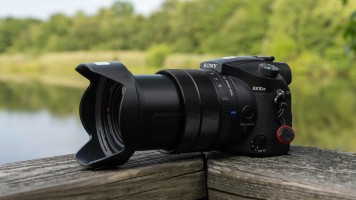
Let's face it: throwing a heavy camera over your shoulder can seem like a hassle, especially if photography isn't the main purpose of your trip. Those big mirrorless and DSLR cameras might stun with their incredible clarity, but not every outing calls for a "serious" camera. Still, there's a desire to capture fun photos, either for your own enjoyment, or to share with friends and family when you return.
Enter the bridge camera. Bridge cameras are an excellent, all-in-one solution for wildlife enthusiasts looking to capture images of their

by Mathew Malwitz · Posted
There’s an old adage that claims in order to be a wildlife photographer, you need a lot of time and a lot of money. This is only partly true. Many great wildlife photo opportunities can occur in urban parks and even in your own backyard, as long as we know what we’re doing. In this article, we’re going to cover a number of essential tips that will help you become a better wildlife photographer.
If you’ve read our introduction

by Mathew Malwitz · Posted
Despite what you might have seen on the internet, you don’t need all the money and time in the world to photograph wildlife. Sure, an African safari would be nice, but it is by no means the only way to capture stunning images of wild animals. In fact, regardless of where you live, odds are there’s a vast ecosystem that likely goes unnoticed. If you have trees in your neighborhood, you’re off to a great start.
What You Need to Photograph Wildlife
While gear plays a crucial role in our ability to photograph wildlife, it isn’t everything. In this

by Mathew Malwitz · Posted
If there’s one area of wildlife photography that challenges even some of the most consummate artists, it’s birds in flight. A dynamic flight shot shows action, and a bit of technical prowess. As you can imagine, capturing birds in flight is no easy feat.
To consistently capture these shots, one must be proficient with their gear and have a knowledge of animal behavior. We’d go as far as to say you need a bit of luck too, but what is luck if not preparedness meeting opportunity. In order to make the most of the opportunities that present

by Trevor Collins · Posted
These days it often seems like everyone has a podcast. With so much competition and so many options for podcasting-centric equipment, it can be daunting to dive in headfirst without knowing the ropes. That’s where B&H comes in, with another all-encompassing guide to set you up for success and help you get your content off the ground as painlessly as possible. Let’s begin.
Why Make a Podcast?
The first topic couldn’t be simpler: Why even start a podcast? The answer is simple−because it’s the best way to get your content to the masses.

by Rachel Leathe · Posted
What makes a camera good for landscape photography? In this article, we’ll dive into factors such as megapixel count, sensor size, usability, weather readiness, and design—helping you develop your own personal metric for finding the ideal camera. We’ll help you wade through all the technical mumbo jumbo to figure out what specs really matter, whether you want to capture stunning mountain ranges or shoot star-strewn night skies.
Megapixels
It doesn't get much more basic than megapixels. They're like the atoms of photography. But just how many

by Rachel Leathe · Posted
There's nothing quite like the thrilling spontaneity of grabbing your camera and stepping out the door with no plan other than to point and shoot at whatever captivating scenes you encounter. In the realm of professional photography, where meticulous control over light, talent, and location is the norm, street photography throws all of that out the window, transforming the world into your unscripted canvas. The absence of predetermined variables and the sheer randomness of it all can be an incredibly liberating and enlightening experience for
by Todd Vorenkamp · Posted
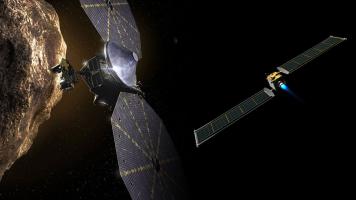
Believe it or not, when a spacecraft leaves the earth with a camera as a part of its scientific suite, there are real-world similarities between the cameras on interplanetary space probes and the cameras we sell at B&H—especially now in the age of digital photography. In this article we will look at all the American spacecraft that have ventured beyond earth orbit and discuss their various camera systems.


by John Harris · Posted
What can you do with a high-end telephoto lens? Be a boss, is what you can do. I mean, c’mon! Strutting around the sidelines or cuttin’ through the bush with one of these beasts resting on your shoulder―not only do you look tough, but you’re also carrying a lens that you need to get the best photos in sports and wildlife photography. When I say best, let’s not underestimate the greatness of photographers who can create wonderful images with a wide-angle lens or even a telephoto of lesser quality, but to really excel in the disciplines of

by John Harris · Posted
I love spending time with my kids, lots and lots of time. And while we are passing all of this time together, I thought I’d have a try at teaching them a little bit about photography. I don’t go into this endeavor with any illusions; they are probably going to end up teaching me.
My kids were both born well after the year 2000 and, I’d argue, that alone puts their visual acumen far ahead of what mine was at their age. Their understanding of photography as a language and their consideration of what can happen inside a frame is much more

by Cory Rice · Posted
When many people think of special effects, they think of dimly lit rooms, expensive computers, and complicated software. While this may be an accurate picture if you are editing a blockbuster action movie, digital still photographers can do a lot to their images even before transferring files off their camera. The following guide covers some of the more popular in-camera effects on the market to consider when purchasing a new camera or for better understanding the camera you already own.
Film Simulation and Color Profiles
In recent years,

by Todd Vorenkamp · Posted
ISO, which stands for International Organization of Standards, is a measure of the sensitivity of film or a digital sensor to light.
This article is part of a multi-part series about photographic Exposure.
1. Introduction: The Exposure Triangle
2. Aperture
3.
by Shawn C. Steiner · Posted
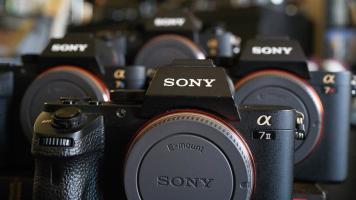
First came the trio of a7 cameras, then came the a7 II series, and now we have the a9. It doesn’t seem like there is any end in sight for Sony with its full-frame mirrorless lineup, and each one has its own unique capabilities. So, if you are looking to grab a member of Sony’s ever-expanding camera family, we are here to help you pick out the one that is best for you.
Overview
We are going to focus on the most current models—the a7 II series and the a9. If you are looking to save some cash or just don’t need/want the latest and greatest, then