Search results for: photography buying guide photo studio
About 89 filtered results
by Mathew Malwitz · Posted
For macro photographers, having the right gear is essential. Magnification and lighting are key, but you don’t necessarily need the biggest, priciest macro lenses out there to get close-up shots. If you’re a macro photographer yourself or buying a gift for one, we have some excellent recommendations for every budget.
Gifts Under $50
1. Close-up macro filters (like this

by Mathew Malwitz · Posted
IN THIS ARTICLE
1. Outdoor Essentials2. Power Solutions3. Binoculars4. Bags and Backpacks
Exploring the outdoors is truly what life is all about, and odds are there's an outdoor enthusiast in your life. You'd think knowing their hobby is enough intel to aid you in finding the perfect gift but turns out that there's a lot of gear in the arsenal of the average outdoorsman. Fear not, for we have put together this carefully

by M. Brett Smith · Posted
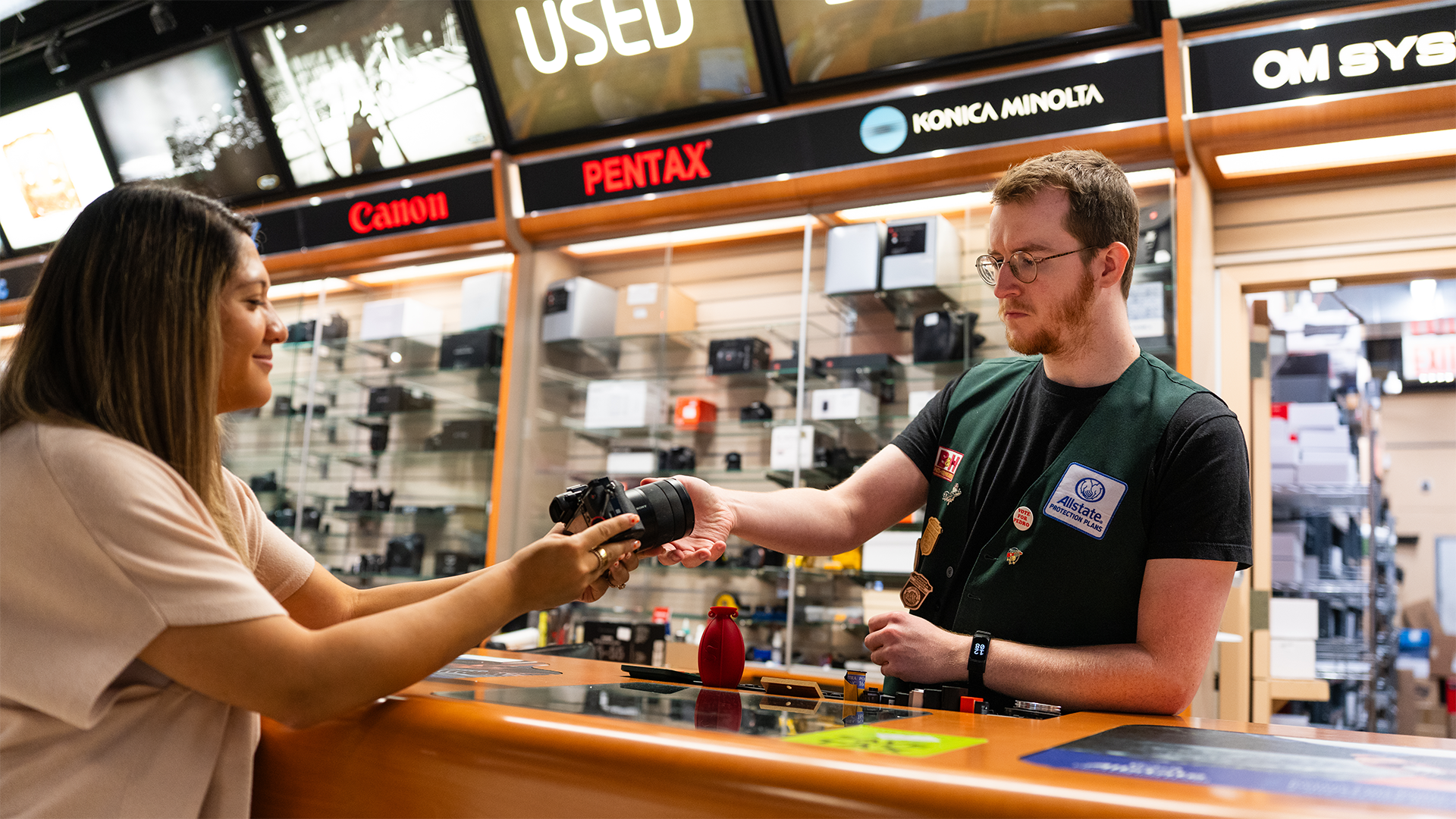
For more than 50 years, B&H Photo has been the creative professional’s choice for photo, video, and audio gear. But did you know we’re also one of the most trusted resources when it comes to buying and trading used gear?
With the B&H Trade-In program, you can turn your pre

by Luke Rollins · Posted
FUJIFILM's beloved instant photography format instax recently surpassed 100 million cameras and printers sold, all while eyeing its 30th anniversary. While perhaps just short of the brand recognition of iconic Polaroid, instax has the people's vote and the lion's share of sales and has expanded that popularity into a full-on ecosystem of films and formats, analog and hybrid cameras, smartphone printers and digital capture devices, and, coming soon, commercial photobooths and other event-oriented products.

by Mathew Malwitz · Posted
This holiday season, we’re looking at fun and affordable lenses for your mirrorless systems. There will be both unique lenses and some overlap thanks to the vast number of third-party lenses hitting the market for all major brands. In this guide, we’re covering lenses for the Canon RF Mount. From ultra-wide-angle lenses suited for landscapes and architectural images to super telephoto ones for sports and wildlife, we’ll be covering a variety of

by Mathew Malwitz · Posted
If renowned landscape photographer Ansel Adams were alive today, he would surely be astounded at the variety of cameras available. When compared to his hulking 8x10 view camera, today’s cameras look like child’s play. He would also be flabbergasted at the image quality these little devices produce.
This year, we have a bottomless well of cameras
by Luke Rollins · Posted
At first glance, studio photography and the compact camera may seem strange bedfellows. The type of work associated with the studio—still life, product photography, portraiture, macro photography—usually wants cameras with larger sensors and interchangeable lenses, especially in professional applications. Compact, point-and-shoot cameras, for their part, have their natural home in everyday, travel, nightlife, and street applications, where their discretion and size become virtues.
It might seem almost cruel to introduce the compact to the
by Mathew Malwitz · Posted
As complementary as peanut butter is to jelly, the camera and tripod are an age-old pairing that still manages to maintain relevance and unmatched functionality in a world dominated by image stabilization and Photoshop tricks. While the form and function of a tripod is far simpler to understand than the scrolling menus of today’s feature-packed cameras, it can still be a chore to choose the right setup for your needs from among a sea of manufacturers and seemingly comparable models.
Now, what’s the big deal with tripods? Most photographers
by Mathew Malwitz · Posted
Dental photography is a unique genre of photography that requires a specialized set of tools to deliver the clarity, brightness, and color accuracy dentists rely upon to accurately record their patients’ progress.
In this guide, we’re going to cover the essential tools dental professionals need to capture the best quality images of their work, from the camera itself to the lighting tools required to accurately capture the color and detail of those pearly whites.
The Camera
Of course, one could use almost any camera, so long as it produces

by Steven Wong · Posted
When processing photos for clients, you probably want to get in and out of the editing bay as quickly as possible. But it can be challenging to find the right professional display or monitor that fits into your workflow and budget. Don’t worry, we’re here to help with three things to keep in mind when considering a professional display. That way, you can find the perfect look and get back to shooting.
Color Accuracy

by Mathew Malwitz · Posted
You don’t have to go far to capture fun and engaging images of wildlife. In fact, you may not have to go anywhere at all. A carefully landscaped yard and the right tools can attract an impressive variety of animal life to observe and photograph. Pair that with a little patience and soon you’ll be capturing stunning images from the comfort of your own home.
Attracting Birds
Birds are part of nearly every environment, from the densest cities to rural areas. While they are common, we’ll need to offer three essentials—water, shelter, and food—to

by Mathew Malwitz · Posted
Editing is an essential piece of the photography puzzle. We all strive to get it right in camera, but even back in the glory days of analog photography, much of the magic happened in the dark room. Today, we have even more tools at our disposal, from photo management software to programs like Adobe Photoshop where we can make drastic changes to our work.
What we consider too much in terms of editing is up to the artist and their creative vision. What matters more is being able to make the edits you wish to make in the most efficient way

by Mathew Malwitz · Posted
Who doesn’t want to capture fun and creative portraits of our four-legged friends? We know we love it. In fact, pet photography may just be the most popular form of photography there is. Think of all the smartphone snaps of yawns, big stretches, and funny moments we all take of our cats, dogs, chinchillas, and beyond.
Quick snaps aside, you know what really ups the quality of our pet portraits? Lighting. Just as with any form of portrait, lighting unlocks possibilities that can be impossible without it. But what lighting system should we use?

by Mathew Malwitz · Posted
Most photos consist of a balance between bright and dark tones, creating what we typically consider to be “proper exposure.” In proper exposure, there should be ample detail in all areas of the image, no matter how dark or how bright. At least, that’s what we should do when trying to capture a balanced exposure.
Balance, while important to most photographic situations, is not always best for a scene. There are

by Luke Rollins · Posted
Subject and style may vary, but consistency is a quality shared by all successful photo studios. When working indoors, that begins with lighting. Strobes remain the bread and butter of many still photography studios. Unlike natural light, which can be finicky and unpredictable; on-camera flashes, which are not typically designed for studio use; or continuous lights, which can become costly as output increases; strobes are built to withstand the rigors of studio life while providing flexible and powerful light. But with so many options on the