Search results for: photography composition visual composition rules
About 21 filtered results
by Mathew Malwitz · Posted
Taking photos has never been easier, whether you're using a smartphone, point-and-shoot, or mirrorless camera. It's a fact that no matter where we go, we almost always have some form of camera on hand, and while the opportunity for image making has changed, what hasn't changed is what makes a photo good.
The simple answer is photography composition, or the arrangement of elements in your frame. This concept can be confusing as all art subjective. That said, think of movies and music and how certain combinations of sounds and storytelling

by Steven Gladstone · Posted
When creating images for a film, you try to balance your shots so that you draw the audience into the movie, while at the same time they forget that they are watching a movie. Usually, the last thing you want is to break the illusion and have the audience snap out of their reverie.
As you read this article, you may want to pause and rewatch some classic films, or films that had a powerful effect on you. Examining the new and different techniques, lighting, and compositions used to create impact, mood, and feeling will help you grow as a
by Mathew Malwitz · Posted
If there’s one question fledgling photographers often ask, it’s “How did you get such a nice background?” Backgrounds are an essential element of a photograph that are often neglected. In fact, it’s safe to say that a background is as important to a composition as the subject itself. After all, a distracting one will detract from an image.
In this guide, we’re going to cover the many methods used to capture clean, smooth backgrounds in our images. This will encompass the settings and gear involved as well as the in-the-field techniques you can

by Mathew Malwitz · Posted
Composition in photography refers to the way in which we arrange visual elements in an image. It's how we position the subject in the frame and how all elements combine to create a visually appealing photograph.
All photographs © Mathew Malwitz
Expensive cameras and long lenses can only get us so far. It's not the gear that makes the photo, but the photographer. A creative and observant eye is the key to making visually pleasing photographs. These skills can be learned, and with practice, you'll be well on your way to creating strong

by Mathew Malwitz · Posted
These days, everyone has a camera right in their pocket. Smartphones have long been the go-to camera for quick photos of our friends, family, pets, and of course, ourselves. With features like portrait mode, users can simulate blurry backgrounds and isolate their subject for more eye-catching images. What else could you ever need? What if I told you that with the

by Mathew Malwitz · Posted
Family portraits are a great way to capture a moment in your family’s history. You may find yourself wanting to capture family photos every few years or so, more often when the little ones are, well, little. Maybe you’re looking for a way to take matters into your own hands, or maybe you’ve been taking your own family photos for years and have found yourself being asked to take photos of friends, family members, or even paying clients.
Family portraits can be a lot of fun to shoot. Maybe you’ve been taking photos of your kids and want to

by Mathew Malwitz · Posted
Typically confined to the northernmost latitudes of our planet, the northern lights—or "aurora borealis"—are a natural spectacle many dream of seeing. Recently, it may seem like auroras are occurring more often and are visibly farther south than ever before. Maybe you've already seen one or even photographed one with your phone.
While rare, exceptionally powerful auroras have been seen with the naked eye as far south as Alabama. These are uncommon, but in mid-latitude states, visible auroras are a bit more frequent. Last summer, I found myself

by Mathew Malwitz · Posted
Anyone who has dabbled in pet photography knows that it can be a rewarding yet challenging experience. While pets are considered to be part of the family, they’re still animals who walk to the beat of their own drum and do things at their own pace. Even the best listeners can be easily distracted or have trouble sitting still for more than two seconds. If you’re considering trying your hand at photographing our fuzzy friends, we’ve put together this helpful guide for you. In this guide, we’re going to cover the essentials for those with a

by Allan Weitz · Posted
Though there aren’t any hard rules on the subject—and all rules are made to be broken—wide-angle and ultra-wide-angle lenses are often considered to be the go-to lenses for landscape photography. It’s not like you can’t capture wonderful landscapes with normal or telephoto lenses (you absolutely can), but due to their broad capture angles, wide- and ultra-wide-angle lenses usually win out over the alternative choices. For those who wish to go wider than ultra-wide, you have to turn to fisheye lenses.
Photographs © Allan Weitz 2020
What Is a

by Todd Vorenkamp · Posted
Knowing your lens’s sharpest aperture—its “sweet spot”—is one surefire way to maximize image sharpness. Image sharpness is the goal of many photographers—regardless of the subject matter. Sharpness is also the catalyst for the dozens of lens-testing and review websites that populate the Internet, as well as the impetus for endless snobbery and debates over which lenses reign supreme in the quest for ultimate clarity. In my article,
Posted
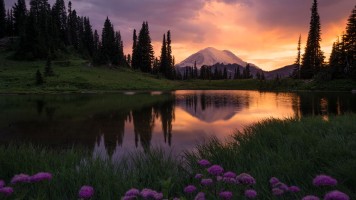
Landscape photographer Sapna Reddy has mastered the art of translating the emotion of beautiful scenery into a photograph. In this seminar, she explains how the visual language of photography works to create stunning images and how to go beyond the basic rules of composition with more advanced guidelines.
0:00 - Introduction
1:41 - Communicating the Visuals
6:40 - Understanding the Language of Photography
8:18 - Focal Points/Visual Elements
13:15 - Composition
32:34 - Storytelling
45:36 - In Summation/Takeaways
48:19 - More from Reddy
49:00 -

by Todd Vorenkamp · Posted
Welcome to the world of Intentional Camera Movement (ICM) photography—a fascinating and beautiful world where the camera and the photographer’s movements combine to become a mechanical paintbrush—transforming photographic capture into something completely unique and otherwise invisible to the naked eye. In a photographic world generally obsessed with image sharpness, there are photographic artists amongst us who give little thought to everything we’ve ever been taught about photography to create spectacular images by intentionally moving their

by Allan Weitz · Posted
A friend of mine once described his favorite wide-angle lens as his “gateway to landscape photography,” and that’s a pretty good metaphor for wide-angle lenses if I ever heard one. Wide-angle lenses and ultra-wide-angle lenses naturally lend themselves to capturing landscapes with a sense of depth. They also tend to capture a sense of drama that you seldom get when photographing landscapes with longer focal length lenses.
Photographs © Allan Weitz 2021
Wide-angle lenses feature angles of view (AoVs) ranging from about 63° to about 74°, which

by Allan Weitz · Posted
I’ll never forget the first time I looked through the viewfinder of a camera fitted with a 20mm ultra-wide-angle lens. Everything looked amazing and I blew several rolls of film shooting everything I saw along the way. Prior to using this “exotic” lens, I had never shot with anything wider than the 50mm normal that came with my first 35mm camera.
The sobering part came when I developed the film and started eyeballing the results of my first outing. In a word, they were underwhelming, but I kept at it until I figured out how to use ultra-wide

by Todd Vorenkamp · Posted
Are you currently a photography student? Are you enrolled in high school, college, or graduate-level photography classes this fall? Here is some unsolicited advice from professional photographic educators to take with you into the classroom or out into the field.
1. “It is totally natural to emulate other photographers who you admire as you start your journey with the medium of photography, but the sooner you can begin to make unique photographs that reflect what you are genuinely interested in, the more rewarding your journey will be. Be