Search results for: photography tips solutions camera care tips
About 69 filtered results
by Mathew Malwitz · Posted
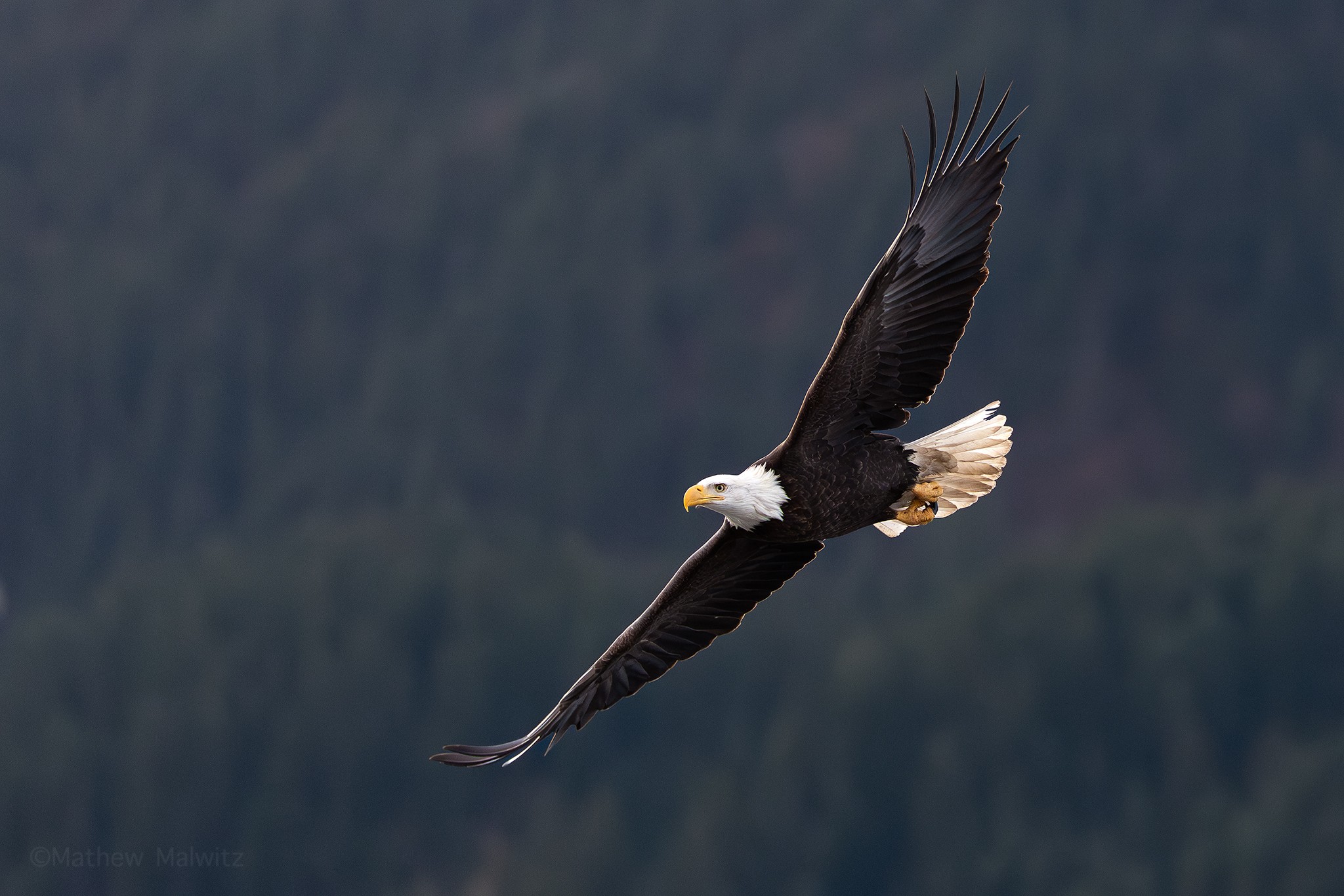
The bald eagle, one of the most regal birds of prey, has a secret. It’s notably one of the most difficult subjects to expose for. If we trust the camera in an automatic mode, we’re likely to get either an overly bright head, or a body that’s too dark in shadow to see. The only reliable way to capture good exposures of these birds is to expose to the right.
Mathew Malwitz
This technique is as useful as it is controversial,

by Luke Rollins · Posted
Learn about how to get started with dental photography, including what gear to use, which photographic fundamentals you should be focusing on, and why dental photography is critical for both clinical care and promoting your own dental practice.
IN THIS ARTICLE
1. (Don’t Fear) the Gear2. Good Dental Photography Is Good Photography3. Macro Discipline, Portrait Mindset4. Embrace the Flash5. Clinical,

by Luke Rollins · Posted
Achieving a standard of production value is an essential component of establishing a brand and growing a following. For part-time, burgeoning, and mid-level creators, it can feel like bridging that gap is less a matter of learned skill and more about the equipment you can afford.
In most cases, the problem isn’t budget at all. Acquiring the specific know-how can give your content professional sheen with little to no financial outlay.
Lighting design is arguably the most immediately visible production component—and the one most capable of

by Mathew Malwitz · Posted
Smartphones have forever changed the world of photography, making the art form more accessible and connecting people from across the world through the instantaneous sharing of images. For all their benefits, there are plenty of criticisms to be had, especially on the creative front. Smartphone cameras are, for some, everything one could want from a camera. For others, they lack the control and creative freedom that makes photography so interesting.
Who can blame one for having hard feelings against smartphones. After all, they nearly wiped

by Mathew Malwitz · Posted
You don’t have to go far to capture fun and engaging images of wildlife. In fact, you may not have to go anywhere at all. A carefully landscaped yard and the right tools can attract an impressive variety of animal life to observe and photograph. Pair that with a little patience and soon you’ll be capturing stunning images from the comfort of your own home.
Attracting Birds
Birds are part of nearly every environment, from the densest cities to rural areas. While they are common, we’ll need to offer three essentials—water, shelter, and food—to
by Mathew Malwitz · Posted
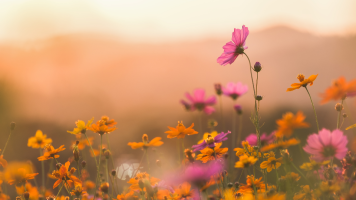
If there’s one question fledgling photographers often ask, it’s “How did you get such a nice background?” Backgrounds are an essential element of a photograph that are often neglected. In fact, it’s safe to say that a background is as important to a composition as the subject itself. After all, a distracting one will detract from an image.
In this guide, we’re going to cover the many methods used to capture clean, smooth backgrounds in our images. This will encompass the settings and gear involved as well as the in-the-field techniques you can
by Mathew Malwitz · Posted
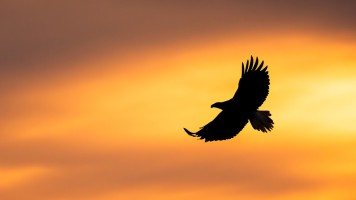
Through the cacophony of forest sounds, your ears home in on a buzzy, almost garbled ascending song. Perhaps you recognize it immediately, or maybe you need to confer with one of the trusty internet databases or apps. You train your eyes on the canopy, scanning for movement of any kind, when you see it: the cerulean warbler, a small rowdy songbird with wings slightly splayed from the body. Quickly, you lower your binoculars and train your camera on the little blue passerine before snapping a few frames.
The resulting photos clearly show the
by Mathew Malwitz · Posted
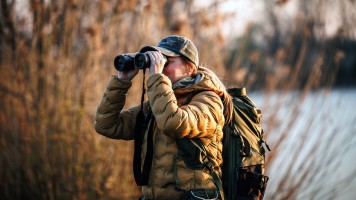
Birds, they’re all around us. If you haven’t paid much attention to them, you’re not alone. But, once you do, you’ll have a hard time stopping. If you haven’t yet dabbled in bird watching, known colloquially as birding, we have just one question. Why not? Birding is the perfect way of partially disconnecting from the digital world we find ourselves in and connecting with nature through observation, and one of the most relaxing pastimes imaginable.
If you’re fascinated by our feathery friends but don’t know where to start, we’ve got you covered

by Mathew Malwitz · Posted
There’s an old adage that claims in order to be a wildlife photographer, you need a lot of time and a lot of money. This is only partly true. Many great wildlife photo opportunities can occur in urban parks and even in your own backyard, as long as we know what we’re doing. In this article, we’re going to cover a number of essential tips that will help you become a better wildlife photographer.
If you’ve read our introduction

by Mathew Malwitz · Posted
Do you plan your images? Really think about that question. Do you have an idea of an image before you head out for a shoot, or do you let the moment inspire you as the pieces fall into place? There's no wrong answer here. Planning or "pre-visualization" is a key piece of the photography puzzle that some put a lot of thought and effort into while others effortlessly come up with ideas on the fly.
No matter how you go about taking a picture, there is some level of planning that goes into a shot. With that said, there's a big difference between

by Mathew Malwitz · Posted
Weddings are one of the most significant days in a couple’s life, and they often have high expectations of the way it’s recorded. Some couples desire to have their day photographed in a manner in which they barely know it’s even happening. Others might prefer the superstar treatment and choose to have their special day shot in a more manicured, glamourous way. The approach—or “style”—we take to photographing a wedding is highly personal, while also being dependent on client’s needs. Wedding photography styles sit on a spectrum. There’s

by M. Brett Smith · Posted
Thanks to the continued development of drone technology, aerial imaging has become a much more viable and potentially lucrative option for wedding photographers and videographers. Modern drones can capture images like never before, whether it’s a breathtaking still from a new and previously unattainable perspective or a cinematic tracking shot of the entire ceremony. With the right drone, the

by Cory Rice · Posted
Using fast prime lenses to create razor-sharp portraits where the focus melts away like butter can be an addictive (and costly) pastime. The jump from an 85mm f/1.8 to an 85mm f/1.4 may seem minor on paper, but anyone who has used both lenses knows that the difference extends well beyond a few decimal points. This article is an homage to the top-tier primes designed for the most demanding portrait photographers. Hide your wallet before proceeding.
Photographs ©

by Allan Weitz · Posted
When it comes to travel, landscape, and seascape photography, I always try to keep at least one long focal length lens in my bag for photographing subjects to which I either cannot get closer or—in the case of a Siberian tiger guarding her cubs—to which I have no business getting closer.
Photographs Ó Allan Weitz 2020
The definition of a long telephoto lens depends on whom you ask, not to mention what format camera they are using. For some, a 105mm lens is long. For others, it’s anything beyond 200mm or 300mm. For me, 300mm has always been the

by Zack Young · Posted
Any photographer worth their salt should be familiar with portrait photography, but they’re likely less familiar with high-volume photography, an offshoot of traditional portraiture that focuses on providing large quantities of professional-level headshots. The most common clients for this type of work include schools, sports teams, large corporations, government-run entities, and basically any other organization that needs a sizeable amount of quality headshots in a short amount of time. Because of the economies of scale, high-volume