Search results for: photography tips solutions focal length depth field
About 93 filtered results
by Luke Rollins · Posted
IN THIS ARTICLE
1. (Don’t Fear) the Gear2. Good Dental Photography Is Good Photography3. Macro Discipline, Portrait Mindset4. Embrace the Flash5. Clinical, but with an Eye for Marketing
For dentists, the evidentiary benefits of a photographic practice go beyond meeting industry standards. They can be the foundation for professional development and the growth of your business. That said,
by Luke Rollins · Posted
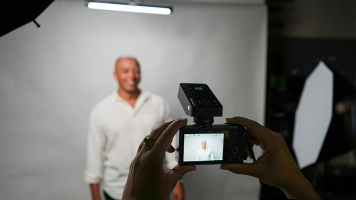
At first glance, studio photography and the compact camera may seem strange bedfellows. The type of work associated with the studio—still life, product photography, portraiture, macro photography—usually wants cameras with larger sensors and interchangeable lenses, especially in professional applications. Compact, point-and-shoot cameras, for their part, have their natural home in everyday, travel, nightlife, and street applications, where their discretion and size become virtues.
It might seem almost cruel to introduce the compact to the
by Mathew Malwitz · Posted
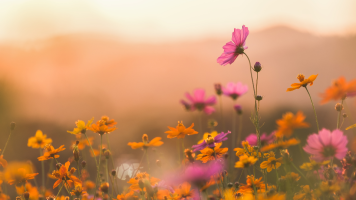
If there’s one question fledgling photographers often ask, it’s “How did you get such a nice background?” Backgrounds are an essential element of a photograph that are often neglected. In fact, it’s safe to say that a background is as important to a composition as the subject itself. After all, a distracting one will detract from an image.
In this guide, we’re going to cover the many methods used to capture clean, smooth backgrounds in our images. This will encompass the settings and gear involved as well as the in-the-field techniques you can

by Mathew Malwitz · Posted
Who doesn’t love a close-up shot of a flower or bumble bee? Some of the most beautiful aspects of nature are quite small and require special tools to capture them in a meaningful way. Whether it be of a cute little insect visiting our garden, or miniature figurines you paint and sell, we need a camera that can focus close and deliver good, quality results.
Before you panic, hear us out. We don’t need to get carried away with complicated lenses and accessories, and can just enjoy yourself with a simple compact,

by John Harris · Posted
It would be foolish to claim that there is only one way to take a portrait, but there are some accepted norms and basic camera settings that you should understand if portraiture is to become your area of photographic interest. Remember though, as you walk down your creative path, that a portrait is more than a headshot, more than a beautiful photo of your subject; it is an opportunity to get to know someone, to have a visual conversation with a person, and to use your photographic skills to pass that understanding of the person on to the

by Todd Vorenkamp · Posted
There is nothing that can replace the extreme close-up view of a rare bird in the wild. Binoculars can get you close but, if you want to look the bird in the eye or confirm that identification for your life list, you need a spotting scope. Spotting scopes pack incredible magnification in a generally simple and lightweight package that is

by Mathew Malwitz · Posted
There’s an old adage that claims in order to be a wildlife photographer, you need a lot of time and a lot of money. This is only partly true. Many great wildlife photo opportunities can occur in urban parks and even in your own backyard, as long as we know what we’re doing. In this article, we’re going to cover a number of essential tips that will help you become a better wildlife photographer.
If you’ve read our introduction

by Mathew Malwitz · Posted
Do you plan your images? Really think about that question. Do you have an idea of an image before you head out for a shoot, or do you let the moment inspire you as the pieces fall into place? There's no wrong answer here. Planning or "pre-visualization" is a key piece of the photography puzzle that some put a lot of thought and effort into while others effortlessly come up with ideas on the fly.
No matter how you go about taking a picture, there is some level of planning that goes into a shot. With that said, there's a big difference between

by Mathew Malwitz · Posted
Despite what you might have seen on the internet, you don’t need all the money and time in the world to photograph wildlife. Sure, an African safari would be nice, but it is by no means the only way to capture stunning images of wild animals. In fact, regardless of where you live, odds are there’s a vast ecosystem that likely goes unnoticed. If you have trees in your neighborhood, you’re off to a great start.
What You Need to Photograph Wildlife
While gear plays a crucial role in our ability to photograph wildlife, it isn’t everything. In this

by Mathew Malwitz · Posted
Photography is by definition, the capture of light on a light sensitive surface. That surface could be glass, tin, film, or a digital imaging sensor like those found in most modern cameras. The amount of light that reaches our light-sensitive surface is what we can define as exposure.
A good exposure will look accurate to life or the photographer's creative vision. It will maximize an images quality and

by Mathew Malwitz · Posted
What better place to spend a Saturday morning than the zoo. You can enjoy some time outside, all while seeing a variety of both local and exotic animals you'd otherwise never dream of encountering. Zoos also are great place to try your hand at photographing wildlife! In this guide, we're talking about taking our camera to the zoo to capture natural looking images of animals in their element! We'll be covering what you need as well as tips and tricks that'll help you capture stunning, natural looking images of animals.
Above photograph © Mathew

by Steven Gladstone · Posted
Whether you’re a student or a seasoned veteran, selecting the right camera can make your head spin with questions. Does sensor size matter? What’s the difference between 4:2:0 and 4:2:2? Do I really need a camera that can record 8K? What about raw? We’ll explain the key components that help a camera produce cinematic images, and in doing so, hopefully help you make that all-important decision.
Evaluate Your Needs and Your Budget
Before considering certain cameras, you must know your needs and your budget. And be realistic. If you are a student

by Luke Rollins · Posted
Macro photography never ceases to amaze me. Show me the face of a jumping spider reproduced at life-size or greater and I’ll undoubtedly stop what I’m doing and stare at it for a while. What’s interesting is how ultra-wide-angle lenses, which are available for DSLRs and

by Mathew Malwitz · Posted
As you begin to research cameras, you’ll likely hear some technical jargon about sensors. While it’s easy to ignore some elements of any devices, there’s no way to work around sensors. But what is a sensor and what does it do? In this guide, we’re diving into the often confusing world of imaging sensors. By time we’re done, you’ll have a better understanding of the most significant component in our digital camera.
About Sensors
What Is an Imaging Sensor?
At the heart of our digital cameras sits an imaging sensor, which serves as the digital

by Mathew Malwitz · Posted
Portraiture: It’s one of the most popular and prevalent forms of photography. Although it may seem simple on paper, it comes with its own unique obstacles. Of course, you’ll want to be familiar with your gear. This is essential to all working photographers, but it allows you to focus your efforts on the genre-specific challenges you’ll face.
When photographing people, you’ll find that some folks are photogenic, while others are not. Your job as a photographer is to break down the barriers set by your clients and to put them in the most