Search results for: photography tips solutions how to get started in film photography
About 37 filtered results
by John Harris · Posted
It would be foolish to claim that there is only one way to take a portrait, but there are some accepted norms and basic camera settings that you should understand if portraiture is to become your area of photographic interest. Remember though, as you walk down your creative path, that a portrait is more than a headshot, more than a beautiful photo of your subject; it is an opportunity to get to know someone, to have a visual conversation with a person, and to use your photographic skills to pass that understanding of the person on to the

by Mathew Malwitz · Posted
Are you interested in the wide and wonderful world of photography? Well, you’ve certainly come to the right place! Check out this short checklist of a dozen items, designed to get you started in digital or film photography and headed in the right direction.
1. Interest
The first thing you need is an interest in photography. If you are reading these words, you likely already checked that box. If you are debating whether to take the dive into photography, you might want to give it some careful thought, or cater your purchases toward your level

by Allan Weitz · Posted
For the longest time, comparing image quality between point-and-shoot cameras and full-frame cameras, or even APS-C format cameras, was a conversation you could have start to finish during the course of an elevator ride. Point-and-shoot cameras were convenient, but the detail and dynamic range of their smaller sensors never measured up to the detail and dynamic range you get from larger sensors. And then one day Sony introduced a new 1" format CMOS sensor, and BOOM! People started having second thoughts about slinging heavy camera bags over

by Todd Vorenkamp · Posted
Raw vs. JPEG. The debate has persisted since the early days of digital photography. With modern digital technology, in-camera JPEG processing has never been better. Across brands, some photographers claim to have switched their workflow to JPEG exclusively, forgoing the advantages (and disadvantages) of shooting raw files. Others shoot raw + JPEG simultaneously to enjoy the benefits of both. Of course, many shoot only raw images. With a week in Ireland to focus on photography, I decided to dive deeper into the raw vs. JPEG option and see if it

by Jill Waterman · Posted
After bonding over a mutual love for exploring and some crazy outdoor adventures during college, Berty and Emily Mandagie honed their respective photography and writing chops before starting their blog, The Mandagies, in 2016. In the past five years their eponymous brand has grown into one of the Internet’s leading Pacific Northwest travel resources, leading us to invite them onboard as our next B&H Creator of the Week.
In our conversation below, the Mandagies share their love for the Oregon coast

by Todd Vorenkamp · Posted
If someone were to ask me what is the fastest, easiest, and most effective way of instantly improving their photography, my answer would be: a tripod. In the quest to make better photographs, we often dream of owning the latest camera body or the most expensive lenses. For many of us, these remain out of reach and impractical. A quality tripod, however, can be had for less than the price of a New York City dinner for two (with drinks) and, because of that, I

by Jill Waterman · Posted
Jean Fruth is a diehard baseball fan. “Growing up in New York, with two great hometown teams, how could you not connect with the sport?” she asks. As a teen, she worked in a restaurant owned by serious Mets fans who had season tickets, “And they would take me to games,” she reminisces. “And my grandfather was a Mets fan, listening to games on the radio.”
Such formative influences foreshadow her ultimate path to becoming one of baseball’s preeminent photographers, yet it took many years of exploration for Fruth to put a plan into action. “My

by Todd Vorenkamp · Posted
Macro and close-up photographers often employ the technique of “focus stacking” to increase the depth of field in their images. While this is often done in a controlled studio environment with a sturdy tripod or support and sometimes the benefit of macro focusing rails, it is possible to use this technique out in the field armed only with a minimal amount of gear. Handheld focus stacking is challenging, fun, and can produce some great results.

by Allan Weitz · Posted
I’ll never forget the first time I looked through the viewfinder of a camera fitted with a 20mm ultra-wide-angle lens. Everything looked amazing and I blew several rolls of film shooting everything I saw along the way. Prior to using this “exotic” lens, I had never shot with anything wider than the 50mm normal that came with my first 35mm camera.
The sobering part came when I developed the film and started eyeballing the results of my first outing. In a word, they were underwhelming, but I kept at it until I figured out how to use ultra-wide

by Todd Vorenkamp · Posted
FUJIFILM continues to lead the digital photography world with its unique and beautiful film simulations that give FUJIFILM X series APS-C interchangeable lens, X series fixed lens, and

by Todd Vorenkamp · Posted
Is it strange to sit back and think that buying a film camera is a new experience to many—even most—photographers? Just 20 years ago, almost everyone was buying and using film cameras. Today, there are legions of photographers who have never shot a single roll of film. Luckily for us, film photography still exists and there are both film and film cameras that you can buy with which

by Cory Rice · Posted
Mastering studio lighting can feel like a Herculean feat when you’re just getting started. Like any aspect of photography, it requires patience, practice, and plenty of mistakes before it comes naturally. In an effort to shorten your learning curve, we’ve rounded up 10 common issues that beginners encounter and how to fix them.
Technical Issues
Lighting setups can be as simple or complicated as your heart desires—or your shot requires. However, before you can begin to think about how to use your lights creatively, you need to understand how
by Allan Weitz · Posted
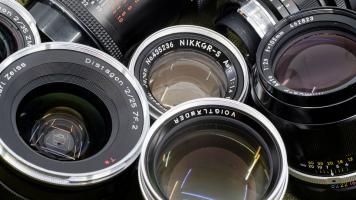
How “good” are vintage lenses when used on modern digital cameras? In a word, vintage lenses are “fine,” though I would have to immediately follow that statement by adding, “It depends,” because there are always exceptions to the rules, though even in these cases, the lens in question often works fine albeit with a technical or optical shortcoming of sorts.
Original photographs © Allan Weitz 2020
When adapting older-generation film camera lenses to DSLRs and mirrorless cameras, most perform well in terms of sharpness, color fidelity, color

by Jill Waterman · Posted
Photo education has undergone significant changes since the story Photography Student? Here Is Some Advice from Teachers was published last year at this time—changes that are no less dramatic than the process of teaching and learning as a whole. With the sudden shift from face-to-face classes to remote learning, in March 2020, teachers and students scrambled to face unique challenges and solve unforeseen

by Jill Waterman · Posted
As described in our companion article that makes up Part 1 of this story, both teachers and students scrambled to face unique challenges and solve unforeseen problems with the sudden shift from face-to-face classes to remote learning in March 2020. Since a new school year is now upon us, we asked a diverse group of educators for updated tips, as well as insights about the online teaching/learning process.
In Remote