Search results for: photography tips solutions image stabilization what you need to know
About 24 filtered results
by Allan Weitz · Posted
For the longest time, comparing image quality between point-and-shoot cameras and full-frame cameras, or even APS-C format cameras, was a conversation you could have start to finish during the course of an elevator ride. Point-and-shoot cameras were convenient, but the detail and dynamic range of their smaller sensors never measured up to the detail and dynamic range you get from larger sensors. And then one day Sony introduced a new 1" format CMOS sensor, and BOOM! People started having second thoughts about slinging heavy camera bags over

by John Harris · Posted
Many photographers, attempting to postpone a major decision or save money, will buy a lens they believe will give them the results they desire, only to find that the lens does not perform as expected. When budget is a factor (and when isn’t it?), it’s important to select a telephoto lens that best serves your specific purposes. When it comes to sports and wildlife photography, the purposes are often similar—magnify distant subjects, separate the subject from background—but it’s worth understanding a few basic distinguishing features and how

by Emily Mandagie · Posted
"Alright, your time in flight will be approximately twelve minutes." Berty and I swallowed that weighted sentence and nervously nodded in response. Smiles were on the outside, but deep inside we were wondering how in the world we were going to make the most of those fleeting seconds in that helicopter and capture exactly what we wanted from the sky!
Aerial photography can be exciting and exhilarating. But it can also come with a lot of added challenges, such as time limits, weather conditions, and—let's be real—a large expense! (Flights aren't

by Todd Vorenkamp · Posted
One of the first words I learned how to say was, “Moon.” All of my life, I have been fascinated by our natural satellite and I have been photographing it for as long as I have had a camera. My photos have gotten better over the years, but I still search for the perfect photo of the moon. Here are some tips and thoughts for your own lunar photography.
Above photograph: A waxing gibbous moon the day before the full moon. FUJIFILM X-T1; Leica APO-Televid 77 spotting scope @ 1000mm (1500mm, 35mm equivalent); f/13, 1/500-second, ISO 200

by Jill Waterman · Posted
Making pictures by night is a curious practice. While specialists of this subject embrace it as a deep-seated passion and have a never-ending quest for technical and creative advancement, those more familiar with daytime photography are often unaware that tried and true photography rules often need to be adapted or even overlooked at night. With this in mind, consider the following tips the next time you venture out in the darkness, to help you to adapt.
1. Take a Chance and Explore the Unknown
What’s my exposure time? This is the number one

by Cory Rice · Posted
Every portrait photographer who started with a kit zoom remembers the first time they swapped it out for a prime lens. The “Wow” factor of a bright, sharp prime is hard to match, even with the best zooms. Optical benefits aside, working from a fixed focal length encourages more natural photographer-sitter interactions and better spatial awareness. Read on to learn why so many portrait photographers love their prime lenses.

by Todd Vorenkamp · Posted
When most of us think of “sports photography,” we immediately think of iconic images from the world of land-based sports—American football, track and field, boxing, baseball, and others. One could argue, however, that yacht racing and sailing regattas provide the canvas for some of the most spectacular images in all of sports. And, if you have spent time around the water, seen the framed print on the wall of my physical therapist’s office, or flipped through the pages of any sailing magazine, you might have noticed that professional sailboat

by Bjorn Petersen · Posted
There’s no denying the appeal of fast lenses and super versatile zooms, but sometimes a small and compact prime lens is all you really need—especially if you’re a landscape photographer. Whether it’s for the smaller footprint, lighter weight, or just because you like the look of a certain lens, there are many cases for trading in the huge, heavy, and complex lenses for the humble, compact, and slower prime.
Smaller and Lighter
The most obvious reason to go the way of the slow prime is because of the noticeable savings in weight and size. If

by Todd Vorenkamp · Posted
Macro and close-up photographers often employ the technique of “focus stacking” to increase the depth of field in their images. While this is often done in a controlled studio environment with a sturdy tripod or support and sometimes the benefit of macro focusing rails, it is possible to use this technique out in the field armed only with a minimal amount of gear. Handheld focus stacking is challenging, fun, and can produce some great results.

by Allan Weitz · Posted
A friend of mine once described his favorite wide-angle lens as his “gateway to landscape photography,” and that’s a pretty good metaphor for wide-angle lenses if I ever heard one. Wide-angle lenses and ultra-wide-angle lenses naturally lend themselves to capturing landscapes with a sense of depth. They also tend to capture a sense of drama that you seldom get when photographing landscapes with longer focal length lenses.
Photographs © Allan Weitz 2021
Wide-angle lenses feature angles of view (AoVs) ranging from about 63° to about 74°, which
by Todd Vorenkamp · Posted
Welcome to the world of large(r)-aperture prime lenses and congratulations on taking a large step forward in your photographic journey with your purchase of a “nifty fifty” 50mm (or 50mm equivalent) wide-aperture lens for your camera! Whether you know it or not, you have just acquired a tool that can dramatically and immediately improve your photography, and this article is designed to help you start getting the most out of your new lens.
Photographs © Todd Vorenkamp, taken with a 50mm (or 50mm equivalent) lens
Regardless of whether you have a

by Allan Weitz · Posted
I went out for a walk with my camera one recent morning. It was bright and sunny—a perfect day for taking pictures. The camera ISO was set at 400, the aperture on my 105mm lens was three-and-a-half stops down from maximum aperture (the “sweet spot”), and my shutter speed was set to 1/500-second. According to the rules—never handhold a camera at a shutter speed slower than the numeric value of the lens in millimeters you are using—there was no reason I should have expected anything other than sharp pictures. Imagine my surprise when I opened
by Allan Weitz · Posted
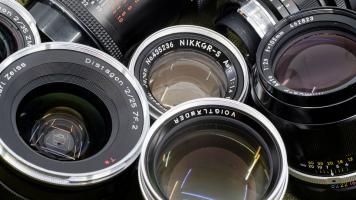
How “good” are vintage lenses when used on modern digital cameras? In a word, vintage lenses are “fine,” though I would have to immediately follow that statement by adding, “It depends,” because there are always exceptions to the rules, though even in these cases, the lens in question often works fine albeit with a technical or optical shortcoming of sorts.
Original photographs © Allan Weitz 2020
When adapting older-generation film camera lenses to DSLRs and mirrorless cameras, most perform well in terms of sharpness, color fidelity, color

Posted
In early July 2020, Canon announced a pair of EOS R-series cameras that should prove to be true game changers in the world of mirrorless cameras. The new cameras are the Canon EOS R5 and R6. Both are full-frame cameras—the R5 features a 45MP sensor, the R6 features a 20MP sensor—and have amazing stills and video. The following is everything else you need to know about these exciting new cameras.
Also, at the top of this page is a replay of our Live Q&A with Canon Technical Expert Rudy Winston. You'll find some questions have an

by Shawn C. Steiner · Posted
If you are here I’m guessing you’ve done a time lapse or two, maybe read our introductory article or Stan Moniz’s night-specific piece, and want to see how you can make your time lapses even better. I’ll admit it, time lapses are tough. There is a ton of information you need to know about photo and video to make