Search results for: photography tips solutions photographers guide food photography
About 16 filtered results
by Mathew Malwitz · Posted
Wildlife photography is one of the most therapeutic and rewarding genres of photography and it’s also one of the most popular. There’s just something so special about being able to witness the magic, and with new camera tech, wildlife photography is easier than ever. That said, the thrill of the shot can overshadow good decision-making, leading to unethical practices. But what are ethical practices?
Take nothing but photographs, leave nothing but footprints—an adage well-known by nature enthusiasts of all levels, but not all that practical.

by Mathew Malwitz · Posted
You don’t have to go far to capture fun and engaging images of wildlife. In fact, you may not have to go anywhere at all. A carefully landscaped yard and the right tools can attract an impressive variety of animal life to observe and photograph. Pair that with a little patience and soon you’ll be capturing stunning images from the comfort of your own home.
Attracting Birds
Birds are part of nearly every environment, from the densest cities to rural areas. While they are common, we’ll need to offer three essentials—water, shelter, and food—to
by Mathew Malwitz · Posted
Through the cacophony of forest sounds, your ears home in on a buzzy, almost garbled ascending song. Perhaps you recognize it immediately, or maybe you need to confer with one of the trusty internet databases or apps. You train your eyes on the canopy, scanning for movement of any kind, when you see it: the cerulean warbler, a small rowdy songbird with wings slightly splayed from the body. Quickly, you lower your binoculars and train your camera on the little blue passerine before snapping a few frames.
The resulting photos clearly show the

by Mathew Malwitz · Posted
Weddings are fast-paced events for photographers, and there’s so much to do. From portraits of the bride and groom to family formals, there’s much to cover, and we haven’t even scratched the surface yet. While all focus is on the bride, groom, and their families, there’s a lot of behind-the-scenes material to capture. As wedding photographers, you need to wear many hats, and that includes landscape, food, and product photography.
Proficiency in photographing product is a must, as there are many details and accoutrements to photograph

by Mathew Malwitz · Posted
Any place in the world can be a photo destination in the winter, but the general idea is to explore a few locations that offer wonderful photographic possibilities in winter that they might not offer in summer. We want to make use of all that snow and everything else the cold temperatures have to offer. After all, we can enjoy the warmer weather come spring. We can always blend in a bit of that warm escapism we all crave after a few months of short days, snow, and cold.
Lake Reschen and South Tyrol, Italy
The Tyrol region of northern Italy and

by Mathew Malwitz · Posted
Despite what you might have seen on the internet, you don’t need all the money and time in the world to photograph wildlife. Sure, an African safari would be nice, but it is by no means the only way to capture stunning images of wild animals. In fact, regardless of where you live, odds are there’s a vast ecosystem that likely goes unnoticed. If you have trees in your neighborhood, you’re off to a great start.
What You Need to Photograph Wildlife
While gear plays a crucial role in our ability to photograph wildlife, it isn’t everything. In this

by Mathew Malwitz · Posted
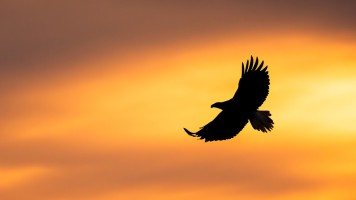
If there’s one area of wildlife photography that challenges even some of the most consummate artists, it’s birds in flight. A dynamic flight shot shows action, and a bit of technical prowess. As you can imagine, capturing birds in flight is no easy feat.
To consistently capture these shots, one must be proficient with their gear and have a knowledge of animal behavior. We’d go as far as to say you need a bit of luck too, but what is luck if not preparedness meeting opportunity. In order to make the most of the opportunities that present

by Allan Weitz · Posted
Though there aren’t any hard rules on the subject—and all rules are made to be broken—wide-angle and ultra-wide-angle lenses are often considered to be the go-to lenses for landscape photography. It’s not like you can’t capture wonderful landscapes with normal or telephoto lenses (you absolutely can), but due to their broad capture angles, wide- and ultra-wide-angle lenses usually win out over the alternative choices. For those who wish to go wider than ultra-wide, you have to turn to fisheye lenses.
Photographs © Allan Weitz 2020
What Is a

by Cory Rice · Posted
Wildlife photography doesn’t necessarily entail braving wilderness in search of elusive species inhabiting remote locations. A carefully landscaped yard can supply an impressive variety of animal life to observe and photograph. In this article, we go through five tips for turning your backyard into a red carpet for local wildlife.
Know your Neighbors
Research, research, research. Find out what wildlife lives in your area. Visit a local nature preserve and/or Audubon Society and talk

by Cory Rice · Posted
Photo studios come in all shapes and sizes. If you are working with small subjects, there is no reason to rent a massive loft or build an addition onto your house to get the shots you need. In many of these cases, a functioning setup can take up as little space as a table. Like all things related to photography, tabletop studios can be as simple or complex as their creators require. For basic applications, plenty of all-in-one kits exist for “non

by Bjorn Petersen · Posted
One of the genres of photography in which nearly everyone participates to some degree, landscape photography is one of the most classic and traditional categories of our medium. It is representative for so many reasons, whether being used for conservation purposes, documentary, backgrounds, events, or as a symbol—landscapes, as mundane or as grand as they might be, are the settings in which we exist. So how do we photograph these spaces? Or, more pointedly, how do we successfully photograph the land? It’s a rich topic, but on a practical level

by Cory Rice · Posted
Photography is a social medium. For many of us, our cameras are a means of getting out of the house, exploring the world, and connecting with the people and places we encounter along the way. So, what's a photographer to do while confined to the home front for days on end? Here are some tips for staying inspired, productive, and creative that don't require leaving the house.
Make Portraits
Keep shooting! Family members, partners, and roommates can all make compelling subjects for portrait and documentary projects.

by Todd Vorenkamp · Posted
You are passionate about photography. You are passionate about travel. Maybe you just want to combine your passion for photography with travel to a destination you have always dreamed of visiting. Whatever the reasons for being there, participating in a photography workshop while travelling is a fantastic way to not only improve your photography skills, but also to experience the people and culture of that place. Added to that, you will likely be spending time with others who share your passion for the art of photography, and new friendships
by Shawn C. Steiner · Posted
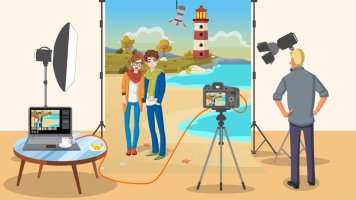
Winter may not be here just yet, but it is starting to feel like it. Once the weather turns cold and stays there, it can be difficult to find the motivation to go out and take photos. Many would take this time to relax, organize their hard drives and studio, and clean up their gear. I want to recommend that you try tethering to keep your creativity pumping, even though you are stuck indoors.
Essential Accessories
For many, the tools needed to shoot tethered are likely already in your possession. This includes a camera,

by Dawn Wayand · Posted
As a new studio photographer, you may have found your niche in fashion, portraits, or headshots. Perhaps you like macro photography or shooting food and products. Regardless of what you specialize in shooting, you’ll need a studio space. However, many photographers cannot afford the expense of a commercial studio, and will find creating a home studio to be a more cost-effective option.
Above photograph © Robert Olsen