Search results for: photography tips solutions rule thirds
About 34 filtered results
by Luke Rollins · Posted
Achieving a standard of production value is an essential component of establishing a brand and growing a following. For part-time, burgeoning, and mid-level creators, it can feel like bridging that gap is less a matter of learned skill and more about the equipment you can afford.
In most cases, the problem isn’t budget at all. Acquiring the specific know-how can give your content professional sheen with little to no financial outlay.
Lighting design is arguably the most immediately visible production component—and the one most capable of

by Steven Gladstone · Posted
When creating images for a film, you try to balance your shots so that you draw the audience into the movie, while at the same time they forget that they are watching a movie. Usually, the last thing you want is to break the illusion and have the audience snap out of their reverie.
As you read this article, you may want to pause and rewatch some classic films, or films that had a powerful effect on you. Examining the new and different techniques, lighting, and compositions used to create impact, mood, and feeling will help you grow as a
by Mathew Malwitz · Posted
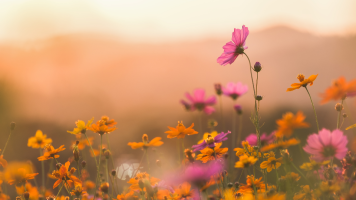
If there’s one question fledgling photographers often ask, it’s “How did you get such a nice background?” Backgrounds are an essential element of a photograph that are often neglected. In fact, it’s safe to say that a background is as important to a composition as the subject itself. After all, a distracting one will detract from an image.
In this guide, we’re going to cover the many methods used to capture clean, smooth backgrounds in our images. This will encompass the settings and gear involved as well as the in-the-field techniques you can

Posted
Now that you understand your camera from Part 1, the next step is understanding what makes a good photograph. Derek goes over some of the core elements of photo theory, composition, perfective, and storytelling.
0:00 - Intro
5:05 - Review of what makes an effective photograph
5:47 - Composition
12:54 - Rule of thirds
18:37 - Golden/Fibonacci spiral
23:47 - Leading lines
32:59 - Negative space
38:29 - Asymmetry
41:52 - Frame within a frame
43:10 - Patterns/Repetition
44:34 - Perspective
55:01 - Storytelling - Photo breakdown
1:15:29 - Photo

by Mathew Malwitz · Posted
Composition in photography refers to the way in which we arrange visual elements in an image. It's how we position the subject in the frame and how all elements combine to create a visually appealing photograph.
All photographs © Mathew Malwitz
Expensive cameras and long lenses can only get us so far. It's not the gear that makes the photo, but the photographer. A creative and observant eye is the key to making visually pleasing photographs. These skills can be learned, and with practice, you'll be well on your way to creating strong

by Mathew Malwitz · Posted
These days, everyone has a camera right in their pocket. Smartphones have long been the go-to camera for quick photos of our friends, family, pets, and of course, ourselves. With features like portrait mode, users can simulate blurry backgrounds and isolate their subject for more eye-catching images. What else could you ever need? What if I told you that with the

by Rachel Leathe · Posted
Did you know that the first photograph ever taken was of a landscape?
“View from the Window at Le Gras” was captured by Nicéphore Niépce, in 1827. It features a very abstract view from Niépce’s window. Then, in 1839, Louis-Jacques-Mandé Daguerre made history with his image of

Posted
In Part 3 of this four-part Introduction to Photography series, Sony Artisan of Imagery Tony Gale breaks down the principles of composition.
0:00 - Introduction
3:12 - Composition: Why and How to Frame a Photo
7:24 - What Are You Trying to Say in Your Photos?
9:06 - What's in the Frame?
15:41 - Composing In-Camera
19:24 - Balance, Symmetry, Reflection, and Repetition
20:21 - Edges of the Frame/The Form of Elements in the Frame
27:35 - Lens Choice
31:24 - Finding the Angle
27:26 - Rule of Thirds, Leading Lines, and Framing
41:15 - Camera Tools

by Todd Vorenkamp · Posted
When the moon passes directly between Earth and the sun, those on Earth are treated to one of nature’s greatest spectacles—a total solar eclipse. It is a phenomenon that almost every observer would like to capture in a photograph.
Due to the rarity of the event, the short duration in which to capture it, and the dynamic nature of the subject, it is one of those photographic opportunities that requires the proper gear, setup, planning, and practice.
Eclipse and solar

by Todd Vorenkamp · Posted
One of the first words I learned how to say was, “Moon.” All of my life, I have been fascinated by our natural satellite and I have been photographing it for as long as I have had a camera. My photos have gotten better over the years, but I still search for the perfect photo of the moon. Here are some tips and thoughts for your own lunar photography.
Above photograph: A waxing gibbous moon the day before the full moon. FUJIFILM X-T1; Leica APO-Televid 77 spotting scope @ 1000mm (1500mm, 35mm equivalent); f/13, 1/500-second, ISO 200
by Caleb Quanbeck · Posted
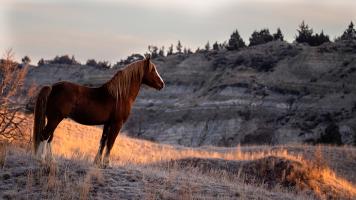
Getting close enough to wild animals is one of the greatest challenges a wildlife photographer faces. So how do you solve this problem? The way most wildlife photographers do is to buy a telephoto lens with as much reach as their wallet allows. Today, a fairly economical way to enter the realm of the super-telephoto lens has been via the family of very nice 150-600mm lenses from brands like Sigma and

by M. Brett Smith · Posted
Portrait photography, or portraiture, remains one of the most popular genres of photography today—and for good reason. Portraits are compelling; they are evocative. Portraits tell a story; they elicit an emotion. Shot correctly, a portrait can reveal the true essence of a person, who they are and what they feel. According to Godard, portraiture is tantamount to capturing the soul. About what other medium or form of expression could you say such a thing?
As with most genres of photography, portraiture is not beholden to any one specific

by Todd Vorenkamp · Posted
Thirty? Really? Thirty questions for every photo? The title of this article might make you think there’s a burdensome checklist that must be completed every time you release the camera’s shutter.
There is not.
However, if you want to take your photography to new dimensions, this list of questions—some dealing with the physical act of the photograph and some dealing with the inner thoughts behind the image—might be just what you need to get your head, feet, or camera in the right place, to help make a good photograph great or a great photograph

by Allan Weitz · Posted
I’ll never forget the first time I looked through the viewfinder of a camera fitted with a 20mm ultra-wide-angle lens. Everything looked amazing and I blew several rolls of film shooting everything I saw along the way. Prior to using this “exotic” lens, I had never shot with anything wider than the 50mm normal that came with my first 35mm camera.
The sobering part came when I developed the film and started eyeballing the results of my first outing. In a word, they were underwhelming, but I kept at it until I figured out how to use ultra-wide

by Todd Vorenkamp · Posted
Tunnel View in Yosemite National Park is one of the most scenic overlooks on the entire planet. Because of its sheer beauty, it is difficult to walk away from it with a bad photograph. (I have always said that it is easier to make a beautiful photograph of something that is already beautiful than it is to make a beautiful photograph of something that is not beautiful.) And, almost every camera-armed tourist who drives out the end of the Wawona Tunnel on State Highway 41 comes away with a very similar photograph—similar to the one that Ansel