Search results for: photography tips solutions understanding filters
About 19 filtered results
by Mathew Malwitz · Posted
For macro photographers, having the right gear is essential. Magnification and lighting are key, but you don’t necessarily need the biggest, priciest macro lenses out there to get close-up shots. If you’re a macro photographer yourself or buying a gift for one, we have some excellent recommendations for every budget.
Gifts Under $50
1. Close-up macro filters (like this
by Mathew Malwitz · Posted
Through the cacophony of forest sounds, your ears home in on a buzzy, almost garbled ascending song. Perhaps you recognize it immediately, or maybe you need to confer with one of the trusty internet databases or apps. You train your eyes on the canopy, scanning for movement of any kind, when you see it: the cerulean warbler, a small rowdy songbird with wings slightly splayed from the body. Quickly, you lower your binoculars and train your camera on the little blue passerine before snapping a few frames.
The resulting photos clearly show the

by Mathew Malwitz · Posted
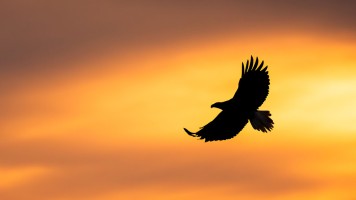
If there’s one area of wildlife photography that challenges even some of the most consummate artists, it’s birds in flight. A dynamic flight shot shows action, and a bit of technical prowess. As you can imagine, capturing birds in flight is no easy feat.
To consistently capture these shots, one must be proficient with their gear and have a knowledge of animal behavior. We’d go as far as to say you need a bit of luck too, but what is luck if not preparedness meeting opportunity. In order to make the most of the opportunities that present

by Mathew Malwitz · Posted
What better place to spend a Saturday morning than the zoo. You can enjoy some time outside, all while seeing a variety of both local and exotic animals you'd otherwise never dream of encountering. Zoos also are great place to try your hand at photographing wildlife! In this guide, we're talking about taking our camera to the zoo to capture natural looking images of animals in their element! We'll be covering what you need as well as tips and tricks that'll help you capture stunning, natural looking images of animals.
Above photograph © Mathew

by Trevor Collins · Posted
These days it often seems like everyone has a podcast. With so much competition and so many options for podcasting-centric equipment, it can be daunting to dive in headfirst without knowing the ropes. That’s where B&H comes in, with another all-encompassing guide to set you up for success and help you get your content off the ground as painlessly as possible. Let’s begin.
Why Make a Podcast?
The first topic couldn’t be simpler: Why even start a podcast? The answer is simple−because it’s the best way to get your content to the masses.

by Tim Ireland · Posted
Macro photography allows photographers to explore the intricate details of subjects at a 1:1 or greater magnification ratio. However, capturing sharp, stable, and well-lit macro shots can be challenging, due to factors like camera shake, focusing difficulties, and lighting issues. This comprehensive guide will delve into the support systems and related tools that can enhance your macro photography experience, addressing specific challenges that may arise.
Stabilization Tools
Studio Stands: Studio stands are large, stable support systems

by Stepan Andranikian · Posted
So you just finished watching a great white shark feeding video and thought, “Wouldn’t it be awesome to be in the water with a camera to film this feast?” I'm right there with you, which is why today we’ll be diving into the world of underwater video creation, from the gear you’d need, to tips for getting the perfect action shot.
Before we get into it, I’d like to leave a little disclaimer: while venturing out into the vast and expansive deep blue is a riveting adventure, please practice caution and, if you’re not experienced in underwater

by Tim Ireland · Posted
Photography is often described as painting with light, and understanding how to manipulate light effectively is a fundamental skill for any photographer. While natural light has its place, using strobes and lighting modifiers can give you greater control over your lighting conditions, especially for product photography. Having a solid understanding of basic lighting gear and lighting modifiers will introduce you to simple yet effective lighting techniques, helping you take your product photography to new dimensions.
Understanding Strobes

Posted
Trying to photograph the night sky but light pollution is getting in the way? Landscape and astrophotographer Jess Santos shares her knowledge regarding light pollution and how to combat it when you’re taking nightscape images. Watch and learn to understand the Bortle Scale, how to find locations, what filters to use, and more.
Where do you want to take night landscape photos? Let us know in the Comments section, below!

by Shawn C. Steiner · Posted
Time lapses feel a lot like photography during capture stages and a lot like video during the editing process. Creating them is a common progression for photographers looking to dip their toes into video and motion because you can start making high-quality time lapses with your current still photo equipment. If you are starting to tackle time-lapse projects, applying some video tricks can help smooth out your final product.
The Absolute Basics
I’m hoping that by the time you make it to this article you already have a basic understanding of how

by Bjorn Petersen · Posted
There is a lot of talk about lighting and photography, and specifically how learning to use light can make you a better photographer. This is true, of course, but is also a notion that’s more often applied to working with artificial lighting, such as for portraits or products, where you can work in a studio with a strobe or LED to fine-tune how your shot looks. When it comes to landscapes, on the other hand, most likely you won’t have the ability to or just won’t want to use artificial lighting for your scenic shots. This is part of the

by Cory Rice · Posted
When many people think of special effects, they think of dimly lit rooms, expensive computers, and complicated software. While this may be an accurate picture if you are editing a blockbuster action movie, digital still photographers can do a lot to their images even before transferring files off their camera. The following guide covers some of the more popular in-camera effects on the market to consider when purchasing a new camera or for better understanding the camera you already own.
Film Simulation and Color Profiles
In recent years,

by Mary Latvis · Posted
If you’ve lived in New York long enough, it’s bound to happen to you one day as you turn a corner: you’ll be gazing from the sidewalk as a movie, TV show, or commercial is being shot. You may ask yourself, “Who are all those people besides the actors standing around on the set?” Read on to discover the crew positions that you’ll find listed in the credits of most professional productions, and how, despite appearances to the contrary, the crew is indeed putting in a full day’s work, and then some.
As befits B&H Photo Video’s focus on all

by Allan Weitz · Posted
Sometimes, the phrases, acronyms and strings of numbers or number-letter combinations used to identify photographic hardware or techniques can be daunting to the uninitiated neophyte photographer.
We've prepared a list of the basic terms. Have we left any out that you think should be added? Please let us know!
0-9 | A | B | C | D | E | F | G | H | I |

by Steven Gladstone · Posted
In the world of film production, a Digital Imaging Technician (DIT) can be many things. Depending on the scope of the production, the scope of their job is constantly evolving. Taking advantage of the wonders of email, I checked in with a few working DITs to get a better understanding of their complex and ever-changing job. What became apparent quickly was that although most people in the industry start off as beginners, taking on the role of DIT requires a healthy balance of experience, people skills, technical knowledge, and an almost