Search results for: photography tips solutions wildlife photography tips birds flight
About 23 filtered results
by Mathew Malwitz · Posted
Have you ever taken a photo that looked so good on the back of your camera, only to get home and see that it’s just not sharp? We’ve all been there, and even the experts miss more shots than they keep. That said, there are many tricks and techniques we can learn to improve the odds. In today’s guide, we’re looking at five techniques to aid us in confidently capturing tack-sharp photographs.
Sharpness is critical in most genres of photography, especially nature and wildlife. Sure, we can intentionally blur elements to showcase motion. We

by Mathew Malwitz · Posted
Birding is, by definition, the recreational hobby of observing and identifying wild birds in their natural habitat. Finding birds is the easy part. Just go outside and stop, look, and listen, and you’ll notice our feathery friends like you’ve never seen before. But how do we identify them? We need to consider a few physical attributes of the birds, from their overall shape to the length of their tail and more.
Birds come in all sorts of elaborate shapes, sizes, and color patterns that make them stand out, or in some cases, remain hidden from

by Mathew Malwitz · Posted
There’s an old adage that claims in order to be a wildlife photographer, you need a lot of time and a lot of money. This is only partly true. Many great wildlife photo opportunities can occur in urban parks and even in your own backyard, as long as we know what we’re doing. In this article, we’re going to cover a number of essential tips that will help you become a better wildlife photographer.
If you’ve read our introduction

by Mathew Malwitz · Posted
Composition in photography refers to the way in which we arrange visual elements in an image. It's how we position the subject in the frame and how all elements combine to create a visually appealing photograph.
All photographs © Mathew Malwitz
Expensive cameras and long lenses can only get us so far. It's not the gear that makes the photo, but the photographer. A creative and observant eye is the key to making visually pleasing photographs. These skills can be learned, and with practice, you'll be well on your way to creating strong

by Mathew Malwitz · Posted
Any place in the world can be a photo destination in the winter, but the general idea is to explore a few locations that offer wonderful photographic possibilities in winter that they might not offer in summer. We want to make use of all that snow and everything else the cold temperatures have to offer. After all, we can enjoy the warmer weather come spring. We can always blend in a bit of that warm escapism we all crave after a few months of short days, snow, and cold.
Lake Reschen and South Tyrol, Italy
The Tyrol region of northern Italy and

by Mathew Malwitz · Posted
Despite what you might have seen on the internet, you don’t need all the money and time in the world to photograph wildlife. Sure, an African safari would be nice, but it is by no means the only way to capture stunning images of wild animals. In fact, regardless of where you live, odds are there’s a vast ecosystem that likely goes unnoticed. If you have trees in your neighborhood, you’re off to a great start.
What You Need to Photograph Wildlife
While gear plays a crucial role in our ability to photograph wildlife, it isn’t everything. In this

by Mathew Malwitz · Posted
If there’s one area of wildlife photography that challenges even some of the most consummate artists, it’s birds in flight. A dynamic flight shot shows action, and a bit of technical prowess. As you can imagine, capturing birds in flight is no easy feat.
To consistently capture these shots, one must be proficient with their gear and have a knowledge of animal behavior. We’d go as far as to say you need a bit of luck too, but what is luck if not preparedness meeting opportunity. In order to make the most of the opportunities that present

Posted
Photographer, Isaac Grant will teach you the best practices to capture memorable and dynamic photos of birds in flight. He'll cover all the techniques and strategies to help you elevate your flight photography skills.
0:00 - Intro
4:10 - Things to remember
6:37 - Techniques & settings
18:57 - Practice planning
22:36 - Picking targets
26:48 - Wind direction
30:50 - Take off & direct flight shots
40:10 - Smaller, faster, and erratic birds
44:59 - Final thoughts
46:17 - Q&A

Posted
In this video, SIGMA Ambassador Martina Abreu goes over the best ways to find and photograph birds without disturbing their natural habitats.
0:00 - Introduction
2:25 - Bird Photography Ethics
9:11 - Sigma Lenses Used
9:57 - Birds in Flight
14:30 - Challenging Light and Weather Conditions
25:07 - Challenge Yourself
26:21 - How to Handle Your Camera in Certain Situations
28:40 - Lens and Settings Discussion / Q&A
Have any tips for photographing birds you’d like to share? Let us know down below.
Sponsored by

Posted
Join Kristi Odom as she shares her wildlife photo-editing workflow in Lightroom Classic, from culling a large number of photos using Photo Mechanic, to settings to use when exporting.
0:00 - In this Video
1:05 - Culling and Selecting
8:42 - Jaguar Photos
13:03 - Bees in Flight Photos
16:58 - Macaw Photos
20:04 - Adaptive Presets
26:32 - Bee on a Flower Photo
27:55 - Export (Settings & Organizing)
What does your editing workflow look like? Let us know down below.
Sponsored by

Posted
Some photography ideas can be a bit complicated, but often the most effective solutions are the most simple. Russell Graves breaks down nature photography to its simplest form in this B&H Event Space video, teaching you some easy hacks for upping your photo game.
0:00 – Introduction
2:47 - About Graves
5:40 - Learning Photography
10:54 - Beginner Advice
20:40 - Calibrate Your Camera's Display and Other Advice
25:58 - Making a Silhouette with Bad Lighting: Post-Processing
32:06 - Using the Camera's Articulating Screen for Low Angles
35:51

Posted
Arthur Morris has been photographing birds for more than 39 years with Canon, Nikon, and Sony gear. Morris shares his tips on how to capture the best photos of Brown Pelicans, in San Diego, California. He explains the different behaviors of pelicans, how to get the right angle, and how to get creative with your shots.
0:00 - Introduction
3:38 - Brown Pelicans in San Diego, CA
11:18 - Working with Angles and Creating Backgrounds
13:53 - Nesting Cliff
16:13 - In-Flight Images and Optimizing Your Images
18:52 - Pelican Cliff and Brandt's

Posted
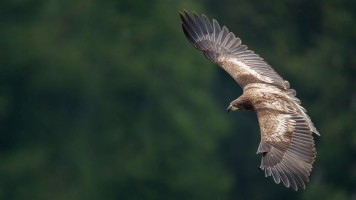
Arthur Morris has been photographing bald eagles in Homer, Alaska, for more than two decades with Canon, Nikon, and Sony gear. Morris shares some tips on capturing in-flight photos, camera settings, and more.
0:00 - Introduction
5:32 - The Story of Homer, Alaska, and its Eagles
9:05 - Using a Film Camera
11:22 - Other Bird Photos
12:19 - Photographing from a Boat
17:47 - Using Wind in Your Favor While Photographing Eagles
20:23 - Photographing Eagles at Sunrise
21:38 - Motion Blur
24:36 - Photographing with Canon and Nikon
27:36 -
Posted
In flight or in a fight, Matt Kloskowski has photographed birds in many different scenarios. Learn how he achieves beautiful bird photos, from camera settings to gear, in this OPTIC seminar.
0:00 - Introduction
1:19 - Embrace the Chaos
8:42 - About Matt
9:49 - In This Presentation
11:14 - Exposure Overview (Aperture, Shutter Speed, & ISO)
22:19 - Autofocus
32:07 - Light, Background, & Action
42:11 - Gear
45:44 - Brief Editing Tips
47:16 - More Courses from Matt
47:49 - Q&A
Ready to photograph birds on your own? Let us know in the
by Brian Zwiebel · Posted
The technological advancements in photography could hardly be imagined by photographers using slow film with manual focus, non-stabilized lenses just 20 years ago. Go back further and cameras did not even have built-in meters. Photographers had to use an incident meter to determine a proper exposure, then dial-in the settings manually. Everyone had to know how to use manual mode!
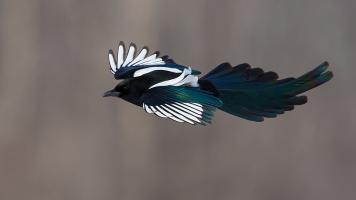
Above image: Black-billed Magpie; manual mode; 1/2000 second; f/8; ISO 800
The above image was the ultimate exposure challenge. A high-contrast bird was flying in