Search results for: photography tips techniques role color photography
About 16 filtered results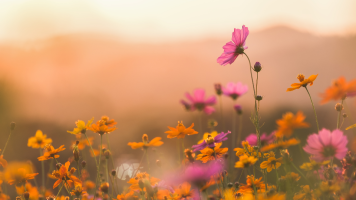
by Mathew Malwitz · Posted
If there’s one question fledgling photographers often ask, it’s “How did you get such a nice background?” Backgrounds are an essential element of a photograph that are often neglected. In fact, it’s safe to say that a background is as important to a composition as the subject itself. After all, a distracting one will detract from an image.
In this guide, we’re going to cover the many methods used to capture clean, smooth backgrounds in our images. This will encompass the settings and gear involved as well as the in-the-field techniques you can
by Mathew Malwitz · Posted
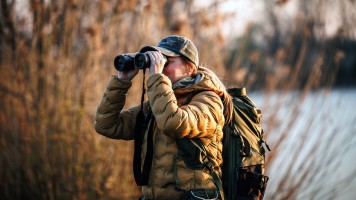
Birds, they’re all around us. If you haven’t paid much attention to them, you’re not alone. But, once you do, you’ll have a hard time stopping. If you haven’t yet dabbled in bird watching, known colloquially as birding, we have just one question. Why not? Birding is the perfect way of partially disconnecting from the digital world we find ourselves in and connecting with nature through observation, and one of the most relaxing pastimes imaginable.
If you’re fascinated by our feathery friends but don’t know where to start, we’ve got you covered

by Mathew Malwitz · Posted
Most photos consist of a balance between bright and dark tones, creating what we typically consider to be “proper exposure.” In proper exposure, there should be ample detail in all areas of the image, no matter how dark or how bright. At least, that’s what we should do when trying to capture a balanced exposure.
Balance, while important to most photographic situations, is not always best for a scene. There are

by Mathew Malwitz · Posted
Do you plan your images? Really think about that question. Do you have an idea of an image before you head out for a shoot, or do you let the moment inspire you as the pieces fall into place? There's no wrong answer here. Planning or "pre-visualization" is a key piece of the photography puzzle that some put a lot of thought and effort into while others effortlessly come up with ideas on the fly.
No matter how you go about taking a picture, there is some level of planning that goes into a shot. With that said, there's a big difference between

by Mathew Malwitz · Posted
Despite what you might have seen on the internet, you don’t need all the money and time in the world to photograph wildlife. Sure, an African safari would be nice, but it is by no means the only way to capture stunning images of wild animals. In fact, regardless of where you live, odds are there’s a vast ecosystem that likely goes unnoticed. If you have trees in your neighborhood, you’re off to a great start.
What You Need to Photograph Wildlife
While gear plays a crucial role in our ability to photograph wildlife, it isn’t everything. In this

by Mathew Malwitz · Posted
These days, everyone has a camera right in their pocket. Smartphones have long been the go-to camera for quick photos of our friends, family, pets, and of course, ourselves. With features like portrait mode, users can simulate blurry backgrounds and isolate their subject for more eye-catching images. What else could you ever need? What if I told you that with the

by Mathew Malwitz · Posted
Anyone who has dabbled in pet photography knows that it can be a rewarding yet challenging experience. While pets are considered to be part of the family, they’re still animals who walk to the beat of their own drum and do things at their own pace. Even the best listeners can be easily distracted or have trouble sitting still for more than two seconds. If you’re considering trying your hand at photographing our fuzzy friends, we’ve put together this helpful guide for you. In this guide, we’re going to cover the essentials for those with a

by Todd Vorenkamp · Posted
Welcome to Part 3 of our journey into the world of Intentional Camera Movement (ICM) photography. In this final chapter of the 3-part series of articles, we voyage back into the mental aspects of creating ICM art, as well as take in some tips for some of the more common ICM subjects and finish with inspirational words from some of the masters of the craft.
Above image © Morag Paterson
Approach
Because ICM eschews many of the lessons we have tried so hard to learn in photography over the years, the approach and process are very

by Todd Vorenkamp · Posted
Welcome to the world of Intentional Camera Movement (ICM) photography—a fascinating and beautiful world where the camera and the photographer’s movements combine to become a mechanical paintbrush—transforming photographic capture into something completely unique and otherwise invisible to the naked eye. In a photographic world generally obsessed with image sharpness, there are photographic artists amongst us who give little thought to everything we’ve ever been taught about photography to create spectacular images by intentionally moving their

by Jill Waterman · Posted
Instead of an apron, food photographer Joanie Simon wears many hats—commercial and editorial imagemaker, recipe developer, photo educator, Blogger, YouTube Influencer, Livestreamer, and content creator extraordinaire. For more than a dozen years, Simon has built her brand into a powerhouse of creative content and learning, to whet the appetites of both foodies and photographers alike. Her straightforward approach to this specialized field is of value to shutterbugs at all levels of experience, from beginners on cell phones to experienced pros.

by Jill Waterman · Posted
Typing #food into Instagram's search bar returns more than 450 million posts, making the search for food photographers on this social platform somewhat akin to "shooting fish in a barrel." Yet, while the number of followers to the most popular feeds surpasses the million mark, when it comes to the topic of food, it's a common occurrence for cookbook authors, recipe creators, food stylists, and celebrity chefs to add the term "photographer" to their skill set, thereby magnifying the popularity of this flavorful subject.
To assemble this current

by Cory Rice · Posted
One of the first challenges awaiting portrait photographers new to studio lighting is how to produce soft light. Anyone who has used a flash or strobe knows that there is more to lighting portraits well than simply pointing a light at a subject and rattling off shots. At the same time, creating soft light does not necessarily require an investment in a ton of expensive lighting modifiers. This article covers the basics of soft light along with some light-shaping tricks for achieving soft light with and without modifiers.

by Jill Waterman · Posted
There is no better example of the inspirational saying, “If you can see it, you can be it,” than in the grassroots efforts of the community-based arts program Newburgh Community Photo Project (NCPP). Founded in 2017 by photographer, educator, and community activist Vincent Cianni, NCPP teaches photography and related media to an underserved population of Newburgh youth, with a goal to explore critical social justice issues directly related to participants’ lives and community.
In our second story on notable youth photo programs, Cianni

by Jill Waterman · Posted
Sidney Baker-Green was still in high school when he first embarked on his creative journey as a wedding photographer and content creator, which now spans still photography and filmmaking. Over the past seven years, he has shared a wide variety of image-making adventures, gear reviews, business advice, and tech tips with a growing audience on social media, leading us to invite him to collaborate as a B&H Creator of the Week.
By means of introduction, we recently asked Baker-Green to respond to a

by Jill Waterman · Posted
To succeed as an underwater photographer, one needs to cultivate a subtle balance of preparedness and patience. For more than two decades, underwater conservation photographer Keith Ellenbogen has done just that, to offer us rare glimpses of the elusive marine life he photographs within the short window of his air supply. In the following interview, Ellenbogen sheds light on how his early training in diving, photography, and the marine environment have contributed to his success, while also discussing his camera and lighting gear, and offering