Search results for: photography tips tutorials aperture photography
About 14 filtered results
by Todd Vorenkamp · Posted
Taking a look at any modern mirrorless or DSLR camera, you’ll notice a slew of controls, buttons, and dials. Atop nearly all cameras sits a large dial labeled with many letters and icons. This is our mode dial. It is how we control the level of power we give to our camera or take for ourselves.
One of the wonderful things that modern electronic digital and film cameras give you is many high-tech options for your image making. One of the horrible things that modern electronic digital and film cameras give you is many high-tech options for your

by Zack Young · Posted
So, your spouse has elected you official photographer of the family holiday party! Or maybe your boss volunteered you to shoot the office party? Or your kids put your name in the running as school party cameraperson. Regardless of the type of party you’ve been assigned (or volunteered) to photograph, here are some tips and tricks that will help you capture memories that will last a lifetime.
Right Gear for Your Holiday Party
As your party’s official

by Robert Sansivero · Posted

by Todd Vorenkamp · Posted
When the moon passes directly between Earth and the sun, those on Earth are treated to one of nature’s greatest spectacles—a total solar eclipse. It is a phenomenon that almost every observer would like to capture in a photograph.
Due to the rarity of the event, the short duration in which to capture it, and the dynamic nature of the subject, it is one of those photographic opportunities that requires the proper gear, setup, planning, and practice.
Eclipse and solar

by Jill Waterman · Posted
Over the past 35 years, Sally Davies has photographed the streets of New York City with a mix of anthropological endurance and high style. But, despite her encyclopedic vision of the city’s exterior face, Davies became troubled by the thought that future generations would know nothing of the people living inside all the buildings she had pictured. Her resulting quest to photograph and interview New York residents in the spaces they call home “had wings right from the first day,” as she describes it—with people of different races, genders,

by John Harris · Posted
There is no wildlife or bird photography without a camera and lens, but I am here to tell you not to buy another piece of gear. It is not the camera or lens that will make you a better photographer; rather, the three things that will improve your wildlife photography are: to know your subject better, to know your gear better, and to know yourself better.
Subject
Of these three, I think the first to address is to know your subject better. And that means research—reading, tutorials, conversations—and time in the field, with or without your

by Cory Rice · Posted
Watch enough online tutorials or read enough marketing copy and you might be convinced that a successful portrait requires cranking the aperture of your lens to its widest setting. While the “wide-open” approach to portraiture is far from new, its usage has surged in recent years, leading to a surplus of photos flaunting extremely shallow depth of field. As polarizing as it is popular, whether this phenomenon is viewed as a scourge or a blessing depends on the audience. Plenty of striking portraits have been made using this technique but, like
by John Harris · Posted
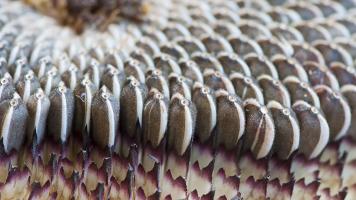
Congratulations on the purchase of your macro photography gear—a world of discovery awaits you. Macro and extreme close-up photography are genres that truly foster a “new” way of seeing, and the goal of this article is to encourage those who own macro-capable gear to embrace the possibilities, to experiment, and to take more macro photos.
Get deep with me, people—the contracted world of macro photography is an ever-expanding, limitless abstraction. It is not necessary to seek distant lands or beautiful people to enjoy the art and craft of

by Shawn C. Steiner · Posted
If you are here I’m guessing you’ve done a time lapse or two, maybe read our introductory article or Stan Moniz’s night-specific piece, and want to see how you can make your time lapses even better. I’ll admit it, time lapses are tough. There is a ton of information you need to know about photo and video to make

by Jill Waterman · Posted
Here’s a hot tip: In addition to photo, video, and audio gear, as well as other tech products, B&H carries thousands of books and tutorials covering the fields of photography, video, audio and computers, plus inspirational titles to get your creative juices flowing. For all you bibliophiles out there, we’ve compiled this shortlist of must-have publications spanning photography basics, photo careers, marketing and promotion, business practices, teaching photography, lighting technique, specialty photo subjects, creative inspiration,
by Todd Vorenkamp · Posted
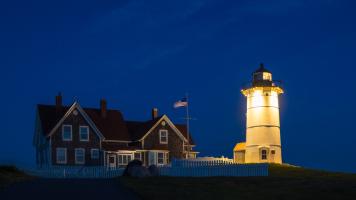
If there is a time when a lighthouse really shines, it is after dark. Duh. Lighthouses are favorite photographic subjects because of their charming beauty, and you can photograph them any time, but they are especially gorgeous when illuminated to protect mariners and vessels from foundering in shallow waters and on rocks.
Trinidad Head Light, in Trinidad, CA
If you want some general tips on lighthouse


by Todd Vorenkamp · Posted
I like shiny things, but I have never really had a reason to buy or own jewelry—I’d rather buy camera gear. I have, however, always wanted to photograph beautiful diamonds and rings. Unwilling to enter the jewelry business for photographic purposes, the arrival of the new Fujifilm XF 80mm f/2.8 R LM OIS WR macro lens and super-generous access from the very nice people at Ken and Dana Design in

by Todd Vorenkamp · Posted
The Sun, our source of light and warmth, is a notoriously poor photographic target, due to its extreme brightness and constant emissions of damaging ultraviolet and infrared radiation. However, with the right equipment, the sun can be a challenging and rewarding photographic subject.
The sun, like the moon, is above the horizon and in our skies half of the time. However, unlike the moon, when the sun is above the horizon, it is always visible (unless it is cloudy). The moon progresses through different phases as it orbits our planet, from new

by Todd Vorenkamp · Posted
Panoramic photography has never been easier than it is today, thanks to digital technology. In the days of film, your options for panoramic photos were the purchase of expensive, but very capable, panoramic cameras, stitching images together in a darkroom, or physically cutting and pasting prints together. Panoramic cameras, like the Linhof Technorama-series, Hasselblad XPan, Fujifilm GX617, or Horseman SW-series cameras, are beautiful machines and still incredibly viable tools of the trade if you want to take exquisite panoramic images with