Search results for: photography deep depth field
About 92 filtered results
by Luke Rollins · Posted
Achieving a standard of production value is an essential component of establishing a brand and growing a following. For part-time, burgeoning, and mid-level creators, it can feel like bridging that gap is less a matter of learned skill and more about the equipment you can afford.
In most cases, the problem isn’t budget at all. Acquiring the specific know-how can give your content professional sheen with little to no financial outlay.
Lighting design is arguably the most immediately visible production component—and the one most capable of

by Steven Esposito · Posted
The FIFA World Cup 2026 is currently underway with billions of fans tuning in to see their favorite teams on the pitch. For this year, FIFA named Lenovo as their Official Technology Partner, providing fans with deeper insights into player statistics and match analytics, bringing people even closer to the action no matter where they are. With such an ambitious task at hand, we must ask the question: How does any of this work?
by Mathew Malwitz · Posted
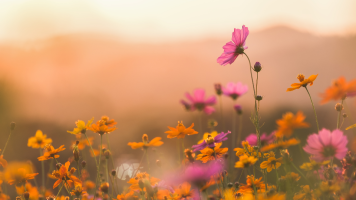
If there’s one question fledgling photographers often ask, it’s “How did you get such a nice background?” Backgrounds are an essential element of a photograph that are often neglected. In fact, it’s safe to say that a background is as important to a composition as the subject itself. After all, a distracting one will detract from an image.
In this guide, we’re going to cover the many methods used to capture clean, smooth backgrounds in our images. This will encompass the settings and gear involved as well as the in-the-field techniques you can
by Mathew Malwitz · Posted
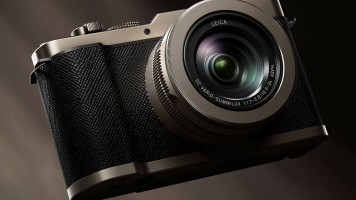
After the smartphone revolution, it appeared that the days of the compact camera were done. How wrong we were. It’s true that a few years back, point-and-shoot options were few and far between. There were just a handful of options on the market, and some industry titans even left the market entirely. Despite the long-rumored demise of the compact camera, it seems that photo enthusiasts still desire a dedicated device without the distractions that come with a smartphone.
What is a compact or “point-and-shoot” camera? Just because a camera is

by Todd Vorenkamp · Posted
Do you want to preserve the memory of that awesome neighborhood fireworks show? Let's discuss the best ways to try to make a memorable photograph commemorating the event.
Before we get started, let me say that there are many ways to accomplish fireworks photography and no technique is usually worse or better than others. The only thing that really matters as you head home after the show is:
You enjoyed the photographic process.
You are left with a photograph or photographs that you personally enjoy.
You enjoyed the fireworks show!

by John Harris · Posted
It would be foolish to claim that there is only one way to take a portrait, but there are some accepted norms and basic camera settings that you should understand if portraiture is to become your area of photographic interest. Remember though, as you walk down your creative path, that a portrait is more than a headshot, more than a beautiful photo of your subject; it is an opportunity to get to know someone, to have a visual conversation with a person, and to use your photographic skills to pass that understanding of the person on to the

by Mathew Malwitz · Posted
Imagine, if you will, a photo shoot. Your subject is a striped, orange cat bouncing off of the walls. You have your camera raised to your brow, finger on the trigger, waiting for the perfect pose. He turns his gaze toward you, but his head is constantly moving. No matter, you quickly fire a few frames, figuring that you finally nailed the shot. You check your shots, only to see a series of blurry portraits.
If this sounds like a situation you’ve been in before, we know the feeling. That’s why, today, we’re taking a look at settings for pet

by Mathew Malwitz · Posted
Binoculars are a birdwatcher's best friend. They allow you to get close-up views of distant objects without having to actually get close. Some birders use spotting scopes and others use cameras with telephoto lenses, but you may be hard-pressed to find a serious birder without a pair of binoculars at the

by Mathew Malwitz · Posted
There’s an old adage that claims in order to be a wildlife photographer, you need a lot of time and a lot of money. This is only partly true. Many great wildlife photo opportunities can occur in urban parks and even in your own backyard, as long as we know what we’re doing. In this article, we’re going to cover a number of essential tips that will help you become a better wildlife photographer.
If you’ve read our introduction

by Mathew Malwitz · Posted
Despite what you might have seen on the internet, you don’t need all the money and time in the world to photograph wildlife. Sure, an African safari would be nice, but it is by no means the only way to capture stunning images of wild animals. In fact, regardless of where you live, odds are there’s a vast ecosystem that likely goes unnoticed. If you have trees in your neighborhood, you’re off to a great start.
What You Need to Photograph Wildlife
While gear plays a crucial role in our ability to photograph wildlife, it isn’t everything. In this

by Luke Rollins · Posted
Like a painter choosing a paintbrush, a photographer’s lens choice will dramatically affect the resulting picture. This is especially true when it comes to landscape photography. Lens choice can make a big difference when you don’t have the benefit of directing your subject. A mountain will not turn its face toward the sun, no matter how hard you beg. As a result, your creativity is limited to a couple of key factors, such as time of day, weather, and―you guessed it, lens choice.
Similar to the range of unique considerations to keep in mind

by Mathew Malwitz · Posted
What better place to spend a Saturday morning than the zoo. You can enjoy some time outside, all while seeing a variety of both local and exotic animals you'd otherwise never dream of encountering. Zoos also are great place to try your hand at photographing wildlife! In this guide, we're talking about taking our camera to the zoo to capture natural looking images of animals in their element! We'll be covering what you need as well as tips and tricks that'll help you capture stunning, natural looking images of animals.
Above photograph © Mathew

by Steven Gladstone · Posted
Whether you’re a student or a seasoned veteran, selecting the right camera can make your head spin with questions. Does sensor size matter? What’s the difference between 4:2:0 and 4:2:2? Do I really need a camera that can record 8K? What about raw? We’ll explain the key components that help a camera produce cinematic images, and in doing so, hopefully help you make that all-important decision.
Evaluate Your Needs and Your Budget
Before considering certain cameras, you must know your needs and your budget. And be realistic. If you are a student

by Mathew Malwitz · Posted
The most engaging portraits seem to have direct eye contact between subject and viewer, as if the camera were simply a window through which we’re looking. But is it that simple? So much goes into making a good portrait, can success simply come down to eye contact between subject and camera and is it even necessary to concentrate on the eyes for a portrait? There are certainly wonderful portraits that do not focus exclusively on the eyes that illustrate character with other aspects of the body, from posture to hands, but as an introduction to

by Luke Rollins · Posted
While 2025 continued many of the photo industry's developments (emphasis on hybrid developments, splashes of niche camera releases, sequels to established camera series), it also formalized the compact digicam trend that had emerged on social media in recent years, with several companies releasing (or re-releasing) point-and-shoot cameras. As the floor for image quality continues to rise, and with yesteryear's flagship features trickling down to today's mid-market offerings, manufacturers are distinguishing themselves through body design,