Search results for: photography features composition rules
About 24 filtered results
by Luke Rollins · Posted
FUJIFILM's beloved instant photography format instax recently surpassed 100 million cameras and printers sold, all while eyeing its 30th anniversary. While perhaps just short of the brand recognition of iconic Polaroid, instax has the people's vote and the lion's share of sales and has expanded that popularity into a full-on ecosystem of films and formats, analog and hybrid cameras, smartphone printers and digital capture devices, and, coming soon, commercial photobooths and other event-oriented products.

by Steven Gladstone · Posted
When creating images for a film, you try to balance your shots so that you draw the audience into the movie, while at the same time they forget that they are watching a movie. Usually, the last thing you want is to break the illusion and have the audience snap out of their reverie.
As you read this article, you may want to pause and rewatch some classic films, or films that had a powerful effect on you. Examining the new and different techniques, lighting, and compositions used to create impact, mood, and feeling will help you grow as a
by Mathew Malwitz · Posted
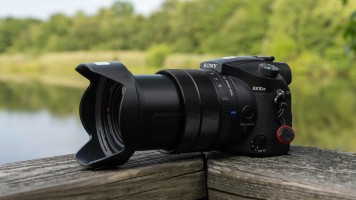
Let's face it: throwing a heavy camera over your shoulder can seem like a hassle, especially if photography isn't the main purpose of your trip. Those big mirrorless and DSLR cameras might stun with their incredible clarity, but not every outing calls for a "serious" camera. Still, there's a desire to capture fun photos, either for your own enjoyment, or to share with friends and family when you return.
Enter the bridge camera. Bridge cameras are an excellent, all-in-one solution for wildlife enthusiasts looking to capture images of their

by Mathew Malwitz · Posted
Composition in photography refers to the way in which we arrange visual elements in an image. It's how we position the subject in the frame and how all elements combine to create a visually appealing photograph.
All photographs © Mathew Malwitz
Expensive cameras and long lenses can only get us so far. It's not the gear that makes the photo, but the photographer. A creative and observant eye is the key to making visually pleasing photographs. These skills can be learned, and with practice, you'll be well on your way to creating strong

by Mathew Malwitz · Posted
Despite what you might have seen on the internet, you don’t need all the money and time in the world to photograph wildlife. Sure, an African safari would be nice, but it is by no means the only way to capture stunning images of wild animals. In fact, regardless of where you live, odds are there’s a vast ecosystem that likely goes unnoticed. If you have trees in your neighborhood, you’re off to a great start.
What You Need to Photograph Wildlife
While gear plays a crucial role in our ability to photograph wildlife, it isn’t everything. In this

by Mathew Malwitz · Posted
These days, everyone has a camera right in their pocket. Smartphones have long been the go-to camera for quick photos of our friends, family, pets, and of course, ourselves. With features like portrait mode, users can simulate blurry backgrounds and isolate their subject for more eye-catching images. What else could you ever need? What if I told you that with the

by Mathew Malwitz · Posted
Family portraits are a great way to capture a moment in your family’s history. You may find yourself wanting to capture family photos every few years or so, more often when the little ones are, well, little. Maybe you’re looking for a way to take matters into your own hands, or maybe you’ve been taking your own family photos for years and have found yourself being asked to take photos of friends, family members, or even paying clients.
Family portraits can be a lot of fun to shoot. Maybe you’ve been taking photos of your kids and want to

by Mathew Malwitz · Posted
Typically confined to the northernmost latitudes of our planet, the northern lights—or "aurora borealis"—are a natural spectacle many dream of seeing. Recently, it may seem like auroras are occurring more often and are visibly farther south than ever before. Maybe you've already seen one or even photographed one with your phone.
While rare, exceptionally powerful auroras have been seen with the naked eye as far south as Alabama. These are uncommon, but in mid-latitude states, visible auroras are a bit more frequent. Last summer, I found myself

by Mathew Malwitz · Posted
Anyone who has dabbled in pet photography knows that it can be a rewarding yet challenging experience. While pets are considered to be part of the family, they’re still animals who walk to the beat of their own drum and do things at their own pace. Even the best listeners can be easily distracted or have trouble sitting still for more than two seconds. If you’re considering trying your hand at photographing our fuzzy friends, we’ve put together this helpful guide for you. In this guide, we’re going to cover the essentials for those with a

Posted
Photographer Russell Graves discusses composition and how it can be used in various cases to make for stronger imagery.
0:00 - Intro
5:50 - Composition rules
22:41 - Image examples
52:04 - Final thoughts
53:12 - Q&A

by Zach Young · Posted
The aesthetics of street photography has evolved greatly over the years. On one side of the spectrum, you have the more “natural” look championed by icons like Henri Cartier-Bresson, William Klein, and Vivian Maier: no added light, no post-processing, no cropping, etc. Elsewhere, you have the innovators, the iconoclasts—artists like Bruce Gilden and Dina Litovsky—who regularly eschew the natural aesthetic by utilizing a

by Todd Vorenkamp · Posted
Many of us believe that astrophotography requires a ton of know-how plus the investment of highly specialized (and expensive) gear to create successful images. The truth is that you can capture astrophotography with any camera and any lens. But, as the saying goes, your mileage may vary.
If you already have a camera and lens, you might want to head over to my three-part series Basic Backyard

by Robert Sansivero · Posted

by Todd Vorenkamp · Posted
Knowing your lens’s sharpest aperture—its “sweet spot”—is one surefire way to maximize image sharpness. Image sharpness is the goal of many photographers—regardless of the subject matter. Sharpness is also the catalyst for the dozens of lens-testing and review websites that populate the Internet, as well as the impetus for endless snobbery and debates over which lenses reign supreme in the quest for ultimate clarity. In my article,

Posted
Professional photographer Mahesh Thapa shares what's in his travel camera backpack, including camera bodies, lenses, filters, a tripod, and other accessories. Plus, Thapa discusses the apps he uses to plan his photos, the composition rules he utilizes, and more. Whether you're capturing mountains or buildings, these travel photography tips will improve your images!
What's in your camera bag? Is there something you carry that we have not included in this video? Tell us what it might be, in the Comments section!
Sponsored by