Search results for: photography features understanding focal length depth field
About 25 filtered results
by John Harris · Posted
It would be foolish to claim that there is only one way to take a portrait, but there are some accepted norms and basic camera settings that you should understand if portraiture is to become your area of photographic interest. Remember though, as you walk down your creative path, that a portrait is more than a headshot, more than a beautiful photo of your subject; it is an opportunity to get to know someone, to have a visual conversation with a person, and to use your photographic skills to pass that understanding of the person on to the

by Mathew Malwitz · Posted
Imagine, if you will, a photo shoot. Your subject is a striped, orange cat bouncing off of the walls. You have your camera raised to your brow, finger on the trigger, waiting for the perfect pose. He turns his gaze toward you, but his head is constantly moving. No matter, you quickly fire a few frames, figuring that you finally nailed the shot. You check your shots, only to see a series of blurry portraits.
If this sounds like a situation you’ve been in before, we know the feeling. That’s why, today, we’re taking a look at settings for pet

by Mathew Malwitz · Posted
There’s an old adage that claims in order to be a wildlife photographer, you need a lot of time and a lot of money. This is only partly true. Many great wildlife photo opportunities can occur in urban parks and even in your own backyard, as long as we know what we’re doing. In this article, we’re going to cover a number of essential tips that will help you become a better wildlife photographer.
If you’ve read our introduction

by Todd Vorenkamp · Posted
Many interchangeable-lens cameras, be it DSLR or mirrorless, are sold today with what we call "kit" lenses. Current kit lenses, in general, thanks to computer technology and advanced manufacturing techniques, are more capable and of higher quality than those of yesteryear. However, many of us who use interchangeable-lens cameras feel the gravitational pull of other lenses that are not yet in our bags.
Adding lenses to your quiver is all about choices and selection and, in photography, we often find ourselves at a sort of "gear crossroads." The

by Mathew Malwitz · Posted
Despite what you might have seen on the internet, you don’t need all the money and time in the world to photograph wildlife. Sure, an African safari would be nice, but it is by no means the only way to capture stunning images of wild animals. In fact, regardless of where you live, odds are there’s a vast ecosystem that likely goes unnoticed. If you have trees in your neighborhood, you’re off to a great start.
What You Need to Photograph Wildlife
While gear plays a crucial role in our ability to photograph wildlife, it isn’t everything. In this

by Mathew Malwitz · Posted
If renowned landscape photographer Ansel Adams were alive today, he would surely be astounded at the variety of cameras available. When compared to his hulking 8x10 view camera, today’s cameras look like child’s play. He would also be flabbergasted at the image quality these little devices produce.
This year, we have a bottomless well of cameras

by Mathew Malwitz · Posted
What better place to spend a Saturday morning than the zoo. You can enjoy some time outside, all while seeing a variety of both local and exotic animals you'd otherwise never dream of encountering. Zoos also are great place to try your hand at photographing wildlife! In this guide, we're talking about taking our camera to the zoo to capture natural looking images of animals in their element! We'll be covering what you need as well as tips and tricks that'll help you capture stunning, natural looking images of animals.
Above photograph © Mathew
by Luke Rollins · Posted
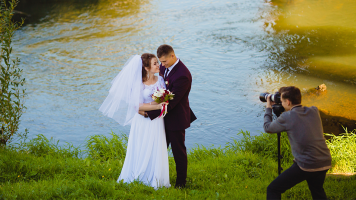
Many hobbyists reach a turning point in their craft when they decide to pursue wedding photography seriously. With the transition to pro comes the task of updating your lens kit accordingly, and most photographers would agree that investing in quality glass is essential. Unlike the rapid turnover of camera bodies, lenses will last for years and can make all the difference in creating quality images. Understanding what some of the best available options are will help you invest appropriately.
What to Consider
Weddings are long affairs, often

by Mathew Malwitz · Posted
Anyone who has dabbled in pet photography knows that it can be a rewarding yet challenging experience. While pets are considered to be part of the family, they’re still animals who walk to the beat of their own drum and do things at their own pace. Even the best listeners can be easily distracted or have trouble sitting still for more than two seconds. If you’re considering trying your hand at photographing our fuzzy friends, we’ve put together this helpful guide for you. In this guide, we’re going to cover the essentials for those with a

by Mathew Malwitz · Posted
Photography is, by definition, the capture of light on a light sensitive surface. Exactly what kind of light this is in reference to is up to you as the photographer. When we think of lighting for photography we may immediately conjure up images of on-camera speedlights or big studio lights with soft boxes atop towering light stands.
While these lights can give us control over our scene in a variety of lighting conditions, they're not the only way we can light our images. Natural and ambient lighting can be harnessed to dramatic effect, if we

by Todd Vorenkamp · Posted
There are many ingredients in the recipe that make a good photographic portrait—foreground, background, setting, pose, expression, color, lighting, and so on—but one element that can be as important to the result as the portrait sitter is the lens used to capture the portrait and help create the art.
Technically, any lens can be used to take a portrait with your camera, and there are traditional focal lengths for “portrait lenses” like 85mm and 105mm, but I asked my fellow B&H photographers, as well as our B&H Creative partners and

by Mathew Malwitz · Posted
Portraiture: It’s one of the most popular and prevalent forms of photography. Although it may seem simple on paper, it comes with its own unique obstacles. Of course, you’ll want to be familiar with your gear. This is essential to all working photographers, but it allows you to focus your efforts on the genre-specific challenges you’ll face.
When photographing people, you’ll find that some folks are photogenic, while others are not. Your job as a photographer is to break down the barriers set by your clients and to put them in the most

by Bjorn Petersen · Posted
Third-party lenses—those made by a brand other than the camera manufacturer—present a wide variety of creative opportunities and fiscal benefits. Though there are certain sacrifices with some third-party options, such as mount availability and autofocus/electronic compatibility, more often than not, you’re rewarded with benefits you can’t achieve with in-system, first-party lenses—for example, a different take on the size and speed of a particular

by Rachel Leathe · Posted
There's nothing quite like the thrilling spontaneity of grabbing your camera and stepping out the door with no plan other than to point and shoot at whatever captivating scenes you encounter. In the realm of professional photography, where meticulous control over light, talent, and location is the norm, street photography throws all of that out the window, transforming the world into your unscripted canvas. The absence of predetermined variables and the sheer randomness of it all can be an incredibly liberating and enlightening experience for
by Todd Vorenkamp · Posted
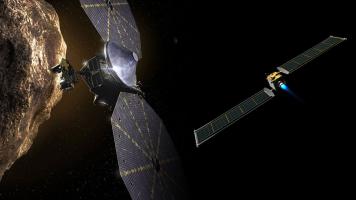
Believe it or not, when a spacecraft leaves the earth with a camera as a part of its scientific suite, there are real-world similarities between the cameras on interplanetary space probes and the cameras we sell at B&H—especially now in the age of digital photography. In this article we will look at all the American spacecraft that have ventured beyond earth orbit and discuss their various camera systems.
