Search results for: photography lighting introduction lighting
About 177 filtered results
by Luke Rollins · Posted
Canon has announced the second generation of its entry-level full frame mirrorless camera, the R8 Mark II. Having spent some time with the camera, we can speak to some of its most apt use cases: portraits, landscapes, street photography, and video.
Canon R8 Mark II

by Mathew Malwitz · Posted
Ever find yourself still struggling to make out a bird, even when your binoculars are trained directly on it? No matter how steady you hold yourself, you simply just don’t have the reach. You could get a stronger pair of binoculars, but these come with inherent drawbacks, such as stability issues and, of course, a heftier build. What’s our solution?
It’s only natural that after using a pair of binoculars, some birders will find that they yearn for more, and the only way to practically get more reach is to use a spotting scope. These are

by Luke Rollins · Posted
Now that the smartphone is fully ensconced in its villain arc, the most enthusiastic anti-smartphone partisans have taken to unbundling the suite of functions Steve Jobs first consolidated: camera, phone, music player, notebook, paperback, watch, and day planner amongst others, but more importantly with each function getting its own discrete, purposed object in the everyday carry bag.
Vibes and aesthetics belong to them all on their own, but uncoupled they each demand a level of attention and consideration that their grouping suppresses. For

by Luke Rollins · Posted
Achieving a standard of production value is an essential component of establishing a brand and growing a following. For part-time, burgeoning, and mid-level creators, it can feel like bridging that gap is less a matter of learned skill and more about the equipment you can afford.
In most cases, the problem isn’t budget at all. Acquiring the specific know-how can give your content professional sheen with little to no financial outlay.
Lighting design is arguably the most immediately visible production component—and the one most capable of
by Mathew Malwitz · Posted
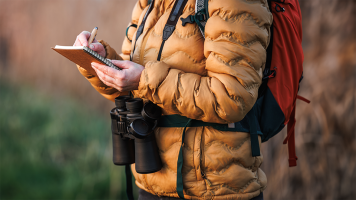
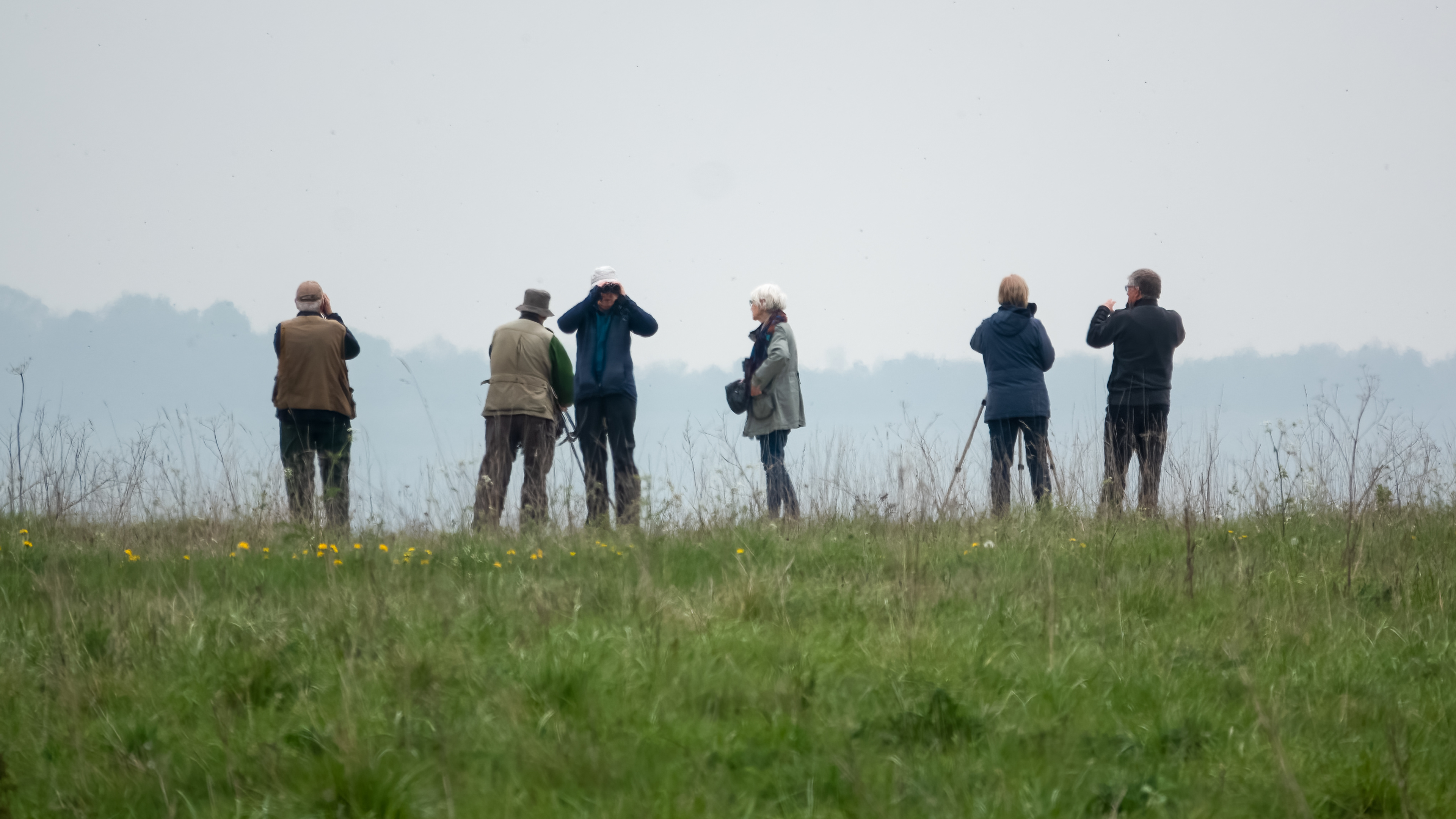
Bird-watching, known colloquially as birding, has quickly become one of the most popular past times for nature enthusiasts of all ages. In this fast-paced digital world we find ourselves in, getting outside and winding down to the sounds and sights of birds is quite therapeutic.
Every hobby has its fair share of essential gear,

by Mathew Malwitz · Posted
Godox has grown their flash lineup with the introduction of the Lux Junior II, a compact retro-styled flash reimagined for even greater versatility. For those unfamiliar, the Godox Lux series brought a classic style, reminiscent of the golden age of photography, into the modern era. The Lux Junior II continues this trend, while delivering new and exciting features that can only benefit the

by Mathew Malwitz · Posted
You don’t have to go far to capture fun and engaging images of wildlife. In fact, you may not have to go anywhere at all. A carefully landscaped yard and the right tools can attract an impressive variety of animal life to observe and photograph. Pair that with a little patience and soon you’ll be capturing stunning images from the comfort of your own home.
Attracting Birds
Birds are part of nearly every environment, from the densest cities to rural areas. While they are common, we’ll need to offer three essentials—water, shelter, and food—to

by Mathew Malwitz · Posted
Exposure can be challenging to master. There are many moving parts, and knowing which settings affect what aspect of our image takes time and practice. The goal might be to take full control and use manual exposure mode, but first, we need to learn the ropes using auto exposure modes.
These modes let us use our camera with a little help. As covered in our introduction to exposure article, photography consists of

by Mathew Malwitz · Posted
At long last, Sony has unveiled the much-sought-after successor to their legendary RX10 bridge camera, the RX10 V. The perfect marriage of new and improved performance-enhancing features plus the hardware that made its predecessor so popular, the RX10 V is sure to excite. Let’s find out how.

by Mathew Malwitz · Posted
Choosing a pair of binoculars can be as easy or as daunting as you want it to be. We’ve covered the technical aspects of binoculars, from magnification to glass quality, and how they affect your choice, but not everyone wants to get into all that. While yes, once we know the basics, we can better choose the pair that meets our particular needs, but that assumes we want to get into all that. If you do, check out our

by Luke Rollins · Posted
After a 2025 spent celebrating its 100th birthday, Leica returns to market with its first new camera of 2026, the SL3-P Mirrorless Camera. Accompanied in its release by two new lenses, the APO-Macro-Elmarit-SL 100mm f/2.8 and the

by Mathew Malwitz · Posted
Through the cacophony of forest sounds, your ears home in on a buzzy, almost garbled ascending song. Perhaps you recognize it immediately, or maybe you need to confer with one of the trusty internet databases or apps. You train your eyes on the canopy, scanning for movement of any kind, when you see it: the cerulean warbler, a small rowdy songbird with wings slightly splayed from the body. Quickly, you lower your binoculars and train your camera on the little blue passerine before snapping a few frames.
The resulting photos clearly show the

by Mathew Malwitz · Posted
Optic size is measured by what it can do, but when you’re new to the hobby, this can be confusing. Pick up a spotting scope or any pair of binoculars and you’ll see them adorned with a set of numbers like 8x42, 7x32, or 20-60x80. What exactly do those numbers mean and what do they tell us about an optic?
At the most

by Mathew Malwitz · Posted
When it comes to choosing the right camera, there’s often a gap between the small, pocketable point-and-shoot cameras and larger mirrorless ones. While interchangeable lens mirrorless cameras have much to offer, their higher price points and larger form factor often make them unfeasible for the average photo enthusiast. It often leads to the question of how a photographer can bridge that gap.
Enter the aptly named

by Mathew Malwitz · Posted
Getting a new camera is always an exciting affair. Whether it’s your first interchangeable lens camera or a long-awaited upgrade, there’s almost always new features to explore. Mirrorless cameras are especially exciting as they bring new and intuitive features that boost creativity while making photography easier than ever! Whether you’re new to cameras, shopping for one, or looking to dust off an old hobby, let’s get into setting up our new mirrorless camera.
What Is a Mirrorless Camera?
It’s not often something is named after a feature it