Search results for: photography motion blur shutter speed
About 71 filtered results
by Luke Rollins · Posted
IN THIS ARTICLE
1. (Don’t Fear) the Gear2. Good Dental Photography Is Good Photography3. Macro Discipline, Portrait Mindset4. Embrace the Flash5. Clinical, but with an Eye for Marketing
For dentists, the evidentiary benefits of a photographic practice go beyond meeting industry standards. They can be the foundation for professional development and the growth of your business. That said,

by Luke Rollins · Posted
Everyone and their mothers are in on the digicam trend, a fact reflected in the used-market prices found across most platforms. Facebook Marketplace, Craigslist, eBay, B&H Used--everywhere you look, the best-known models are selling for prices that often meet or exceed their debut MSRP.
Take that old favorite of mine, the Canon S95. Extraordinarily capable, exceedingly pocketable, I got it for a song ($130) back in 2023. Three years later, the going rate has more than tripled, with the average price sitting above $400 and pushing $500

by Mathew Malwitz · Posted
Have you ever taken a photo that looked so good on the back of your camera, only to get home and see that it’s just not sharp? We’ve all been there, and even the experts miss more shots than they keep. That said, there are many tricks and techniques we can learn to improve the odds. In today’s guide, we’re looking at five techniques to aid us in confidently capturing tack-sharp photographs.
Sharpness is critical in most genres of photography, especially nature and wildlife. Sure, we can intentionally blur elements to showcase motion. We
by Mathew Malwitz · Posted
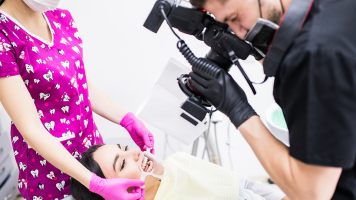
Dental photography is a unique genre of photography that requires a specialized set of tools to deliver the clarity, brightness, and color accuracy dentists rely upon to accurately record their patients’ progress.
In this guide, we’re going to cover the essential tools dental professionals need to capture the best quality images of their work, from the camera itself to the lighting tools required to accurately capture the color and detail of those pearly whites.
The Camera
Of course, one could use almost any camera, so long as it produces

by Luke Rollins · Posted
Whether you’re the designated photographer at a friend’s night out or a professional working an event, a compact, point-and-shoot camera can be a strategic choice for creating a distinctive look for your images. Depending on where you’re starting, the move to a compact camera can be either a step up from the smartphone or an embrace of a more limited feature set. In either case, the best event and party photography with a compact camera says one thing: you had to be there.
The number one advantage to using a compact camera is social. The

by Mathew Malwitz · Posted
Smartphones have forever changed the world of photography, making the art form more accessible and connecting people from across the world through the instantaneous sharing of images. For all their benefits, there are plenty of criticisms to be had, especially on the creative front. Smartphone cameras are, for some, everything one could want from a camera. For others, they lack the control and creative freedom that makes photography so interesting.
Who can blame one for having hard feelings against smartphones. After all, they nearly wiped

Posted


by John Harris · Posted
It would be foolish to claim that there is only one way to take a portrait, but there are some accepted norms and basic camera settings that you should understand if portraiture is to become your area of photographic interest. Remember though, as you walk down your creative path, that a portrait is more than a headshot, more than a beautiful photo of your subject; it is an opportunity to get to know someone, to have a visual conversation with a person, and to use your photographic skills to pass that understanding of the person on to the

by Mathew Malwitz · Posted
Imagine, if you will, a photo shoot. Your subject is a striped, orange cat bouncing off of the walls. You have your camera raised to your brow, finger on the trigger, waiting for the perfect pose. He turns his gaze toward you, but his head is constantly moving. No matter, you quickly fire a few frames, figuring that you finally nailed the shot. You check your shots, only to see a series of blurry portraits.
If this sounds like a situation you’ve been in before, we know the feeling. That’s why, today, we’re taking a look at settings for pet

by Todd Vorenkamp · Posted
One of the magical aspects of modern photography is the ability to review an image instantly within our EVF (electronic viewfinder) or right on the back of the camera.
Frequently, one possible mistake that digital photographers make is when reviewing an image on their camera—they evaluate exposure based on the reproduced image. Why might this be a mistake? Well, both your camera’s LCD and EVF likely have adjustable brightness. Also, you might be viewing your images in bright sunlight or in the pitch black of night. Just as viewing a computer

by Mathew Malwitz · Posted
If there’s one area of wildlife photography that challenges even some of the most consummate artists, it’s birds in flight. A dynamic flight shot shows action, and a bit of technical prowess. As you can imagine, capturing birds in flight is no easy feat.
To consistently capture these shots, one must be proficient with their gear and have a knowledge of animal behavior. We’d go as far as to say you need a bit of luck too, but what is luck if not preparedness meeting opportunity. In order to make the most of the opportunities that present

by Mathew Malwitz · Posted
As we learn about exposure, we need to talk about shutter speed. Your camera’s shutter controls the duration of an exposure and is one of the three settings that determine the exposure of an image. Together, these settings are known as the exposure triangle.
Where aperture controls the amount of light we allow to reach our imaging area, it is the duration of our exposure that will directly influence whether an image is sharp or blurred. This is what makes it such a significant piece of the exposure puzzle. Now, let’s take a closer look

by Mathew Malwitz · Posted
Photography is by definition, the capture of light on a light sensitive surface. That surface could be glass, tin, film, or a digital imaging sensor like those found in most modern cameras. The amount of light that reaches our light-sensitive surface is what we can define as exposure.
A good exposure will look accurate to life or the photographer's creative vision. It will maximize an images quality and

by Mathew Malwitz · Posted
What better place to spend a Saturday morning than the zoo. You can enjoy some time outside, all while seeing a variety of both local and exotic animals you'd otherwise never dream of encountering. Zoos also are great place to try your hand at photographing wildlife! In this guide, we're talking about taking our camera to the zoo to capture natural looking images of animals in their element! We'll be covering what you need as well as tips and tricks that'll help you capture stunning, natural looking images of animals.
Above photograph © Mathew

by Mathew Malwitz · Posted
Winter brings with it some of the best photographic opportunities imaginable. As the temperatures begin to drop, our approach to photography changes a bit. Cooler weather brings with it snow, stunningly colorful evening skies, wintering birds, and an assortment of beautiful weather conditions. Some of the best photographic opportunities present themselves in these unfortunately cold times. That being said, if we prep ourselves and our gear appropriately, we can capture stunning images.
Before You Head Out
First, some safety precautions. Cold