Search results for: photography tips solutions 10 tips better photos
About 84 filtered results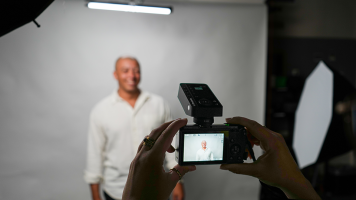
by Luke Rollins · Posted
At first glance, studio photography and the compact camera may seem strange bedfellows. The type of work associated with the studio—still life, product photography, portraiture, macro photography—usually wants cameras with larger sensors and interchangeable lenses, especially in professional applications. Compact, point-and-shoot cameras, for their part, have their natural home in everyday, travel, nightlife, and street applications, where their discretion and size become virtues.
It might seem almost cruel to introduce the compact to the

by Mathew Malwitz · Posted
Have you ever taken a photo that looked so good on the back of your camera, only to get home and see that it’s just not sharp? We’ve all been there, and even the experts miss more shots than they keep. That said, there are many tricks and techniques we can learn to improve the odds. In today’s guide, we’re looking at five techniques to aid us in confidently capturing tack-sharp photographs.
Sharpness is critical in most genres of photography, especially nature and wildlife. Sure, we can intentionally blur elements to showcase motion. We

Posted
Isaac Grant comes to the B&H Event Space with his bird photography workshop. Combined with guided field experience, real-time feedback, and proven techniques that will help you shoot smarter, improve faster, and create stronger bird images in days, not years.
0:00 - Intro
3:59 - Bird photography is hard
7:03 - The biggest problem
10:00 - Workshops matter
15:36 - Guided field experience
17:31 - Confidence changes photographers
20:13 - Community matters
22:02 - How workshops help
29:00 - Anticipation
37:24 - Reading bird behavior
54:25 -

by Mathew Malwitz · Posted
You don’t have to go far to capture fun and engaging images of wildlife. In fact, you may not have to go anywhere at all. A carefully landscaped yard and the right tools can attract an impressive variety of animal life to observe and photograph. Pair that with a little patience and soon you’ll be capturing stunning images from the comfort of your own home.
Attracting Birds
Birds are part of nearly every environment, from the densest cities to rural areas. While they are common, we’ll need to offer three essentials—water, shelter, and food—to
by Mathew Malwitz · Posted
If there’s one question fledgling photographers often ask, it’s “How did you get such a nice background?” Backgrounds are an essential element of a photograph that are often neglected. In fact, it’s safe to say that a background is as important to a composition as the subject itself. After all, a distracting one will detract from an image.
In this guide, we’re going to cover the many methods used to capture clean, smooth backgrounds in our images. This will encompass the settings and gear involved as well as the in-the-field techniques you can

by Mathew Malwitz · Posted
There’s an old adage that claims in order to be a wildlife photographer, you need a lot of time and a lot of money. This is only partly true. Many great wildlife photo opportunities can occur in urban parks and even in your own backyard, as long as we know what we’re doing. In this article, we’re going to cover a number of essential tips that will help you become a better wildlife photographer.
If you’ve read our introduction

by Luke Rollins · Posted
Subject and style may vary, but consistency is a quality shared by all successful photo studios. When working indoors, that begins with lighting. Strobes remain the bread and butter of many still photography studios. Unlike natural light, which can be finicky and unpredictable; on-camera flashes, which are not typically designed for studio use; or continuous lights, which can become costly as output increases; strobes are built to withstand the rigors of studio life while providing flexible and powerful light. But with so many options on the

by M. Brett Smith · Posted
When it comes to finding the best drone, there is no "one-size-fits-all" solution. Different pilots have different needs, different budgets, and different skill levels. Some are photographers, some are racers, and some just like to fly. In other words, what's best for one drone pilot might not be what's best for all.
To help you find the drone that best suits your needs and interests, we've put together a list of some of our

by Mathew Malwitz · Posted
For macro photographers, having the right gear is essential. Magnification and lighting are key, but you don’t necessarily need the biggest, priciest macro lenses out there to get close-up shots. If you’re a macro photographer yourself or buying a gift for one, we have some excellent recommendations for every budget.
Gifts Under $50
1. Close-up macro filters (like this Macro Lens

by Mathew Malwitz · Posted
Portraiture: It’s one of the most popular and prevalent forms of photography. Although it may seem simple on paper, it comes with its own unique obstacles. Of course, you’ll want to be familiar with your gear. This is essential to all working photographers, but it allows you to focus your efforts on the genre-specific challenges you’ll face.
When photographing people, you’ll find that some folks are photogenic, while others are not. Your job as a photographer is to break down the barriers set by your clients and to put them in the most

by Mathew Malwitz · Posted
Are you interested in the wide and wonderful world of photography? Well, you’ve certainly come to the right place! Check out this short checklist of a dozen items, designed to get you started in digital or film photography and headed in the right direction.
1. Interest
The first thing you need is an interest in photography. If you are reading these words, you likely already checked that box. If you are debating whether to take the dive into photography, you might want to give it some careful thought, or cater your purchases toward your level

by Zack Young · Posted
Once you’re familiar with the basic concepts behind high-volume photography, the next logical step is to figure out what gear you need to purchase. That’s when the panic might hit. Suddenly you’re flooded with decisions about cameras, lenses, strobes, backdrops, barcode scanners, and more, each category including tons of different options at every

by Rachel Leathe · Posted
I can’t count the number of times a stranger has approached me while I’ve been setting up my drone to ask if they can watch the launch. I imagine this is how the world’s first television owners must have felt as the neighborhood kids crowded around the only television on their block to witness such groundbreaking technology.

by Zach Young · Posted
The aesthetics of street photography has evolved greatly over the years. On one side of the spectrum, you have the more “natural” look championed by icons like Henri Cartier-Bresson, William Klein, and Vivian Maier: no added light, no post-processing, no cropping, etc. Elsewhere, you have the innovators, the iconoclasts—artists like Bruce Gilden and Dina Litovsky—who regularly eschew the natural aesthetic by utilizing a

by Allan Weitz · Posted
For the longest time, comparing image quality between point-and-shoot cameras and full-frame cameras, or even APS-C format cameras, was a conversation you could have start to finish during the course of an elevator ride. Point-and-shoot cameras were convenient, but the detail and dynamic range of their smaller sensors never measured up to the detail and dynamic range you get from larger sensors. And then one day Sony introduced a new 1" format CMOS sensor, and BOOM! People started having second thoughts about slinging heavy camera bags over