Search results for: photography tips solutions how choose tripod
About 60 filtered results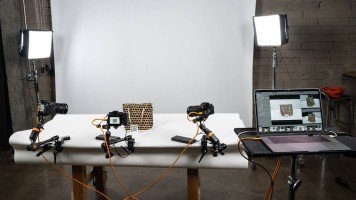
by Luke Rollins · Posted
At its most basic, tethered shooting involves connecting your camera, wired or wirelessly, to your computer as you shoot. You’ve likely seen it in some behind-the-scenes video for a professional studio shoot, or you just have a friend who swears it’s the best thing since sliced bread. Tethering is a shooting technique that can benefit many a photographer’s workflow significantly, though upon first hearing of it, the idea of tethering can be something that first requires a bit of education. Hopefully, this introduction will help get you started
by Luke Rollins · Posted
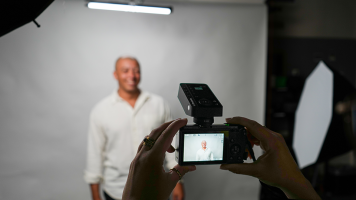
At first glance, studio photography and the compact camera may seem strange bedfellows. The type of work associated with the studio—still life, product photography, portraiture, macro photography—usually wants cameras with larger sensors and interchangeable lenses, especially in professional applications. Compact, point-and-shoot cameras, for their part, have their natural home in everyday, travel, nightlife, and street applications, where their discretion and size become virtues.
It might seem almost cruel to introduce the compact to the

by Mathew Malwitz · Posted
You don’t have to go far to capture fun and engaging images of wildlife. In fact, you may not have to go anywhere at all. A carefully landscaped yard and the right tools can attract an impressive variety of animal life to observe and photograph. Pair that with a little patience and soon you’ll be capturing stunning images from the comfort of your own home.
Attracting Birds
Birds are part of nearly every environment, from the densest cities to rural areas. While they are common, we’ll need to offer three essentials—water, shelter, and food—to
by Mathew Malwitz · Posted
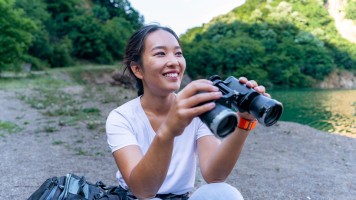
Optic size is measured by what it can do, but when you’re new to the hobby, this can be confusing. Pick up a spotting scope or any pair of binoculars and you’ll see them adorned with a set of numbers like 8x42, 7x32, or 20-60x80. What exactly do those numbers mean and what do they tell us about an optic?
At the most

by Mathew Malwitz · Posted
As photographers, we are faced with a wide array of lighting conditions, ranging from bright sunlight to dimly lit interiors. Using ambient light as your main source is often preferable; however, in a situation such as an event or portrait where time is of the essence, you will need to know how to properly expose all these varying scenes using both natural and artificial light sources.
Being resourceful with your lighting setups lends greater efficiency, and having a lighting system you can easily move from one situation to the next quickly is

by Mathew Malwitz · Posted
Despite what you might have seen on the internet, you don’t need all the money and time in the world to photograph wildlife. Sure, an African safari would be nice, but it is by no means the only way to capture stunning images of wild animals. In fact, regardless of where you live, odds are there’s a vast ecosystem that likely goes unnoticed. If you have trees in your neighborhood, you’re off to a great start.
What You Need to Photograph Wildlife
While gear plays a crucial role in our ability to photograph wildlife, it isn’t everything. In this

by Mathew Malwitz · Posted
If there’s one area of wildlife photography that challenges even some of the most consummate artists, it’s birds in flight. A dynamic flight shot shows action, and a bit of technical prowess. As you can imagine, capturing birds in flight is no easy feat.
To consistently capture these shots, one must be proficient with their gear and have a knowledge of animal behavior. We’d go as far as to say you need a bit of luck too, but what is luck if not preparedness meeting opportunity. In order to make the most of the opportunities that present

by Mathew Malwitz · Posted
What better place to spend a Saturday morning than the zoo. You can enjoy some time outside, all while seeing a variety of both local and exotic animals you'd otherwise never dream of encountering. Zoos also are great place to try your hand at photographing wildlife! In this guide, we're talking about taking our camera to the zoo to capture natural looking images of animals in their element! We'll be covering what you need as well as tips and tricks that'll help you capture stunning, natural looking images of animals.
Above photograph © Mathew

by Mathew Malwitz · Posted
Winter brings with it some of the best photographic opportunities imaginable. As the temperatures begin to drop, our approach to photography changes a bit. Cooler weather brings with it snow, stunningly colorful evening skies, wintering birds, and an assortment of beautiful weather conditions. Some of the best photographic opportunities present themselves in these unfortunately cold times. That being said, if we prep ourselves and our gear appropriately, we can capture stunning images.
Before You Head Out
First, some safety precautions. Cold

by Mathew Malwitz · Posted
One of the most effective ways to improve your portraiture is by controlling the light, and one of the most effective ways to control your light is to move it. Seems like a simple enough concept, but it can be daunting at first, especially if you're using a speedlight or an on-camera flash. Despite its misleading name, an on-camera flash can, very easily, be used off the camera. The "on-camera" part simply refers to its form factor

by Rebecca Melville · Posted
Content creation has exploded into a multi-billion-dollar industry with no signs of slowing down. While it’s true that anyone with a smartphone can become a content creator, the shift toward polished productions might have you browsing some more professional gadgets. Luckily, affordable, easy-to-use gear is widely available for every kind of content creator. Let’s explore some options you might consider snagging for your new hobby or upcoming project.
Best vlogging cameras for content creators

by Mathew Malwitz · Posted
Are you interested in the wide and wonderful world of photography? Well, you’ve certainly come to the right place! Check out this short checklist of a dozen items, designed to get you started in digital or film photography and headed in the right direction.
1. Interest
The first thing you need is an interest in photography. If you are reading these words, you likely already checked that box. If you are debating whether to take the dive into photography, you might want to give it some careful thought, or cater your purchases toward your level

by Zack Young · Posted
Once you’re familiar with the basic concepts behind high-volume photography, the next logical step is to figure out what gear you need to purchase. That’s when the panic might hit. Suddenly you’re flooded with decisions about cameras, lenses, strobes, backdrops, barcode scanners, and more, each category including tons of different options at every

by Todd Vorenkamp · Posted
Before you venture out to photograph your first lunar eclipse, you should get some practice taking photos of the moon. If lunar photography is varsity-level stuff, lunar eclipse photography is all-pro. There are some unique challenges to the art, and great ways to get creative results, but the basics of lunar photography apply. Unlike

Posted
Join Diego Rizzo and learn his five tips on photographing volcanoes, covering preparation, gear, focusing, settings, and more.
0:00 - Intro
0:18 - Weather & Prep
1:09 - How to Choose a Tripod
1:53 - Focusing & Exposing
3:33 - Exposure Time/Shutter Speed
4:23 - Drones
5:36 - Safety (Bonus Tip!)
6:57 - More from Diego