Search results for: photography article understanding lenses focal length
About 33 filtered results
by Luke Rollins · Posted
IN THIS ARTICLE
1. (Don’t Fear) the Gear2. Good Dental Photography Is Good Photography3. Macro Discipline, Portrait Mindset4. Embrace the Flash5. Clinical, but with an Eye for Marketing
For dentists, the evidentiary benefits of a photographic practice go beyond meeting industry standards. They can be the foundation for professional development and the growth of your business. That said,
by Luke Rollins · Posted
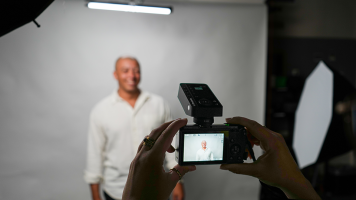
At first glance, studio photography and the compact camera may seem strange bedfellows. The type of work associated with the studio—still life, product photography, portraiture, macro photography—usually wants cameras with larger sensors and interchangeable lenses, especially in professional applications. Compact, point-and-shoot cameras, for their part, have their natural home in everyday, travel, nightlife, and street applications, where their discretion and size become virtues.
It might seem almost cruel to introduce the compact to the

by John Harris · Posted
It would be foolish to claim that there is only one way to take a portrait, but there are some accepted norms and basic camera settings that you should understand if portraiture is to become your area of photographic interest. Remember though, as you walk down your creative path, that a portrait is more than a headshot, more than a beautiful photo of your subject; it is an opportunity to get to know someone, to have a visual conversation with a person, and to use your photographic skills to pass that understanding of the person on to the

by Mathew Malwitz · Posted
Today, we're going to learn about practical applications of other, less common lenses for street photography such as portrait lenses, ultra wide-angle landscape lenses, and special effect glass like mirror lenses and beyond. These are by no means the only unconventional lenses out there, but these should get your gears turning and inspire you to start experimenting.
Portrait Lenses
Portrait lenses are known for their unparalleled sharpness and eye-catching, subject isolating qualities. This is thanks to their simple design, top-of-the-line

by Mathew Malwitz · Posted
Getting a new camera is always an exciting affair. Whether it’s your first interchangeable lens camera or a long-awaited upgrade, there’s almost always new features to explore. Mirrorless cameras are especially exciting as they bring new and intuitive features that boost creativity while making photography easier than ever! Whether you’re new to cameras, shopping for one, or looking to dust off an old hobby, let’s get into setting up our new mirrorless camera.
What Is a Mirrorless Camera?
It’s not often something is named after a feature it

by Mathew Malwitz · Posted
There’s an old adage that claims in order to be a wildlife photographer, you need a lot of time and a lot of money. This is only partly true. Many great wildlife photo opportunities can occur in urban parks and even in your own backyard, as long as we know what we’re doing. In this article, we’re going to cover a number of essential tips that will help you become a better wildlife photographer.
If you’ve read our introduction

by Todd Vorenkamp · Posted
Many interchangeable-lens cameras, be it DSLR or mirrorless, are sold today with what we call "kit" lenses. Current kit lenses, in general, thanks to computer technology and advanced manufacturing techniques, are more capable and of higher quality than those of yesteryear. However, many of us who use interchangeable-lens cameras feel the gravitational pull of other lenses that are not yet in our bags.
Adding lenses to your quiver is all about choices and selection and, in photography, we often find ourselves at a sort of "gear crossroads." The

by Mathew Malwitz · Posted
Despite what you might have seen on the internet, you don’t need all the money and time in the world to photograph wildlife. Sure, an African safari would be nice, but it is by no means the only way to capture stunning images of wild animals. In fact, regardless of where you live, odds are there’s a vast ecosystem that likely goes unnoticed. If you have trees in your neighborhood, you’re off to a great start.
What You Need to Photograph Wildlife
While gear plays a crucial role in our ability to photograph wildlife, it isn’t everything. In this

by Mathew Malwitz · Posted
If there’s one area of wildlife photography that challenges even some of the most consummate artists, it’s birds in flight. A dynamic flight shot shows action, and a bit of technical prowess. As you can imagine, capturing birds in flight is no easy feat.
To consistently capture these shots, one must be proficient with their gear and have a knowledge of animal behavior. We’d go as far as to say you need a bit of luck too, but what is luck if not preparedness meeting opportunity. In order to make the most of the opportunities that present

by Mathew Malwitz · Posted
What better place to spend a Saturday morning than the zoo. You can enjoy some time outside, all while seeing a variety of both local and exotic animals you'd otherwise never dream of encountering. Zoos also are great place to try your hand at photographing wildlife! In this guide, we're talking about taking our camera to the zoo to capture natural looking images of animals in their element! We'll be covering what you need as well as tips and tricks that'll help you capture stunning, natural looking images of animals.
Above photograph © Mathew

by Mathew Malwitz · Posted
Anyone who has dabbled in pet photography knows that it can be a rewarding yet challenging experience. While pets are considered to be part of the family, they’re still animals who walk to the beat of their own drum and do things at their own pace. Even the best listeners can be easily distracted or have trouble sitting still for more than two seconds. If you’re considering trying your hand at photographing our fuzzy friends, we’ve put together this helpful guide for you. In this guide, we’re going to cover the essentials for those with a
by Christopher Witt · Posted
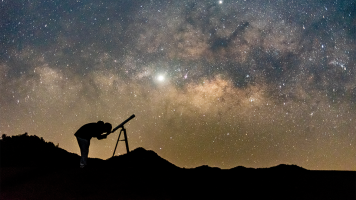
Humans’ fascination with the stars is as old as our ability to think and ask questions. For millennia we, as a species, were limited to observing the heavens with just our eyes. Of course, back then we were able to see more because light pollution didn’t exist, but making detailed observations was impossible. The invention of the microscope led to the development of the telescope, which allowed people to finally start exploring the larger universe. As technological advances were made and telescopes got bigger and better, their reach and the
by Todd Vorenkamp · Posted
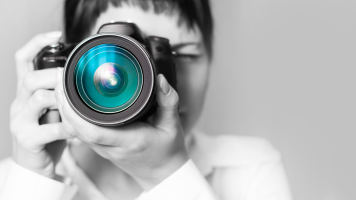
We all know that cameras make fantastic gifts for Mom on Mother's Day (or on birthdays and holidays as well!), but what if Mom is already a photographer? B&H Photo has you more than covered!
Is Mom a professional photojournalist? Is she the designated shutterbug for the local Scout troop? Maybe she is totally into floral macro photos, or is Mom responsible for the awesome family portraits that are framed on the mantle and hang on the wall?
Regardless of her photographic passions, there are always great gifts in all price ranges that can

by Rachel Leathe · Posted
There's nothing quite like the thrilling spontaneity of grabbing your camera and stepping out the door with no plan other than to point and shoot at whatever captivating scenes you encounter. In the realm of professional photography, where meticulous control over light, talent, and location is the norm, street photography throws all of that out the window, transforming the world into your unscripted canvas. The absence of predetermined variables and the sheer randomness of it all can be an incredibly liberating and enlightening experience for
by Todd Vorenkamp · Posted
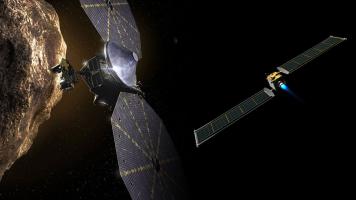
Believe it or not, when a spacecraft leaves the earth with a camera as a part of its scientific suite, there are real-world similarities between the cameras on interplanetary space probes and the cameras we sell at B&H—especially now in the age of digital photography. In this article we will look at all the American spacecraft that have ventured beyond earth orbit and discuss their various camera systems.
