Search results for: photography guides food photography guide
About 23 filtered results
by Mathew Malwitz · Posted
You don’t have to go far to capture fun and engaging images of wildlife. In fact, you may not have to go anywhere at all. A carefully landscaped yard and the right tools can attract an impressive variety of animal life to observe and photograph. Pair that with a little patience and soon you’ll be capturing stunning images from the comfort of your own home.
Attracting Birds
Birds are part of nearly every environment, from the densest cities to rural areas. While they are common, we’ll need to offer three essentials—water, shelter, and food—to

by Mathew Malwitz · Posted
The travel tripod conundrum is a cruel reality of physics and practicality. The larger and heavier a tripod is, the steadier it will hold a camera. The larger and heavier a tripod is, the less likely you will ever want to carry it around or take it on a trip. Why are we left with a photographic reality like that which makes the tastiest food bad for you?
Tripods come in all shapes, weights, heights, and styles. If you are new to the world
by Mathew Malwitz · Posted
Through the cacophony of forest sounds, your ears home in on a buzzy, almost garbled ascending song. Perhaps you recognize it immediately, or maybe you need to confer with one of the trusty internet databases or apps. You train your eyes on the canopy, scanning for movement of any kind, when you see it: the cerulean warbler, a small rowdy songbird with wings slightly splayed from the body. Quickly, you lower your binoculars and train your camera on the little blue passerine before snapping a few frames.
The resulting photos clearly show the

Posted
While its origin is murky, the adage “Take nothing but photographs, leave nothing but footprints, kill nothing but time,” is at the heart of this wide-ranging discussion about ethical practices in wildlife photography.
Above Photograph © Melissa Groo
From exotic safaris to local birding expeditions, interest in this subject matter has grown tremendously in recent years. Ever advancing camera technologies and increasing ease of use make stunning pictures more accessible than ever, but when these advantages combine with an unbridled enthusiasm

by Mathew Malwitz · Posted
Weddings are fast-paced events for photographers, and there’s so much to do. From portraits of the bride and groom to family formals, there’s much to cover, and we haven’t even scratched the surface yet. While all focus is on the bride, groom, and their families, there’s a lot of behind-the-scenes material to capture. As wedding photographers, you need to wear many hats, and that includes landscape, food, and product photography.
Proficiency in photographing product is a must, as there are many details and accoutrements to photograph

by Mathew Malwitz · Posted
Winter is one of the most exciting seasons for wildlife photography. Northern species return to their wintering grounds and bring life to an otherwise cold and barren landscape. Photographers and bird watchers alike yearn for this time of year, as owls and other birds of prey become more common. One of the most visited and coveted winter birdwatching spots in the US is the famous Sax-Zim Bog.
Nestled in the rural hills about an hour northwest of Duluth Minnesota, Sax

by Mathew Malwitz · Posted
Any place in the world can be a photo destination in the winter, but the general idea is to explore a few locations that offer wonderful photographic possibilities in winter that they might not offer in summer. We want to make use of all that snow and everything else the cold temperatures have to offer. After all, we can enjoy the warmer weather come spring. We can always blend in a bit of that warm escapism we all crave after a few months of short days, snow, and cold.
Lake Reschen and South Tyrol, Italy
The Tyrol region of northern Italy and

by Mathew Malwitz · Posted
Despite what you might have seen on the internet, you don’t need all the money and time in the world to photograph wildlife. Sure, an African safari would be nice, but it is by no means the only way to capture stunning images of wild animals. In fact, regardless of where you live, odds are there’s a vast ecosystem that likely goes unnoticed. If you have trees in your neighborhood, you’re off to a great start.
What You Need to Photograph Wildlife
While gear plays a crucial role in our ability to photograph wildlife, it isn’t everything. In this

by Mathew Malwitz · Posted
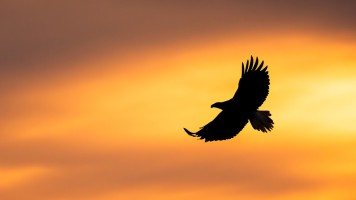
If there’s one area of wildlife photography that challenges even some of the most consummate artists, it’s birds in flight. A dynamic flight shot shows action, and a bit of technical prowess. As you can imagine, capturing birds in flight is no easy feat.
To consistently capture these shots, one must be proficient with their gear and have a knowledge of animal behavior. We’d go as far as to say you need a bit of luck too, but what is luck if not preparedness meeting opportunity. In order to make the most of the opportunities that present

by Todd Vorenkamp · Posted
Choosing a lens is a highly personal choice, and that’s especially true for wildlife photography. This is in the realm of the telephoto lens after all. While almost any focal length lens works for landscapes and other types of photography, in general, when it comes to photographing animals in the wild, you'll want to have the longest reach you can. In this guide, we’re going to discuss the factors one should consider when purchasing a lens for wildlife photography.
Focal Length
The first and most straightforward factor to consider is focal

by Mathew Malwitz · Posted
Anyone who has dabbled in pet photography knows that it can be a rewarding yet challenging experience. While pets are considered to be part of the family, they’re still animals who walk to the beat of their own drum and do things at their own pace. Even the best listeners can be easily distracted or have trouble sitting still for more than two seconds. If you’re considering trying your hand at photographing our fuzzy friends, we’ve put together this helpful guide for you. In this guide, we’re going to cover the essentials for those with a

by Mathew Malwitz · Posted
Food photography is an undeniably popular artistic medium, involving all kinds of people and gear to make those mouthwatering shots possible. If you’re an aspiring food photographer or someone looking to take their existing work to the next level, we’ve put together a special, themed gift guide that’s perfect for any skill level.
1. A 50mm Lens
Whether you are far into your photography career or just starting out, whenever you complete a dish in your kitchen or have a plate placed in front of you at a restaurant, there’s no better starting

by Luke Rollins · Posted
The Sony a1 II mirrorless camera is the company’s most versatile camera yet, offering the best overall mixture of speed, video capabilities, high-resolution stills, and a robust, professional-worthy body design. It pulls much of the original a1’s well-rounded feature-set into an a9 III body and adds the AF and IBIS technologies introduced with the a7R V. It’s a camera meant for working professionals that can excel in commercial

Posted
Professional food and drink photographer, Jordan Hughes, walks us through the exact camera lenses he uses on nearly every shoot. Learn about the camera lenses that are an absolute must to have on hand, and how to best use them.
0:00 Intro
5:25 Jordan's go-to gear
6:32 Shot list
10:24 Lenses
30:59 Lens list summery
34:35 Jordan's photography course
37:00 Q&A
Sponsored by

by Todd Vorenkamp · Posted
If your dreams involve capturing stunning images of beautiful, wild animals in nature, there is no getting around it—you need the right gear. Although every camera can capture wildlife, not all cameras are created equally and some certainly have technological advantages that benefit wildlife photography. We have discussed buying considerations for the right lens in this article, and here we will take a deep dive into what to look for in a camera for dedicated wildlife photography.
What Makes a Camera Better for Wildlife?
For wildlife