Search results for: photography tips solutions focal length guide
About 40 filtered results
by Luke Rollins · Posted
IN THIS ARTICLE
1. (Don’t Fear) the Gear2. Good Dental Photography Is Good Photography3. Macro Discipline, Portrait Mindset4. Embrace the Flash5. Clinical, but with an Eye for Marketing
For dentists, the evidentiary benefits of a photographic practice go beyond meeting industry standards. They can be the foundation for professional development and the growth of your business. That said,
by Luke Rollins · Posted
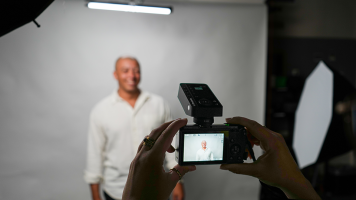
At first glance, studio photography and the compact camera may seem strange bedfellows. The type of work associated with the studio—still life, product photography, portraiture, macro photography—usually wants cameras with larger sensors and interchangeable lenses, especially in professional applications. Compact, point-and-shoot cameras, for their part, have their natural home in everyday, travel, nightlife, and street applications, where their discretion and size become virtues.
It might seem almost cruel to introduce the compact to the
by Mathew Malwitz · Posted
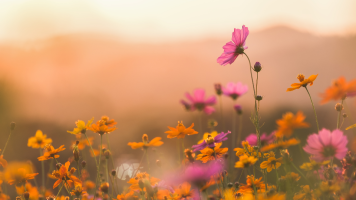
If there’s one question fledgling photographers often ask, it’s “How did you get such a nice background?” Backgrounds are an essential element of a photograph that are often neglected. In fact, it’s safe to say that a background is as important to a composition as the subject itself. After all, a distracting one will detract from an image.
In this guide, we’re going to cover the many methods used to capture clean, smooth backgrounds in our images. This will encompass the settings and gear involved as well as the in-the-field techniques you can

by Todd Vorenkamp · Posted
There is nothing that can replace the extreme close-up view of a rare bird in the wild. Binoculars can get you close but, if you want to look the bird in the eye or confirm that identification for your life list, you need a spotting scope. Spotting scopes pack incredible magnification in a generally simple and lightweight package that is

by Mathew Malwitz · Posted
There’s an old adage that claims in order to be a wildlife photographer, you need a lot of time and a lot of money. This is only partly true. Many great wildlife photo opportunities can occur in urban parks and even in your own backyard, as long as we know what we’re doing. In this article, we’re going to cover a number of essential tips that will help you become a better wildlife photographer.
If you’ve read our introduction

by Mathew Malwitz · Posted
Do you plan your images? Really think about that question. Do you have an idea of an image before you head out for a shoot, or do you let the moment inspire you as the pieces fall into place? There's no wrong answer here. Planning or "pre-visualization" is a key piece of the photography puzzle that some put a lot of thought and effort into while others effortlessly come up with ideas on the fly.
No matter how you go about taking a picture, there is some level of planning that goes into a shot. With that said, there's a big difference between

by Mathew Malwitz · Posted
Any place in the world can be a photo destination in the winter, but the general idea is to explore a few locations that offer wonderful photographic possibilities in winter that they might not offer in summer. We want to make use of all that snow and everything else the cold temperatures have to offer. After all, we can enjoy the warmer weather come spring. We can always blend in a bit of that warm escapism we all crave after a few months of short days, snow, and cold.
Lake Reschen and South Tyrol, Italy
The Tyrol region of northern Italy and

by Mathew Malwitz · Posted
Despite what you might have seen on the internet, you don’t need all the money and time in the world to photograph wildlife. Sure, an African safari would be nice, but it is by no means the only way to capture stunning images of wild animals. In fact, regardless of where you live, odds are there’s a vast ecosystem that likely goes unnoticed. If you have trees in your neighborhood, you’re off to a great start.
What You Need to Photograph Wildlife
While gear plays a crucial role in our ability to photograph wildlife, it isn’t everything. In this

by Mathew Malwitz · Posted
If there’s one area of wildlife photography that challenges even some of the most consummate artists, it’s birds in flight. A dynamic flight shot shows action, and a bit of technical prowess. As you can imagine, capturing birds in flight is no easy feat.
To consistently capture these shots, one must be proficient with their gear and have a knowledge of animal behavior. We’d go as far as to say you need a bit of luck too, but what is luck if not preparedness meeting opportunity. In order to make the most of the opportunities that present

by Mathew Malwitz · Posted
As we learn about exposure, we need to talk about shutter speed. Your camera’s shutter controls the duration of an exposure and is one of the three settings that determine the exposure of an image. Together, these settings are known as the exposure triangle.
Where aperture controls the amount of light we allow to reach our imaging area, it is the duration of our exposure that will directly influence whether an image is sharp or blurred. This is what makes it such a significant piece of the exposure puzzle. Now, let’s take a closer look

by Mathew Malwitz · Posted
Photography is by definition, the capture of light on a light sensitive surface. That surface could be glass, tin, film, or a digital imaging sensor like those found in most modern cameras. The amount of light that reaches our light-sensitive surface is what we can define as exposure.
A good exposure will look accurate to life or the photographer's creative vision. It will maximize an images quality and
by Mathew Malwitz · Posted
We’ve all tried to photograph something up close. This small-scale world fascinates us all, whether it be a stunning flower or a bumble bee crawling about, but our cameras can’t seem to focus as close as we want. So, what is a struggling photographer to do?
There are several ways to do close-up, or "macro" photography, but the

by Mathew Malwitz · Posted
What better place to spend a Saturday morning than the zoo. You can enjoy some time outside, all while seeing a variety of both local and exotic animals you'd otherwise never dream of encountering. Zoos also are great place to try your hand at photographing wildlife! In this guide, we're talking about taking our camera to the zoo to capture natural looking images of animals in their element! We'll be covering what you need as well as tips and tricks that'll help you capture stunning, natural looking images of animals.
Above photograph © Mathew

by Mathew Malwitz · Posted
As you begin to research cameras, you’ll likely hear some technical jargon about sensors. While it’s easy to ignore some elements of any devices, there’s no way to work around sensors. But what is a sensor and what does it do? In this guide, we’re diving into the often confusing world of imaging sensors. By time we’re done, you’ll have a better understanding of the most significant component in our digital camera.
About Sensors
What Is an Imaging Sensor?
At the heart of our digital cameras sits an imaging sensor, which serves as the digital

by Mathew Malwitz · Posted
Portraiture: It’s one of the most popular and prevalent forms of photography. Although it may seem simple on paper, it comes with its own unique obstacles. Of course, you’ll want to be familiar with your gear. This is essential to all working photographers, but it allows you to focus your efforts on the genre-specific challenges you’ll face.
When photographing people, you’ll find that some folks are photogenic, while others are not. Your job as a photographer is to break down the barriers set by your clients and to put them in the most