Search results for: explorations shutter speed guide
About 13 filtered results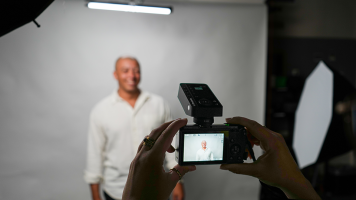
by Luke Rollins · Posted
At first glance, studio photography and the compact camera may seem strange bedfellows. The type of work associated with the studio—still life, product photography, portraiture, macro photography—usually wants cameras with larger sensors and interchangeable lenses, especially in professional applications. Compact, point-and-shoot cameras, for their part, have their natural home in everyday, travel, nightlife, and street applications, where their discretion and size become virtues.
It might seem almost cruel to introduce the compact to the

by Mathew Malwitz · Posted
Smartphones have forever changed the world of photography, making the art form more accessible and connecting people from across the world through the instantaneous sharing of images. For all their benefits, there are plenty of criticisms to be had, especially on the creative front. Smartphone cameras are, for some, everything one could want from a camera. For others, they lack the control and creative freedom that makes photography so interesting.
Who can blame one for having hard feelings against smartphones. After all, they nearly wiped

by Mathew Malwitz · Posted
Do you plan your images? Really think about that question. Do you have an idea of an image before you head out for a shoot, or do you let the moment inspire you as the pieces fall into place? There's no wrong answer here. Planning or "pre-visualization" is a key piece of the photography puzzle that some put a lot of thought and effort into while others effortlessly come up with ideas on the fly.
No matter how you go about taking a picture, there is some level of planning that goes into a shot. With that said, there's a big difference between

Posted
While its origin is murky, the adage “Take nothing but photographs, leave nothing but footprints, kill nothing but time,” is at the heart of this wide-ranging discussion about ethical practices in wildlife photography.
Above Photograph © Melissa Groo
From exotic safaris to local birding expeditions, interest in this subject matter has grown tremendously in recent years. Ever advancing camera technologies and increasing ease of use make stunning pictures more accessible than ever, but when these advantages combine with an unbridled enthusiasm

by Mathew Malwitz · Posted
Winter is one of the most exciting seasons for wildlife photography. Northern species return to their wintering grounds and bring life to an otherwise cold and barren landscape. Photographers and bird watchers alike yearn for this time of year, as owls and other birds of prey become more common. One of the most visited and coveted winter birdwatching spots in the US is the famous Sax-Zim Bog.
Nestled in the rural hills about an hour northwest of Duluth Minnesota, Sax

by Mathew Malwitz · Posted
If you’ve been around photography for any length of time, you’ve probably heard of ISO. ISO is one of the three settings that determine our exposure in photography. These settings are collectively referred to as the exposure triangle. ISO is unique in this equation, and in this guide, we’re going to explore why.
ISO can be referred to in two ways. It’s most commonly spoken as an abbreviation, but it is also sometimes referred to as a word pronounced as eye-so. General consensus is that you call it whichever you like. After all, it’s not what

by Mathew Malwitz · Posted
There’s an old adage that gear doesn’t make the picture, it’s the photographer. This is partly true. A super-telephoto prime with a fast aperture will make quick work of busy backgrounds, and the faster focusing systems of high-end full-frame cameras will more easily track a bird’s eye in some of the most challenging lighting conditions. But there’s another factor to consider. At the heart of the image is a creative eye and technical proficiency. High-end camera gear only serves a purpose once you know what you’re doing.
In this guide, we’re

by Mathew Malwitz · Posted
Wedding photography is a popular and lucrative genre of the industry. After all, weddings are an extravagant, emotionally charged event at which expectations run high. Couples put their trust in you as the photographer to capture this unrepeatable day, and second best just won’t cut it. Wedding photography takes a dedicated, skilled individual.
We all know it’s not the camera that takes the photo; it’s the photographer. That being said, having the

by Zack Young · Posted
Once you’re familiar with the basic concepts behind high-volume photography, the next logical step is to figure out what gear you need to purchase. That’s when the panic might hit. Suddenly you’re flooded with decisions about cameras, lenses, strobes, backdrops, barcode scanners, and more, each category including tons of different options at every

by Todd Vorenkamp · Posted
What is the best lens for landscape photography? The answer is that any camera lens can and will be the perfect lens for capturing a landscape, depending on your viewpoint and the subject. But if a landscape photographer is heading out into the world with a single lens, betting money says they will go with a wide-angle zoom or prime lens affixed to their camera.
How to Choose the Best Focal Length for a Landscape Lens
We started this buying guide by saying that almost any lens could be used as a landscape lens. Let’s refine that premise to

Posted
Where will you be on April 8, 2024? If you don’t already know, you’d better figure it out fast, particularly if you’ve got an interest in observing—and ideally photographing—the awe-inspiring phenomenon of a total solar eclipse.
To get you up to speed on essential eclipse details, tune in to our chat with science writer Rebecca Boyle and Gabriel Biderman from B&H’s Road Marketing team. Boyle shares tidbits about Earth’s silvery sister, gleaned from research for her book Our Moon, while Biderman discusses preparations (and practice!) for

by Mary Latvis · Posted
If you’re a RED afficionado who’s rewarded yourself with the new RED KOMODO-X 6K S35 digital cinema camera, be sure to explore the multiple ways you can customize your rig with pro video accessories from B&H. Each component below helps you to take full advantage of the features packed into the KOMODO-X’s strikingly compact form so that you capture the nuanced images you desire.
Above photograph: KOMODO-X with Accessories
RF

by Todd Vorenkamp · Posted
The premise of the camera is simple: it's a box that allows a measured amount of light into it in order to create an image on a photo-sensitive material. Stroll through the B&H Photo SuperStore and you'll see there are literally thousands of different interpretations of how to best do this. Cameras of all shapes, sizes, and colors are on the shelves—all of them begging to be held and used to make photographs.
The camera, one of the world's ultimate gadgets, has an appeal that transcends a great cross section of the human race.