Search results for: video tips solutions low light video tips
About 119 filtered results
by Steven Esposito · Posted
Keyboards, the tool you absolutely need when it comes to navigating a computer. There are so many different types of keyboards that feature a slew of elements that make some keyboards good for one thing, but not so good for another. How do we know what is best for you? By educating you on the features, how they work, and why you would get one for any specific reason. So, if you are shopping around for your next keyboard, this is the place to be!
Types of Keyboards
There are a bunch of different types of keyboards, but what makes them specific

by Luke Rollins · Posted
Canon has announced the second generation of its entry-level full frame mirrorless camera, the R8 Mark II. Having spent some time with the camera, we can speak to some of its most apt use cases: portraits, landscapes, street photography, and video.
Canon R8 Mark II
by Luke Rollins · Posted
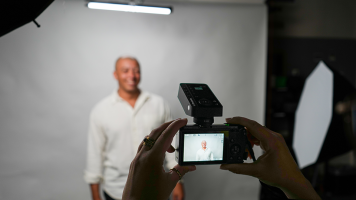
At first glance, studio photography and the compact camera may seem strange bedfellows. The type of work associated with the studio—still life, product photography, portraiture, macro photography—usually wants cameras with larger sensors and interchangeable lenses, especially in professional applications. Compact, point-and-shoot cameras, for their part, have their natural home in everyday, travel, nightlife, and street applications, where their discretion and size become virtues.
It might seem almost cruel to introduce the compact to the

by Jennifer Hahn · Posted
Point-and-shoot cameras are a great value-add to your photography kit, social media sharing, or as a vacation companion for quick stills and capturing memories on the fly. And these days, the value is even greater with point-and-shoot video recording. The point-and-shoot design makes things simple to change to video mode and press record. Though after you’ve captured your video, it can become cumbersome to edit and share that footage.
Some cameras allow you to edit/trim your video footage (also called “Movies” in some cameras) in camera, which

by Mathew Malwitz · Posted
Have you ever taken a photo that looked so good on the back of your camera, only to get home and see that it’s just not sharp? We’ve all been there, and even the experts miss more shots than they keep. That said, there are many tricks and techniques we can learn to improve the odds. In today’s guide, we’re looking at five techniques to aid us in confidently capturing tack-sharp photographs.
Sharpness is critical in most genres of photography, especially nature and wildlife. Sure, we can intentionally blur elements to showcase motion. We

by Luke Rollins · Posted
Achieving a standard of production value is an essential component of establishing a brand and growing a following. For part-time, burgeoning, and mid-level creators, it can feel like bridging that gap is less a matter of learned skill and more about the equipment you can afford.
In most cases, the problem isn’t budget at all. Acquiring the specific know-how can give your content professional sheen with little to no financial outlay.
Lighting design is arguably the most immediately visible production component—and the one most capable of

by Steven Esposito · Posted
If you have found yourself moving, downsizing, or going away to school, you might be dealt a desk area that is drastically smaller than that to which you are accustomed. If this is you, or will be you sometime soon, a small workspace is no reason to panic. With some intention and a bit of finessing, you can cultivate a sleek and functional small desk setup without compromising on quality. I am going to share some helpful pointers with supplementary products to consider while you transition into a new, smaller workspace.
Lose the Monitor Base

by Mathew Malwitz · Posted
Smartphones have forever changed the world of photography, making the art form more accessible and connecting people from across the world through the instantaneous sharing of images. For all their benefits, there are plenty of criticisms to be had, especially on the creative front. Smartphone cameras are, for some, everything one could want from a camera. For others, they lack the control and creative freedom that makes photography so interesting.
Who can blame one for having hard feelings against smartphones. After all, they nearly wiped

by Mathew Malwitz · Posted
Through the cacophony of forest sounds, your ears home in on a buzzy, almost garbled ascending song. Perhaps you recognize it immediately, or maybe you need to confer with one of the trusty internet databases or apps. You train your eyes on the canopy, scanning for movement of any kind, when you see it: the cerulean warbler, a small rowdy songbird with wings slightly splayed from the body. Quickly, you lower your binoculars and train your camera on the little blue passerine before snapping a few frames.
The resulting photos clearly show the

by Mathew Malwitz · Posted
Who doesn’t love a close-up shot of a flower or bumble bee? Some of the most beautiful aspects of nature are quite small and require special tools to capture them in a meaningful way. Whether it be of a cute little insect visiting our garden, or miniature figurines you paint and sell, we need a camera that can focus close and deliver good, quality results.
Before you panic, hear us out. We don’t need to get carried away with complicated lenses and accessories, and can just enjoy yourself with a simple compact,
by Steven Gladstone · Posted
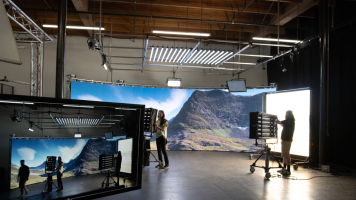
Lighting hasn't really changed in the past few decades. Sure, new fixtures, faster cameras and lenses, and shooting styles may change, but the essence of lighting really hasn't changed. The look of the scene is still driven by the DP and still created by the lighting designer; it is still all about ratios, and no matter how technology advances, lighting is a powerful tool for putting realism and drama on screen.
What Is Image-Based Lighting?
Simply put, image-based lighting (IBL) is using lighting fixtures to mimic the effects of natural

by Steven Gladstone · Posted
Welcome to Part 2 of Keys to a Happy and Healthy Production Life.
Hopefully you’ve read Part 1, but if not, be sure to check it out.
Working on productions, and making films at every level can be fun, exciting, thrilling, and rewarding. The key to longevity in the business is both being easy to work with and being valuable to those who hire you. If you’re a director, you must figure out how to balance getting what

by Mathew Malwitz · Posted
Wedding photography is a blend of genres, sort of a marriage (pun intended) between portrait, street, and occasionally even landscape photography. There’s always a bit of mystery when it comes to lighting, and we need to be ready for anything. In a reception hall, you may dimly chandeliers, bright LEDs, or even pulsating, colorful strobes from the DJ booth. All of these variables, and you may not be able to use flash! What can you do?

by Todd Vorenkamp · Posted
There is nothing that can replace the extreme close-up view of a rare bird in the wild. Binoculars can get you close but, if you want to look the bird in the eye or confirm that identification for your life list, you need a spotting scope. Spotting scopes pack incredible magnification in a generally simple and lightweight package that is

by Mathew Malwitz · Posted
Do you plan your images? Really think about that question. Do you have an idea of an image before you head out for a shoot, or do you let the moment inspire you as the pieces fall into place? There's no wrong answer here. Planning or "pre-visualization" is a key piece of the photography puzzle that some put a lot of thought and effort into while others effortlessly come up with ideas on the fly.
No matter how you go about taking a picture, there is some level of planning that goes into a shot. With that said, there's a big difference between